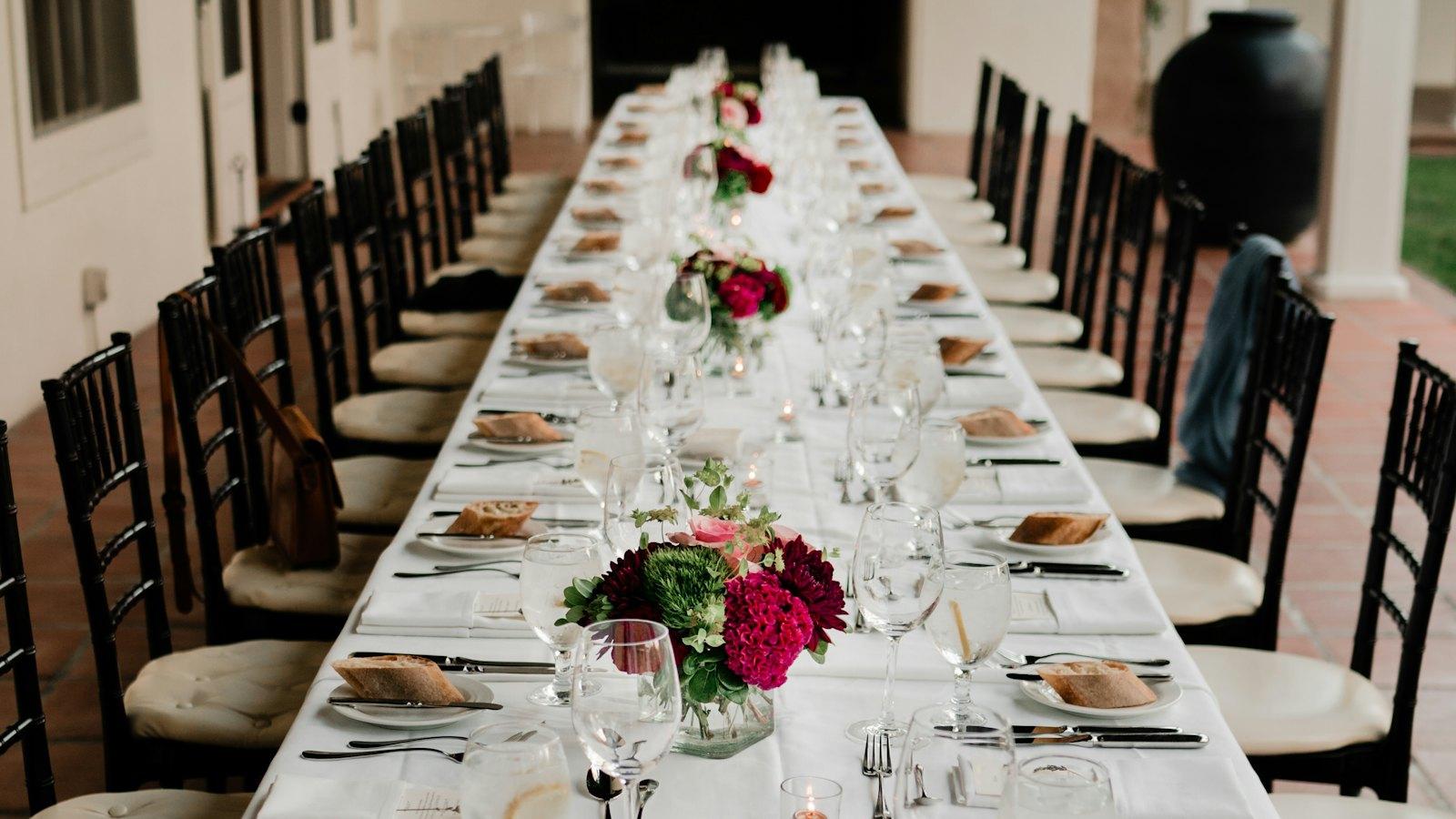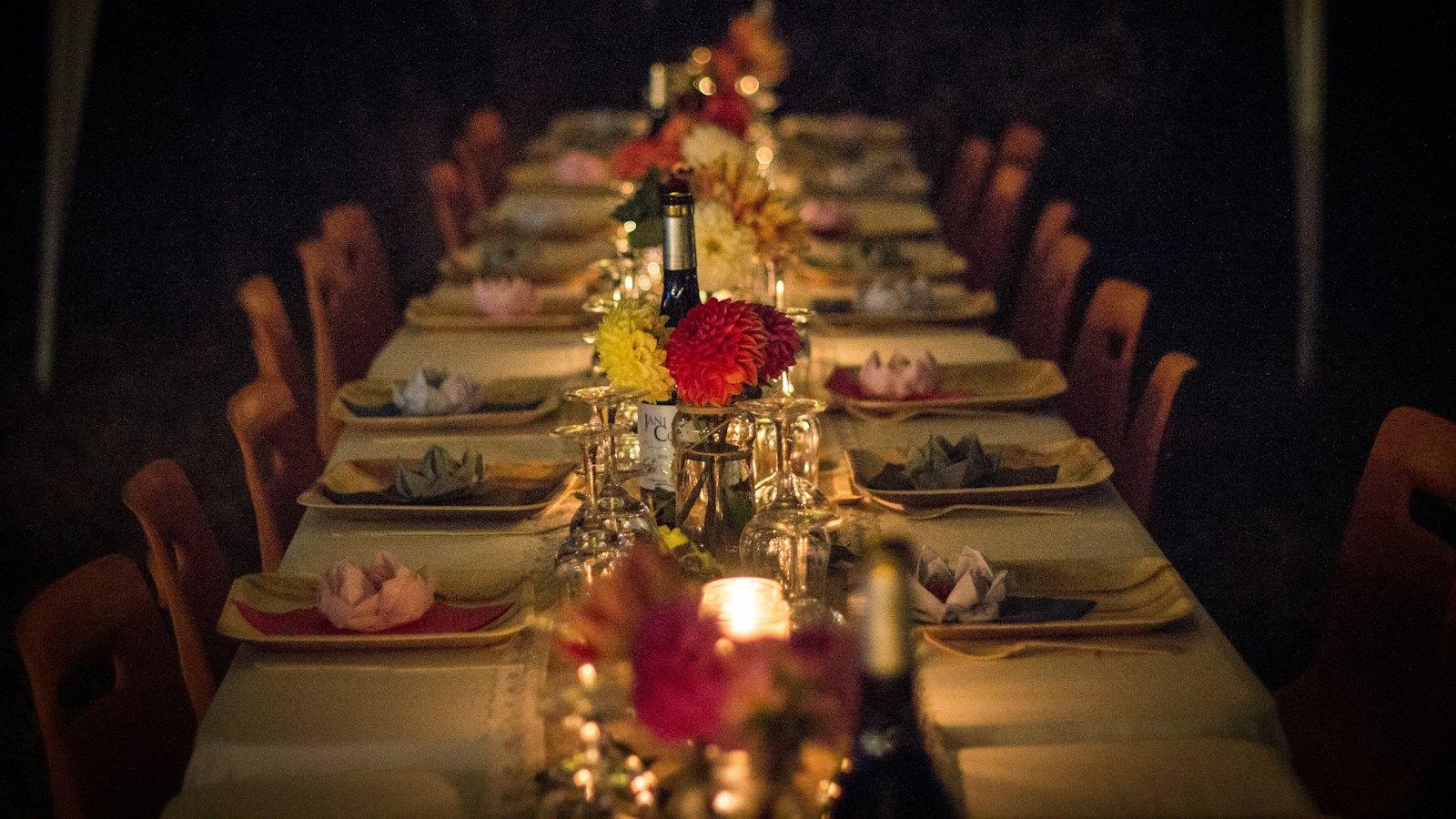
A table for ten is not two tables for five. It is a different process for the kitchen, for service and for the room, and it improves the earlier it is discussed.
What else it involves is in our guide to larger parties.
What a house needs to know beforehand
Four things, and the first matters most.
The number of people, as precisely as possible. Twelve instead of ten means a different table, different quantities and sometimes an extra person on service. If the number changes, a message the day before is worth more than an apology on the night.
The time, and for how long. A large table almost always stays longer than a small one, and a house expecting that plans the evening around it rather than against it.
The occasion. Whether it is a birthday, a business dinner or a family gathering changes practically everything — from the choice of table to the volume of the music.
Restrictions. Vegetarian, vegan, allergies: with twelve people there is almost always something, and knowing in advance is the difference between thinking ahead and striking a dish. How that runs in the kitchen is in allergies and special requests.
Why the number has to be exact
A house fixes almost everything off a group booking: the shopping, the staffing, the table layout. Two extra people are no problem announced two days ahead, and a problem standing in the door at eight.
The reverse holds equally: booking for twelve and arriving as eight has blocked a table that could have gone elsewhere that evening, and food that was bought. How that connects is in walk-in or booking.
How much notice
For eight to ten people a few days is enough. From twelve, a week is more comfortable, and on Fridays, Saturdays and in December, closer to two.
December is a category of its own: in Vienna the weeks before Christmas are the densest time of year for groups, and anyone planning an office party then should ask in October — the office party goes into it.
Why the shape of the table matters
A long table for twelve looks good and has one drawback: you only talk to four people — left, right and opposite. Two tables of six side by side look less festive and often work better socially.
A round table is the pleasantest arrangement but is rarely available beyond eight — past that the diameter gets so large that people are calling across it.
Given the choice, decide by the occasion: a long table for a celebration, several tables for a dinner where conversation is the point.
The room gets something out of it too
A large table changes the acoustics. Twelve people at one long table are louder than twelve across three, because they talk along its length, and in a small room everybody else hears it.
Good houses therefore put groups where they disturb nobody — a side room, one end of the space, or the table that sits apart anyway. Say so in advance and you get the better position.
Past a certain size the honest solution is to take the whole room, and that is usually cheaper than expected — hiring the whole place describes when.
How long a large table stays
Longer than the booking suggests. A table for two stays ninety minutes; a table for twelve stays three hours — not because people eat more slowly but because there is conversation between courses and nobody wants to be the first to stand up.
A house that expects that plans no second sitting on the table. Fail to mention it and you get a time limit that then puts everybody under pressure.
What the kitchen does with it
A large table is treated in the kitchen as one job rather than ten. Every plate has to be ready simultaneously, and that reorders the whole evening — described in how an order travels through a house.
Which is why large parties take a little longer than a table for two, and why choosing in advance helps so much — a menu for groups describes how that looks.
Book a table; for larger parties, ideally by phone.