At a table for two, drinks are incidental. With twelve people they are the reason service spends half the evening standing at the table — unless it is solved differently.
What applies to larger parties generally is in our guide to them.
Drinks are the bottleneck with a group
Not the food. Food arrives once; drinks arrive all evening, and every round is a fresh job for one person who is doing nothing else while it happens.
The first round matters most
Twelve people deciding one after another what they would like takes ten minutes, and then service starts building twelve different drinks. Two cocktails among them add another five minutes for everybody else.
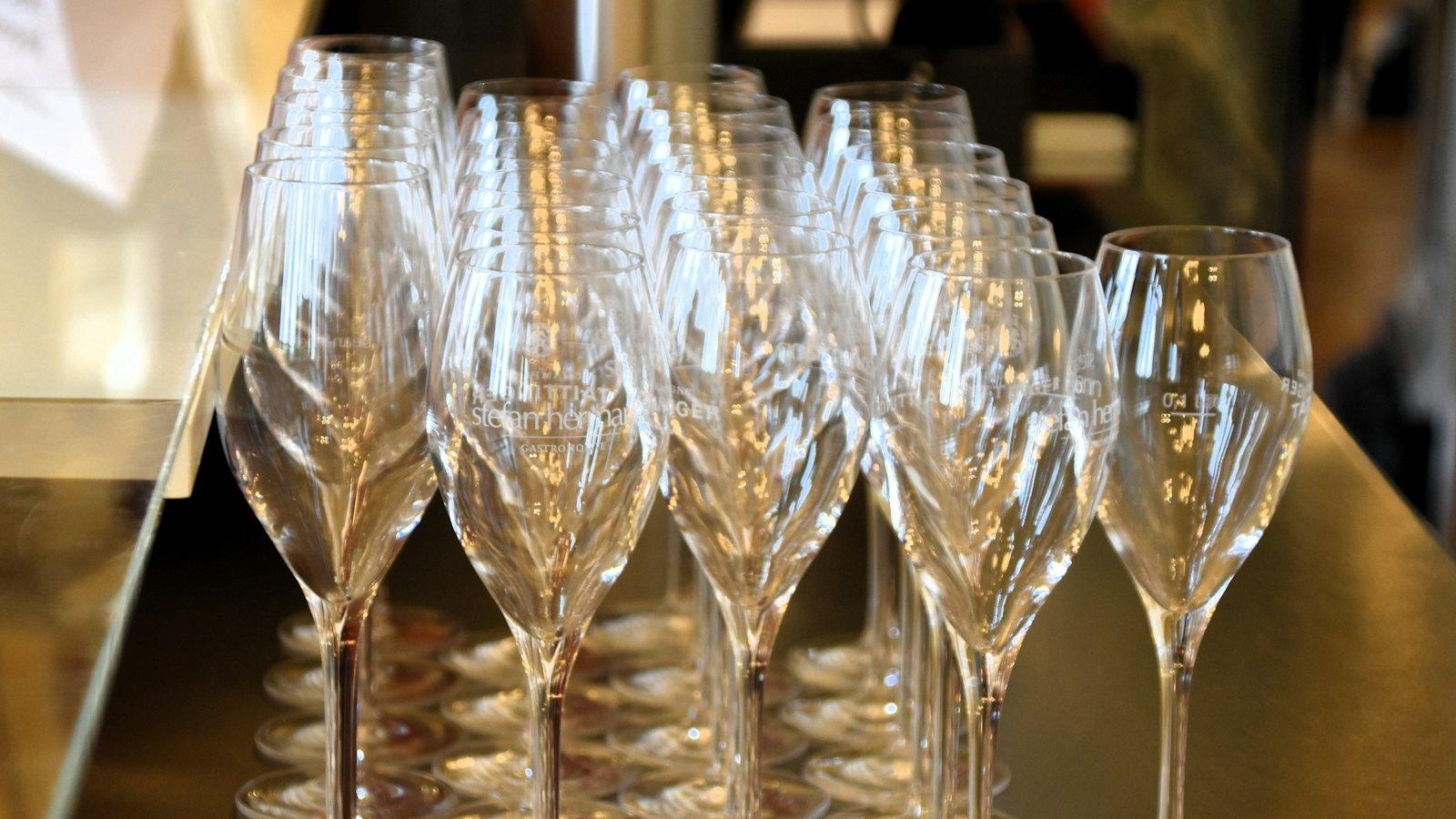
So a reception works best as a single decision: something sparkling for everyone, plus an alcohol-free version. That reaches the table in two minutes, and afterwards everyone has time to consider something else.
Why something bitter suits that better than something sweet is in what an aperitif has to do.
What a group actually drinks
Differently from a table for two. Consumption is steadier across the evening because somebody is always ordering again, and it is higher overall because people stay longer.
Above all the choice narrows: with twelve people the same thing is rarely ordered twelve times, but almost everyone will settle on two or three things if they are offered. That is the difference between one question to the table and twelve individual ones.
Bottles rather than glasses
From six people, wine by the bottle is almost always the better choice — not for the price but for the time. A bottle for the table is opened once and topped up; twelve glasses are twelve separate operations repeated all evening.
In practice: one white and one red for the table, plus water in large bottles. Anyone wanting something else orders it individually, and that is two rather than twelve.
For a mixed table a short by-the-glass list helps more than a long bottle list — the connection is in wine by the glass, and why it is honest.
Order in rounds, not individually
One question to the table beats twelve separate ones, and it is faster for everybody including the people waiting for their drink.
Alcohol-free belongs in it
With twelve people somebody at the table is almost always not drinking that evening, and at an office party often several. A house with nothing to offer but mineral water makes that person the exception at the table.
What there should be instead is in alcohol-free is not a consolation.
Water belongs on the table
The simplest point and the most frequently overlooked. Across an evening twelve people drink more water than anything else, and ordering it individually ties up service permanently.
Large bottles on the table, refilled, solve it entirely. In Austria tap water is normal and either free or very cheap — in a coffee house it arrives unasked anyway, as ordering coffee in Vienna describes.
When service tops up
With a group, not on request but in rounds. One person goes round the table once and fills whatever is empty — that takes two minutes and replaces twelve separate requests.
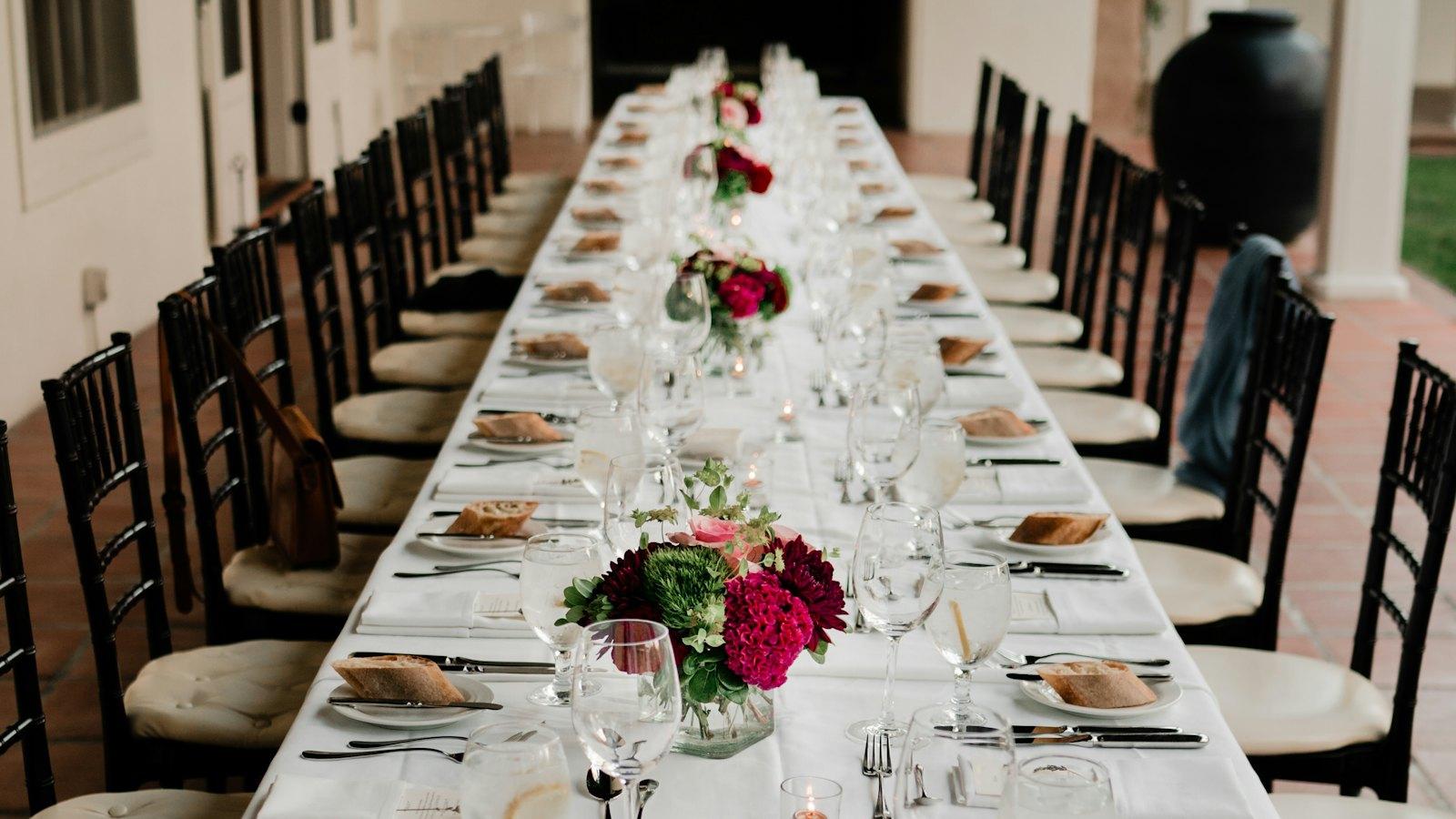
For that to work the bottles have to be on the table rather than at the bar. Where things stand is a preparation question rather than a service one — mise en place describes it.
The budget per head
The usual route with office parties, and it solves the problem that the person organising is not the person paying. An amount per head is agreed for drinks; anything above it, people pay themselves.
For that to work it has to be said in advance — to the house and to the guests. A budget only the organiser knows about produces exactly the conversation nobody wants at the end of the evening. How office parties otherwise run is in the office party.
Why the bill depends on this
Drinks are why splitting a bill gets difficult with a group: the food can be attributed, the fourth bottle of wine cannot. Thinking about it beforehand saves twenty minutes — splitting the bill describes how.
Book a table and say how you want to start.