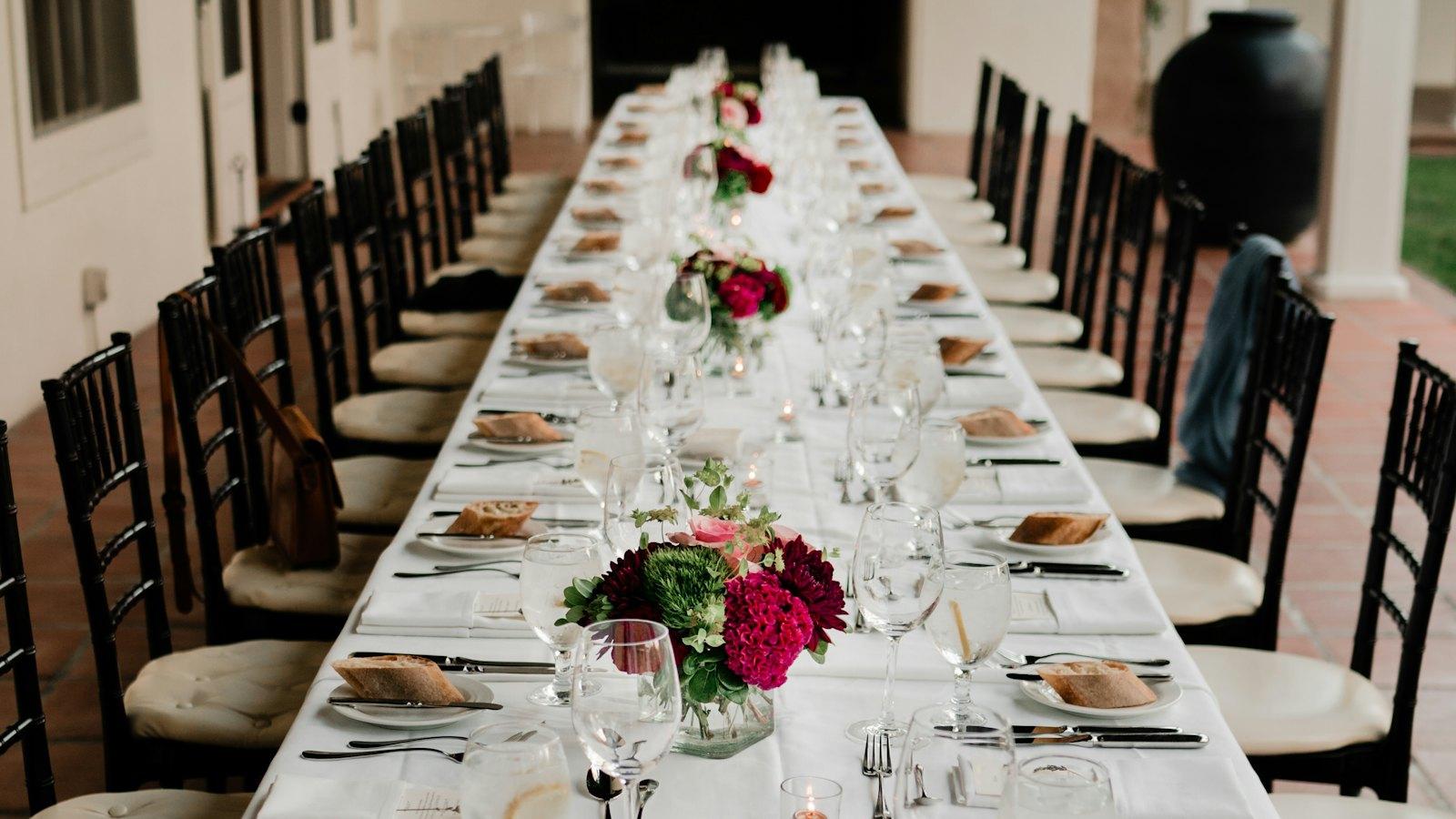
Paying separately is entirely normal in Austria, and service is set up for it — with four people. With fourteen it becomes the longest part of the evening.
What applies to larger parties generally is in our guide to them.
Paying separately is normal here
Unlike in many countries you do not have to ask for it in Austria. Service asks of its own accord whether it is together or separate.
Why it gets hard with a group
The food can be attributed, provided the order was taken with seat positions — the process is in how an order travels through a house.
The drinks cannot. The fourth bottle of wine belongs to nobody, the water belongs to everyone, and the round somebody bought appears on no docket. Almost every long settlement hangs on exactly that — drinks for a crowd describes how to keep it simpler from the start.
Then there is the time: fourteen separate settlements at the table, each by card, take twenty to thirty minutes. For all of it, one person from service is at that table and nowhere else.
Whoever writes it down wins
The most practical advice for a large party: one person at the table keeps a running note of who bought a round and who ordered a bottle. Two lines on a phone, and settling up at the end takes three minutes rather than twenty.
It sounds bureaucratic and it is the difference between an evening that ends in conversation and one that ends in arithmetic.
Anyone who dislikes that takes the simplest option: one person pays and the rest transfer. Among friends that is now the normal case, and it is the fastest solution for the house.
What actually works
One person pays, the rest transfer. The fastest option and, among friends, now the usual one. One bill, one payment, and the rest happens later on a phone.
By couples or small groups. Four bills instead of fourteen. Nearly as fast as one, and the best compromise for most tables.
Evenly across everyone. Works if everyone had roughly the same and not otherwise. Somebody who drank a glass of water is reluctant to pay a twelfth of four bottles of wine.
Food individually, drinks shared. The cleanest route when it has to be exact: everyone pays for what they ate, and the drinks are divided across the table.
What lengthens an evening
Fourteen separate card payments, one after another, at one table. If it has to be individual, it helps when some pay cash — then the two run in parallel.
And working it out at the table. Starting to calculate who had what only once the bill has arrived also ties up the member of service standing there waiting.
It is the last impression
An evening that was good and ends in twenty minutes of arithmetic is remembered as arithmetic.
How to settle it in advance
One sentence at booking does it: "We will pay together" or "We will pay by couples." Service sets the settlement up that way rather than rebuilding it at the end.
With office parties it is settled beforehand anyway, because payment is on invoice — the office party goes into that.
Card or cash
Almost everywhere in Vienna takes both, but with a group the mixture is faster than either alone. Four card payments and four cash payments together take less time than eight card payments, because the terminal is the bottleneck.
Some small houses have only one terminal, and then it is the bottleneck for the whole room rather than just that table.
Who takes the bill
With an invitation this belongs settled in advance, and with the house. A discreet word on arrival is enough to stop the bill being placed in the middle of the table.
Conversely: if nobody says anything, service brings the bill the way the order was taken. A joint order produces a joint bill, and dividing it is then the table's business.
The tip
On a split bill everyone tips on their share; on a joint one, once on the total. Both are normal. What is not normal in Austria is leaving money on the table — why is in tipping, without the guesswork.
Book a table and say how you would like to pay.