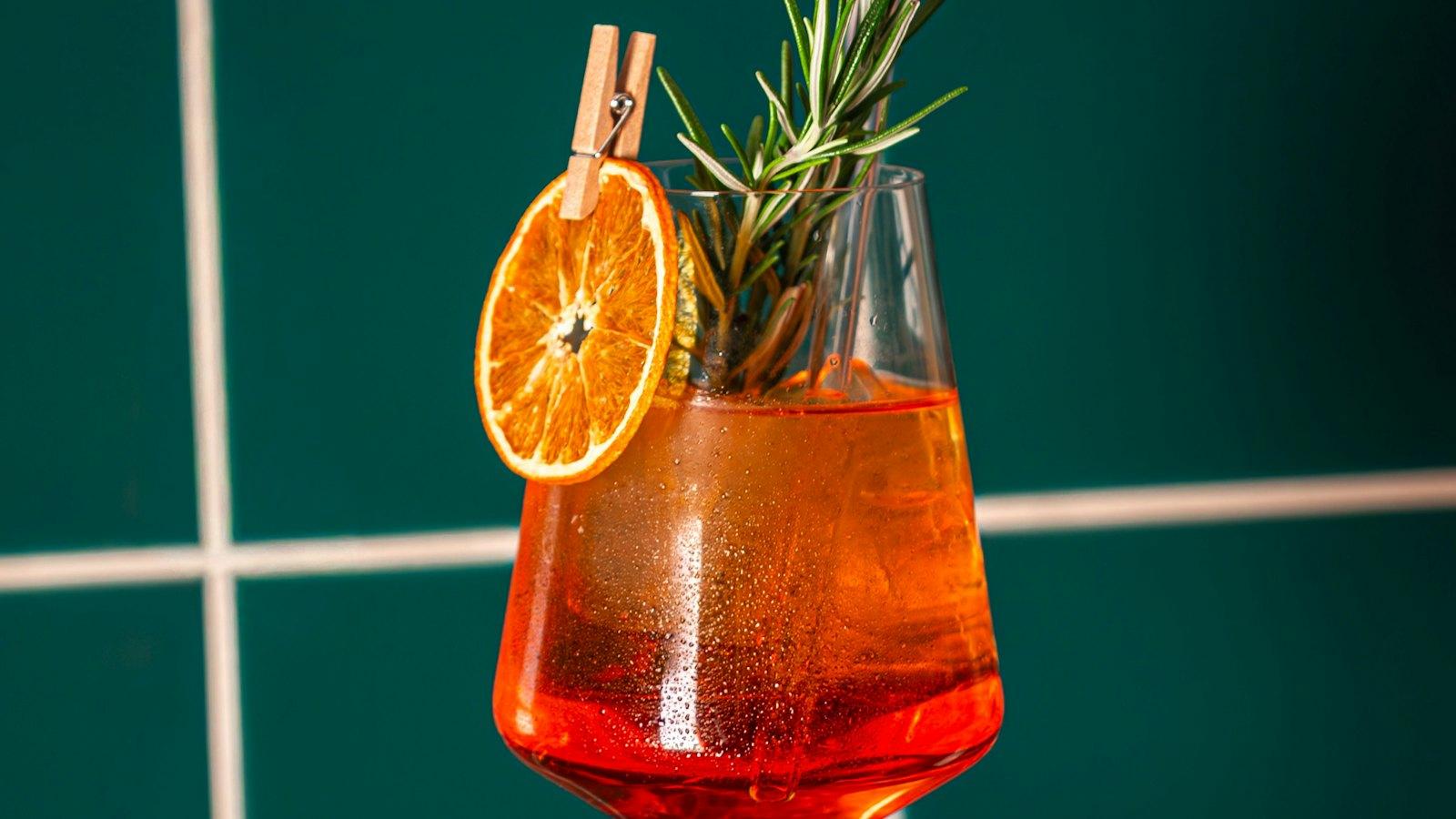
At most bars the alcohol-free part of the list is a list of bottles. Anyone not drinking is visibly handed what was left over, and that is a decision — usually just not a conscious one.
Why intent counts at a bar is in our guide to the bar.
What is missing is not only the alcohol
Alcohol does three things at once in a drink: it carries aroma compounds that will not dissolve in water, it gives body and a sense of density, and it leaves a faint warmth. Take it out and all three go, and juice with soda replaces none of them.
So a good alcohol-free drink is not a cocktail minus the spirit but a recipe of its own. What replaces the body is anything with texture: syrup, honey, fruit purée, a foaming agent for the head. What replaces the warmth is heat — ginger, pepper, chilli. And what carries the aromas are extractions that work in water: tea, herbal infusions, roasted notes.
Bitterness is the most important part
The commonest fault is that alcohol-free drinks are sweet. With no counterweight, any sweetness turns tiring after a few mouthfuls, and that is exactly why a cordial finishes worse than a cocktail.
Bitterness solves it. Gentian, cinchona, grapefruit peel, strongly brewed tea, coffee — anything with a bitter pull turns a sweet drink into one you want to finish. With an aperitif that is the whole point anyway, as what an aperitif has to do describes.
Acidity works in the same direction and is the second half of the answer — citrus and acidity behind the bar goes into it.
Our lemonade as an example
Panela, lime, water. Three ingredients, and the same thought as the signature cocktail with the rum taken out. The panela brings depth and colour, the lime the acidity, and together they make something people order because they want it rather than because they are driving.
What the panela contributes is in panela: sugar that does more than sweeten.
What is worth buying in a bottle
Not everything has to be made from scratch. Some things are better from a bottle than any attempt behind the bar, and they have one thing in common: they bring bitterness or acidity with them.
Good tonic, bitter lemon made with real cinchona, ginger beer with detectable ginger, herbal sodas, grape juice from a winemaker rather than from concentrate. Alcohol-free beer has also become a serious option — the quality has shifted noticeably in a few years.
What rarely convinces are alcohol-free spirits. They cost as much as the original and mostly deliver flavoured water, without body and without length. Put the same money into good ingredients and you get further.
Ice and glassware apply equally
More so, in fact. An alcohol-free drink has less holding it up and therefore loses more when it is over-diluted or poured into a warm glass. That is not a special case but the same craft — set out in ice is an ingredient.
And the glass: pour an alcohol-free drink into a water tumbler and you have said something about how seriously it was meant. The same glass as the cocktail costs nothing and changes the whole perception — what matters there is in the glass and the temperature.
How to ask for one
Nobody has to explain why they are not drinking, and good houses do not ask. One sentence covers it: "Something without alcohol, but nothing sweet" — and a bar has everything it needs.
It is worth asking what there is, though. A good deal of the alcohol-free side of a list is seasonal and printed nowhere, because it changes with the fruit.
Why it pays
The practical part: at a table of six there is almost always somebody not drinking that evening — because they are driving, because they do not care for it, because they do not feel like it tonight. A house with nothing decent for that person loses not only their order but leaves them sitting there like someone who was forgotten.
In the end it is the same consideration as with food: a table should be able to eat and drink together even when not everyone wants the same thing.
Book a table — the lemonade is on the same list as the cocktail.