Acidity does for a bar what salt does for a kitchen: it does not make things sour, it makes them legible. A drink without acidity tastes flat and too sweet, even when the quantity of sugar is right.
That ingredients decide more than recipes at a bar is the point of our guide to the bar. Acidity is the most perishable of them.
Fresh means fresh
Citrus juice changes within hours, and measurably. The volatile aromatics from the peel that end up in the juice during pressing go first; after that the juice oxidises and turns bitter and dull.
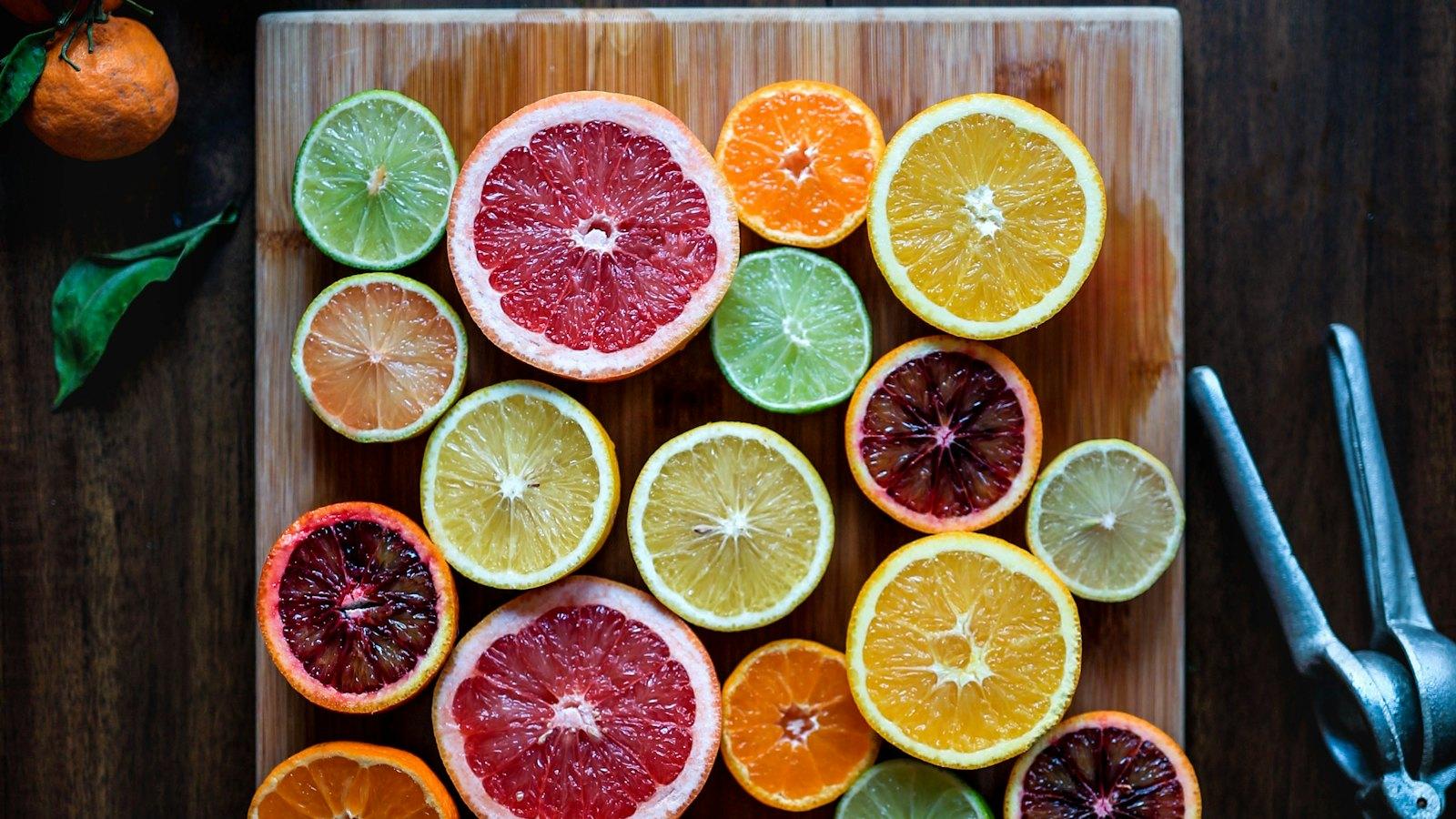
Lime juice is the most delicate: after four to six hours it is noticeably different, and after a day it tastes of bottled cordial. Lemon juice holds a little longer, around a day. Orange is the most robust and still not the same after half a day.
That is why a bar presses in the morning rather than buying in weekly. And it is why a long cocktail list is harder to keep fresh than a short one — the same arithmetic as a long food menu, described in what belongs on one menu and what does not.
Lime and lemon are not the same thing
Both are sour, and that is where the similarity ends.
Lime is sharper, shorter and slightly bitter, with a distinctly green, almost resinous note. It suits rum, tequila and anything carrying sweetness, because it pushes back rather than blending in.
Lemon is rounder, more floral and longer on the finish. It suits gin, whiskey and drier drinks, where it gives outline without dominating.
Swapping one for the other does not give you a worse drink but a different one — and usually one that is no longer in balance.
Where the aroma actually sits
Not in the juice but in the peel. The essential oils in the outer coloured layer are what make a lemon smell of lemon; the juice mainly supplies acidity and sugar.
Which is why many drinks get a zest: a strip of peel squeezed over the glass so the oils spread across the surface. That is not decoration — the difference is immediate to the nose, and smell is the larger part of what we call taste.
What does not belong is the white pith underneath. It is bitter and contributes nothing, which is why a zest is cut thin.
How to press
Fruit at room temperature gives considerably more juice than cold fruit, and rolling it firmly across the counter first gives more again. Press without force: wring a citrus half out to the last drop and you drag bitter compounds out of the pith with it.
And always strain. Pulp in a glass changes the texture and settles at the bottom.
How much acidity a drink needs
There is a rule of thumb that carries surprisingly far: two parts spirit, one part acidity, half to one part sweetness. Out of it come a daiquiri, a whiskey sour, a margarita and a large share of every drink with juice in it.
More important than the exact numbers is that acidity and sweetness get adjusted together. A drink that is too sour is not repaired with less lemon but usually with a little more sweetness — and the other way round. Both move the same slider from opposite sides.
And the fruit moves it too. Limes vary noticeably in acidity with ripeness, which means: you taste as you go rather than following a recipe blind. The same applies to the sugar when it is not neutral — which is precisely the case with panela.
Take the peel first
If you want both juice and zest, take the peel off first. A squeezed half cannot be peeled properly any more, and by then half the oils have ended up in the juice anyway.
Stripped peel keeps for a few days in sugar or alcohol and goes on giving there — a simple way of getting two things out of one fruit.
Acidity without citrus
Not every acidity has to come from a fruit. Vinegar works better in drinks than its reputation suggests, particularly as a shrub — fruit syrup with vinegar, which keeps for months and does in winter what fresh fruit does in summer.
It is the same reasoning as bottling in the kitchen: pickling, bottling, keeping sets it out for the plate.
Book a table — whatever is sour in the glass was pressed that day.