A kitchen that follows the season has two problems: in August there is too much of everything, and in February almost nothing. Preserving is the link between those two months, and it is why seasonal cooking in winter does not mean eating nothing but cabbage.
How the rest of the year divides up is in our guide to cooking with the season.
Three methods, three results
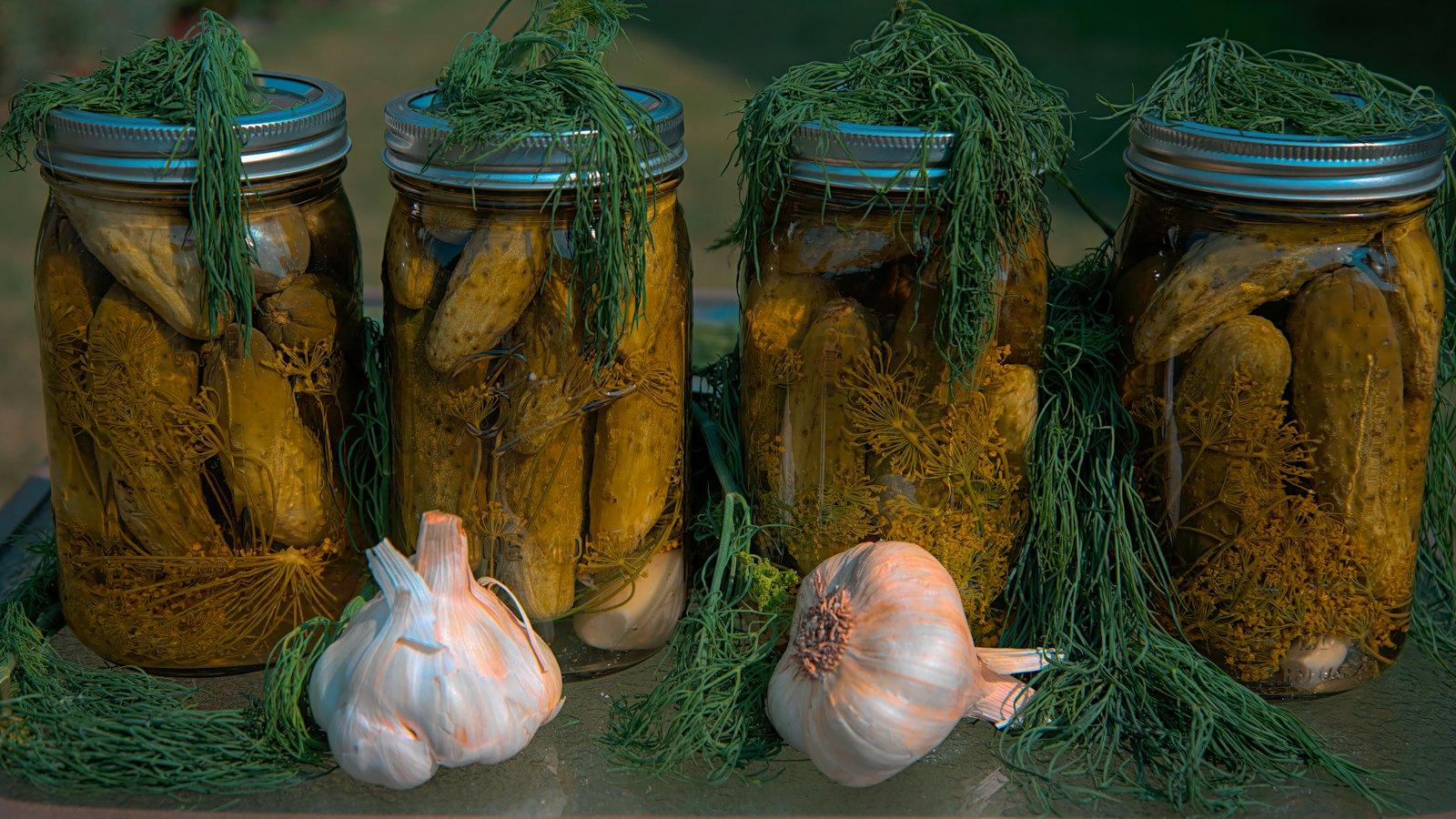
Pickling in vinegar is the quickest. Vegetables go into a brine of vinegar, water, salt, sugar and spices, and the vinegar drops the pH far enough that most bacteria stop working. The result tastes distinctly of vinegar — not a side effect but the point.
Fermenting is the oldest. Nothing is added but salt: lactic acid bacteria already living on the vegetable convert sugar into lactic acid and preserve it themselves. That is how sauerkraut happens, and it tastes different from pickled cabbage — more complex, less sharp.
Bottling is what happens to tomatoes. The jar is filled, sealed and heated until the contents are sterile; as it cools a vacuum forms and holds the seal. The flavour stays closest to the original ingredient.
Why bottled tomatoes beat fresh ones in winter
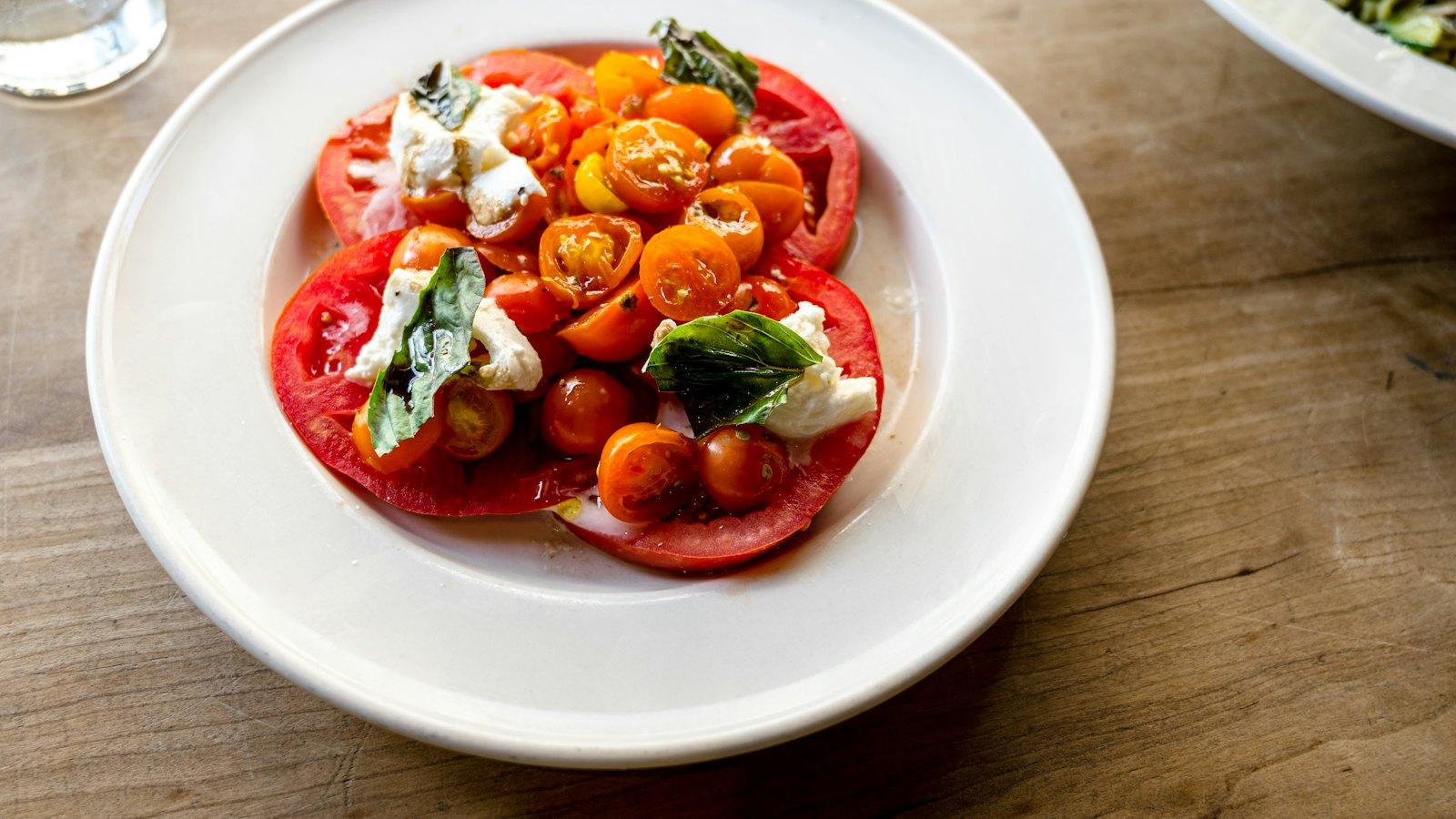
This is where most people hesitate, and it is true anyway. A tomato picked ripe in August and bottled the same day has its full sugar and aroma. A fresh tomato in February was picked green and travelled a thousand kilometres — why that matters so much is in tomatoes that taste of something.
For anything cooked — sauces, braises, soups — the bottled one is the better ingredient, and it is cheaper. It is no help for a salad, and then there simply is no salad.
What Austrian cooking does with it
The pickled gherkin is not decoration. It sits beside braises and crumbed meat because it supplies acidity, which makes it part of the same arithmetic as lemon and potato salad — described in dumplings, potato salad and the rest of the plate.
Sauerkraut is the larger case. For centuries it was the source of vitamin C in winter, and in flavour terms it is exactly what fatty meat asks for. Alongside it come stewed plums, pickled beetroot, horseradish in jars and jams, all following the same pattern: what is here gets processed before it is gone.
What suits which method
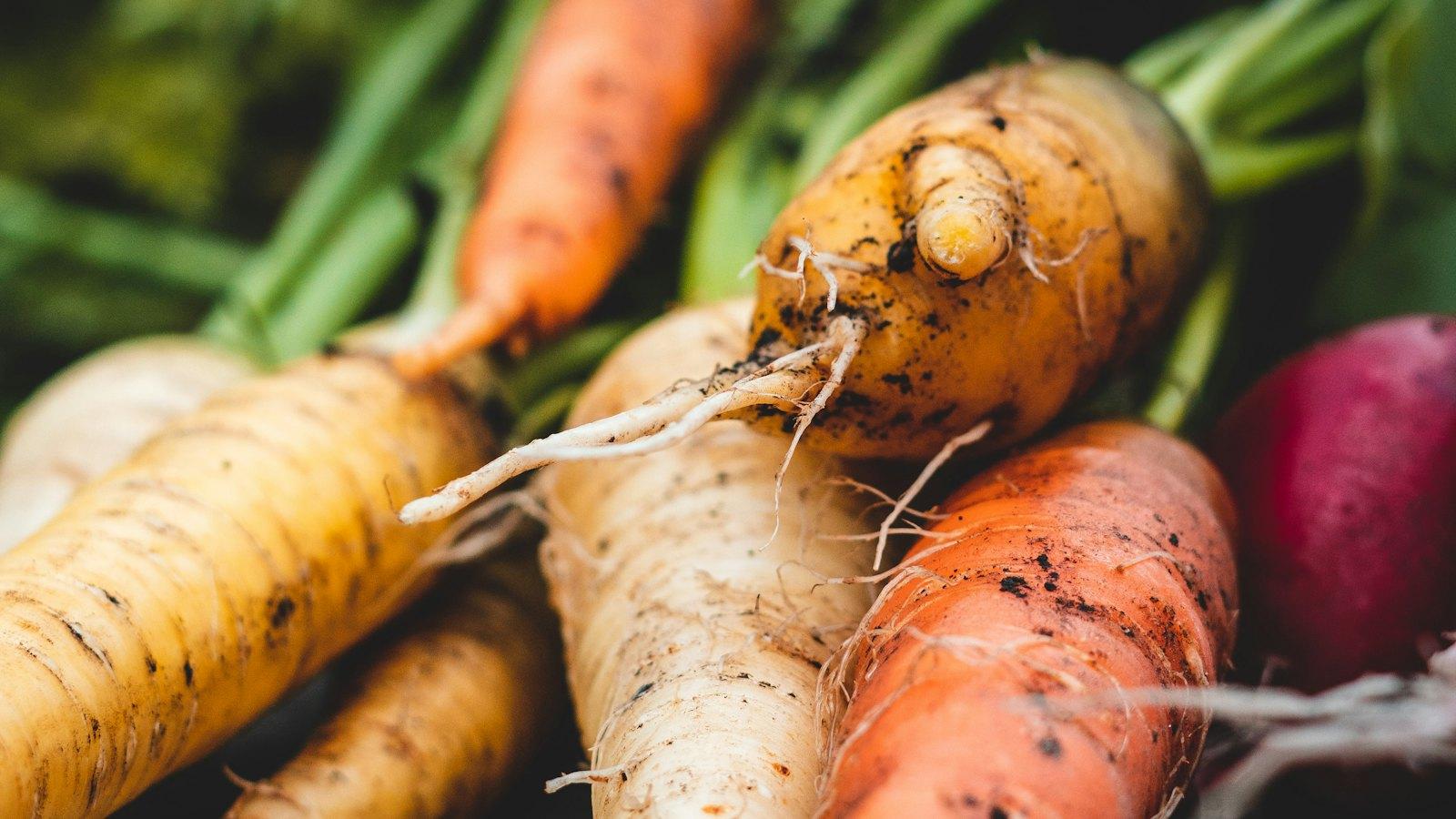
Not every vegetable takes every treatment. Firm, low-water vegetables get pickled: cucumbers, carrots, onions, beetroot, peppers, beans. They keep their bite because their cell walls stand up to the brine.
Soft, water-heavy vegetables turn to mush instead. Courgette, aubergine and tomatoes are better bottled, roasted or cooked down to a paste — there the collapse is not a problem but the point.
Cabbage is the classic candidate for fermenting, because it carries enough of its own sugar for the lactic acid bacteria. And fruit almost always heads towards jam or stewed fruit, because there sugar is the preservative.
What goes wrong
Too little salt and too little acidity are the two serious mistakes, and they are not questions of taste. For fermenting, the usual quantity is two per cent of the weight of the vegetables; below that the wrong micro-organisms win. For pickling, the brine needs enough vinegar to be genuinely sour, and recipes that dilute it heavily with water are risky.
The third mistake is impatience. Pickles need two to four weeks before the brine has worked through. A jar opened after three days tastes of raw vegetables in vinegar.
Why it makes a kitchen calmer
A larder changes how February is cooked. Instead of asking what else can be done with cabbage, there is acidity, colour and flavour from jars filled in summer. It also changes August, because a glut stops being a problem: a crate of tomatoes nobody can eat this week is a winter's worth of sauce rather than something to apologise for. That is the part most people miss about preserving: it is not nostalgia, it is what makes buying seasonally affordable in the first place, and it always was.
What else winter leaves you is in what still grows in winter.
Book a table — in February you can taste August.