The most common question about our menu is not which dish is good. It is: how does this go together? A Wiener Schnitzel and a burrata sit two lines apart, and at first glance that looks like indecision.
It is the opposite. How the two kitchens meet is the subject of our guide to Austrian and Mediterranean cooking as a whole; this piece is about the menu itself — how it is built, and where it tips over.
The question we ask of every dish
Every new plate gets the same test: would this be understood in a tavern in Lower Austria, and in a trattoria in Liguria? Not ordered — understood. A pumpkin risotto would be recognised in both. A schnitzel with wasabi mayonnaise in neither.
That is not a rule against invention. It is a rule against explanation. A dish you have to explain before it tastes good has already failed. The best plates on our menu need two words: schnitzel, burrata. Everything else happens at the table.
Two kitchens, not fusion
Fusion means taking a technique from here and an ingredient from there until what comes out belongs nowhere. That is precisely what we do not do. Our menu sets two kitchens side by side; it does not stir them together.
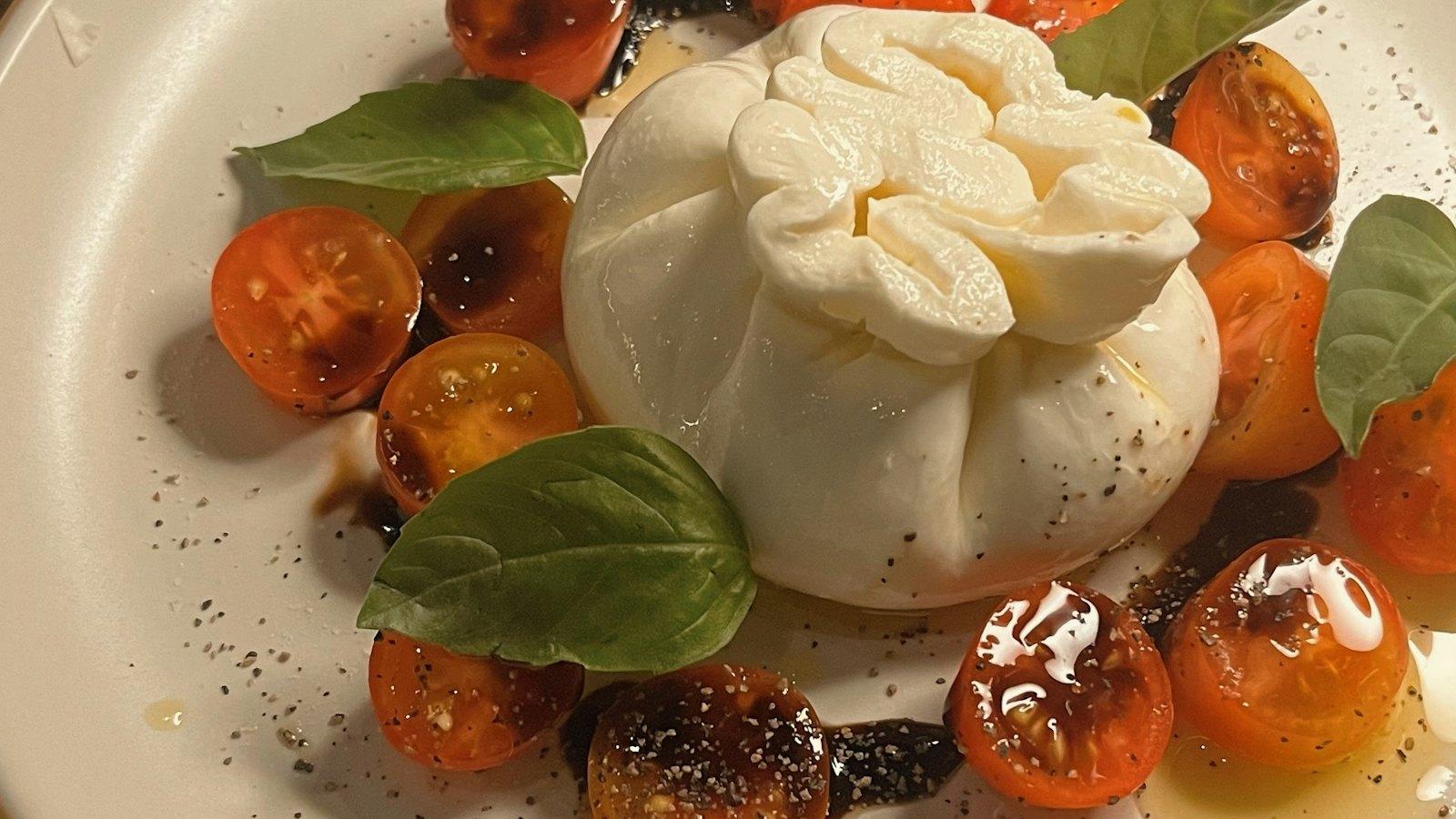
The schnitzel stays a schnitzel, veal and clarified butter, done properly — we wrote down what actually matters in a Wiener Schnitzel separately. The burrata stays a burrata, with good oil and tomatoes worth eating. Neither is improved. They share the room, the kitchen and the shopping, and nothing else.
The gain lands at the table. Four people with four different ideas of dinner each find something on one page, and nobody has to eat the compromise.
Where a menu tips over
Too long is the most common mistake and the most expensive. Forty dishes mean forty ingredients that have to be fresh, and in practice half of them are not. A short menu is not a restriction; it is the only honest way to cook fresh every day.
The second mistake is symmetry for its own sake. Not every Austrian dish needs a Mediterranean counterpart. Some evenings are schnitzel evenings and some are fish evenings, and a menu is allowed to say so instead of filling in a grid.
The third is a season that exists only on paper. Offer a tomato salad in February and you have decided to sell bad tomatoes. Better pumpkin while there is pumpkin, and tomatoes when they taste of something.
What a menu has to do besides being good
A menu is not only a list of dishes. It is also a plan for the evening — for the kitchen as much as for the table.
In practice that means not everything can be made to order. If every dish on the menu starts when the order comes in, the kitchen stalls at half past eight. So every menu that works is a mixture: things prepared in advance — braises, pickles, sauces — and things that have to be made fresh because they are worthless otherwise. A schnitzel is firmly in the second group and is fried when it is ordered.
And it has to be readable. A menu that describes every dish with four adjectives does not get read, it gets skimmed, and what gets ordered off a skim is usually the most familiar line on it. Short lines make guests actually choose.
What it means for the evening
In practice: you can have a classic Austrian dinner here, a light Mediterranean one, or both at the same table. Plenty of guests order across the menu and build something to share — how sharing and ordering works here has a piece of its own.
It also means the menu changes. Not weekly, but often enough that the pumpkin disappears when the pumpkin is over. What stays are the few dishes people ask after on the days they are not on.
The short version: a dish goes on the menu when it needs no explaining, when its ingredients are worth eating this week, and when it can stand next to its neighbour without drowning it out.
A menu reads best at the table anyway, with a glass beside it. Book a table and see whether the two halves go together.