The bar is not a second room here. It is the same idea in liquid form: something from Austria, something from further away, and nothing that needs explaining before it tastes good. The same idea on a plate is the subject of our guide to Austrian and Mediterranean cooking.
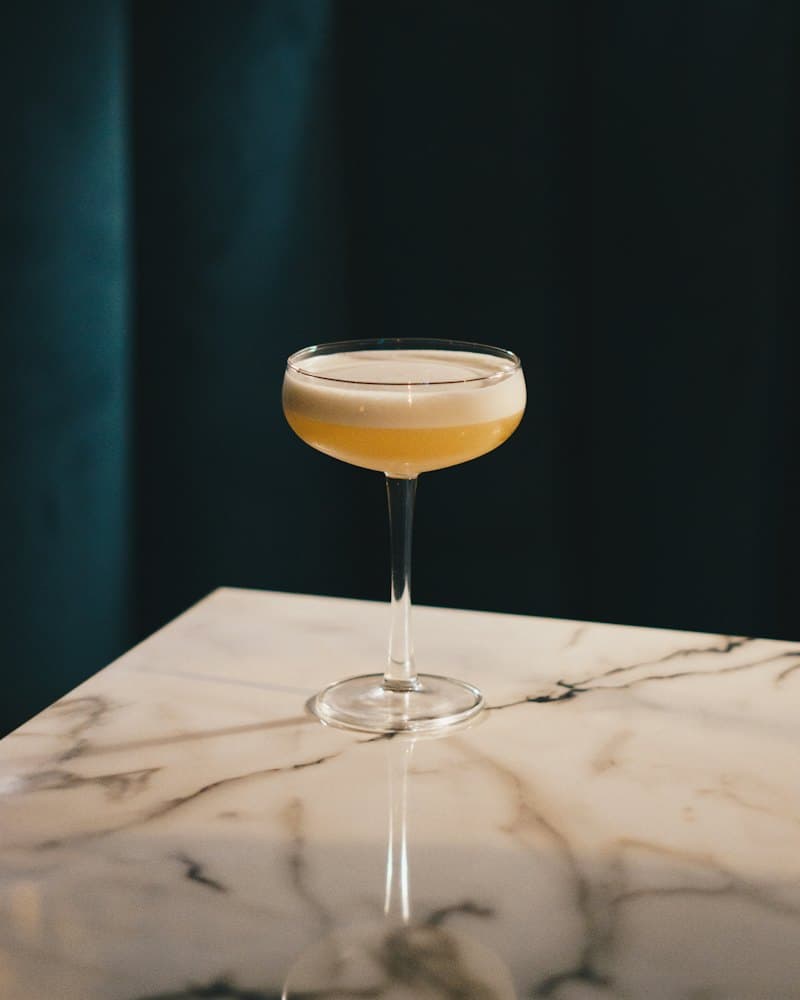
The signature: white rum, passion fruit, lime, panela
Four ingredients, and the fourth is the one that matters.
Panela is sugar cane juice boiled down and never refined. It brings more than sweetness: molasses, a little acidity, and a colour that gives the drink depth. Use sugar syrup instead and you get the same cocktail one storey flatter.
Passion fruit and lime do the rest: two acidities that taste different. Lime is sharp and short, passion fruit round and long. Together they keep the drink awake the whole way down — one acidity on its own turns either aggressive or dull by the third mouthful.
The rum is white and restrained, and that is deliberate. A rum with too much character of its own would argue with the panela instead of carrying it.
Why the list is short
There are not thirty cocktails behind our bar. That is the same decision as the one in the kitchen: we should be able to talk about what we pour, and every ingredient should come up often enough to stay fresh.
Freshly squeezed lime is where that gets decided. It lasts an evening, not a week. A short list means it is used up before it tastes tired; with thirty drinks there is always a bottle of pre-pressed juice standing somewhere.
Then there is speed. On a full evening the length of the list decides whether a drink takes four minutes or twelve, and a cocktail that takes twelve arrives at a table that has moved on to the main course.
The same panela sits behind our house lemonade, which is worth a paragraph of its own further down.
Beside it: Austrian organic wine
The wine list is deliberately short. We would rather pour eight wines we can talk about than forty we would have to guess at. By the glass and by the bottle, mostly Austrian, mostly organic, because in this country that stopped being a niche some time ago and is frequently just the better bottle.
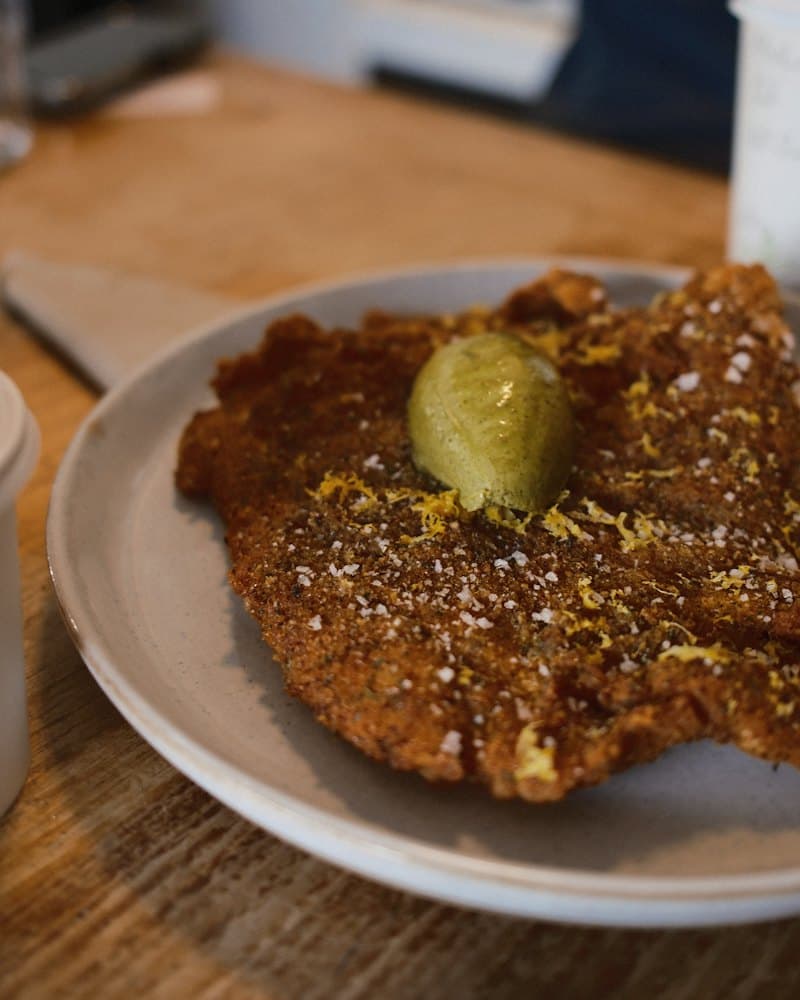
Austrian white wine has a practical advantage that appears on no wine list: it works with both halves of our kitchen. A Grüner Veltliner, with its note of pepper, sits as well next to a schnitzel as next to grilled vegetables and olive oil. That is not luck, it is acidity — the same quality a schnitzel asks for is what makes it useful against Mediterranean food.
Anyone who would rather drink red usually gets a Zweigelt: light enough for a warm evening, sturdy enough for a braise.
Without alcohol, and not as an afterthought
The part of the list where most bars get lazy is the alcohol-free one. The usual offer is three soft drinks from a bottle and a mineral water, and anyone not drinking is visibly handed the leftovers.
We do it the other way round: the same ingredients that go into the cocktail are available without the rum. The house lemonade with panela and lime is not a substitute, it is a drink in its own right that happens to contain no alcohol. Alongside it are alcohol-free aperitifs that bring bitterness rather than only sweetness — because what makes an aperitif is the bitter pull, not the alcohol.
It is practical for mixed tables, too. Anyone driving, or simply not drinking tonight, does not end up sitting with a glass of apple juice beside a round of cocktails.
And on tap
Estrella Damm. A lager from Barcelona that needs to be cold and asks nothing else of you. It works with the schnitzel and it works with the tacos, and that span is precisely the point of this place — the same span that decides what belongs on one menu and what does not.
A table that eats together usually drinks together too; how that works is in sharing, or not.
Book a table — though the bar takes you without one.