The practical objection to two kitchens on one menu is that it means twice the shopping. Two supplier lists, two stores, twice as much going off in the back.
In practice it does not work out that way, and the reason is mundane. Both kitchens want the same things — good vegetables, good meat, good fat, good bread. How they come together is the subject of our guide to Austrian and Mediterranean cooking; this piece is about the part nobody sees.
The overlap is bigger than the difference
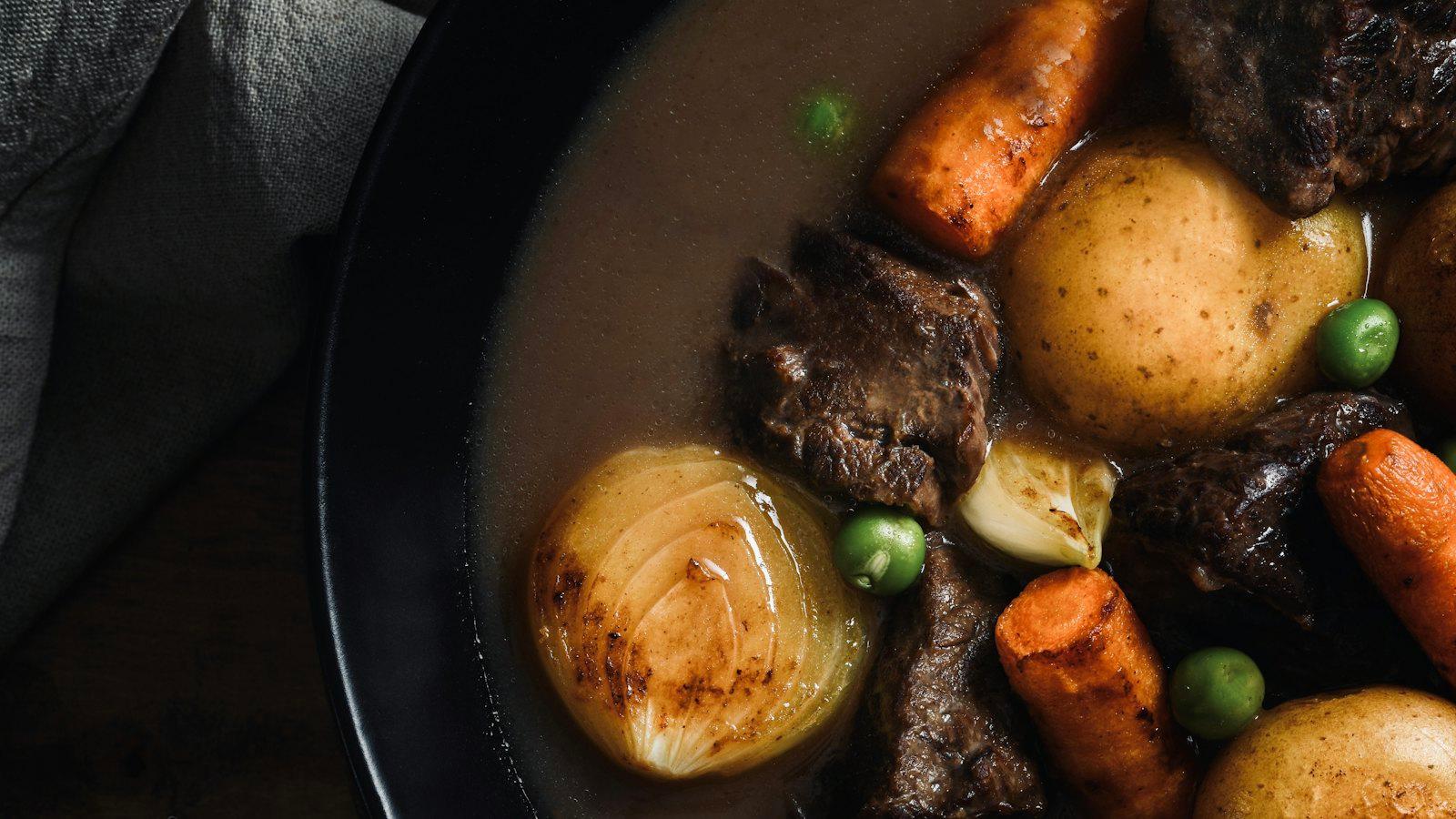
Onions, garlic, carrots, celery, parsley, potatoes, butter, eggs, lemons. That is the base of a goulash and the base of a risotto. It is also the base of nearly everything else that leaves our kitchen.
The real difference between the two halves comes down to a handful of things: veal and clarified butter on one side; olive oil, burrata and anchovies on the other. That is not two stores. It is two shelves.
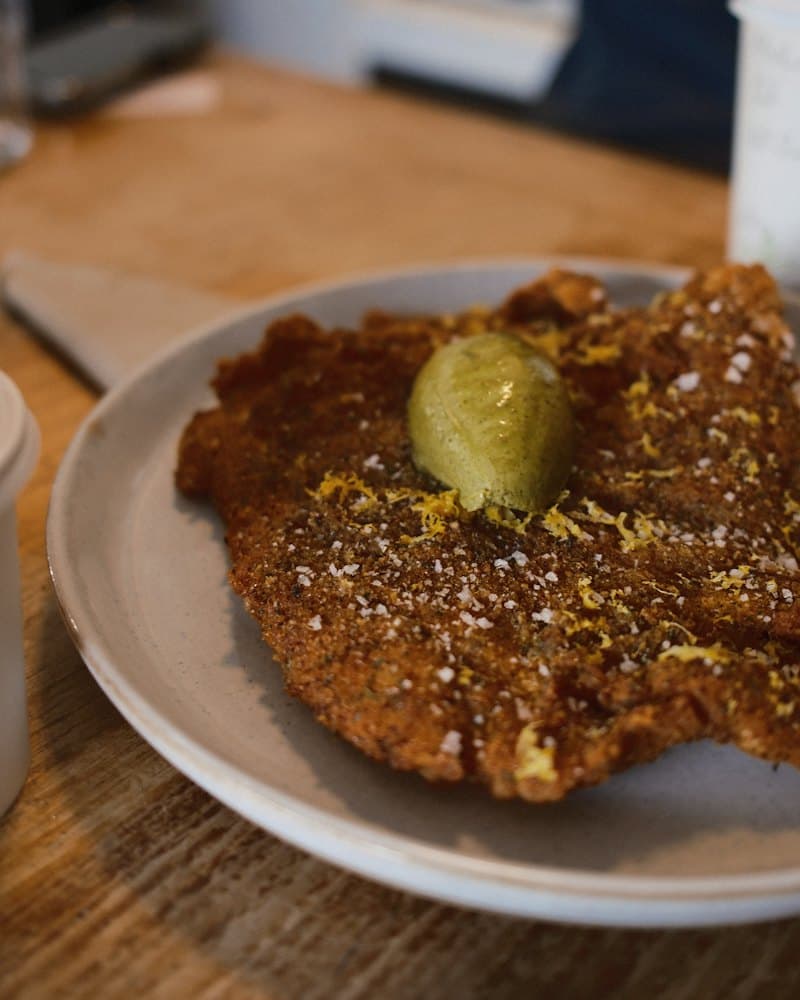
Several of them work in both directions anyway. Good tomatoes belong on a bruschetta and in a goulash. Lemon zest belongs on the fish and on the schnitzel.
Produce decides, not the recipe
It sounds like a slogan, but it has a flatly practical consequence: the order decides the menu, not the other way round. We look first at what there is and what is worth having, and write down what gets cooked afterwards.
That is why the pumpkin disappears when the pumpkin is over, instead of running until February. And it is why a dish sometimes appears on the board that was not on the menu last week.
It has an uncomfortable side too: it means saying no. If the tomatoes are no good there is no tomato salad this week, even when three guests ask for it. The alternative is selling bad tomatoes, and people notice immediately.
Less waste, not more
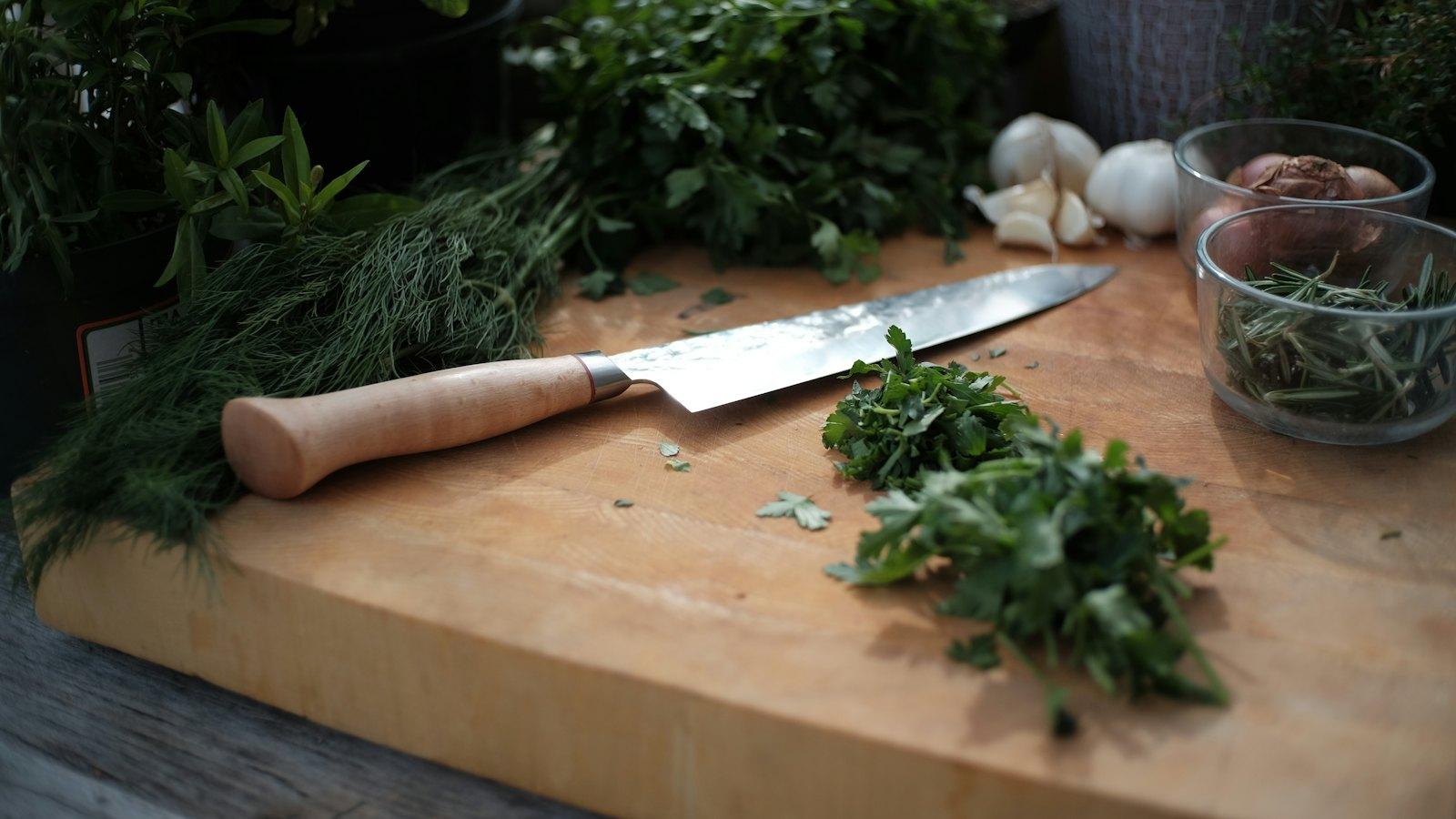
The objection actually reverses. A short menu with many shared ingredients throws away less than a long menu where every dish needs its own speciality. If the same parsley goes into four dishes, it gets used. If it goes into one, it goes off.
That is exactly why the length of a menu hangs directly on the shopping — the connection is in what belongs on one menu and what does not.
Then there is second use, which makes the difference in any kitchen. Carrot peel, onion ends and celery tops become stock, and the stock goes into the braise. Yesterday's bread becomes crumbs for the coating. Herb stalks too tough for a salad give more to a sauce than the leaves do. None of this is thrift as a pose — it is simply how a kitchen works when it buys fresh every day.
Seasonal means planning, not luck
The market decides what is possible, but it does not decide it at short notice. Asparagus does not arrive as a surprise, and neither does pumpkin. Cook with the season and you know roughly in July what will be on the board in October, and you can prepare for it.
The difference between a kitchen that cooks seasonally and one that says so is in the weeks between: the stretch where one thing is over and the next has not started. That is when pickles, braises and a decent larder are the difference between an honest menu and a quiet return to imported produce.
Where we do not economise
Three things: the meat for the schnitzel, the olive oil, and the fat we fry in. All three are ingredients you taste even when you are not paying attention, and in all three cheap is immediately obvious.
Veal is expensive, and a schnitzel made from anything else is a different dish — what actually matters in a Wiener Schnitzel explains why. Olive oil used only as a fat can be left out; good oil is an ingredient. And frying fat that has been in use too long ruins any coating, however good everything before it was.
The order of things, then: market first, then the menu, then the recipe. It works the other way round too — but you can taste it in February.
How much of this reaches the plate is hard to describe. Book a table and taste it instead.