"I like Austrian food, but not in the evening." We hear that often, and it is a misunderstanding — though one that somebody earned. Just not the cooking itself.
Why both halves of our menu stand next to each other is the subject of our guide to Austrian and Mediterranean cooking. This piece is about the reputation attached to the Austrian half, and what is actually behind it.
Where the reputation comes from
It comes from tavern cooking of a particular era: a lot of fat, held warm for a long time, big portions, everything under sauce. That was not an intention, it was arithmetic. Fat is cheap, sauce stretches, and a plate that still looks good at eleven at night has to survive a lot.
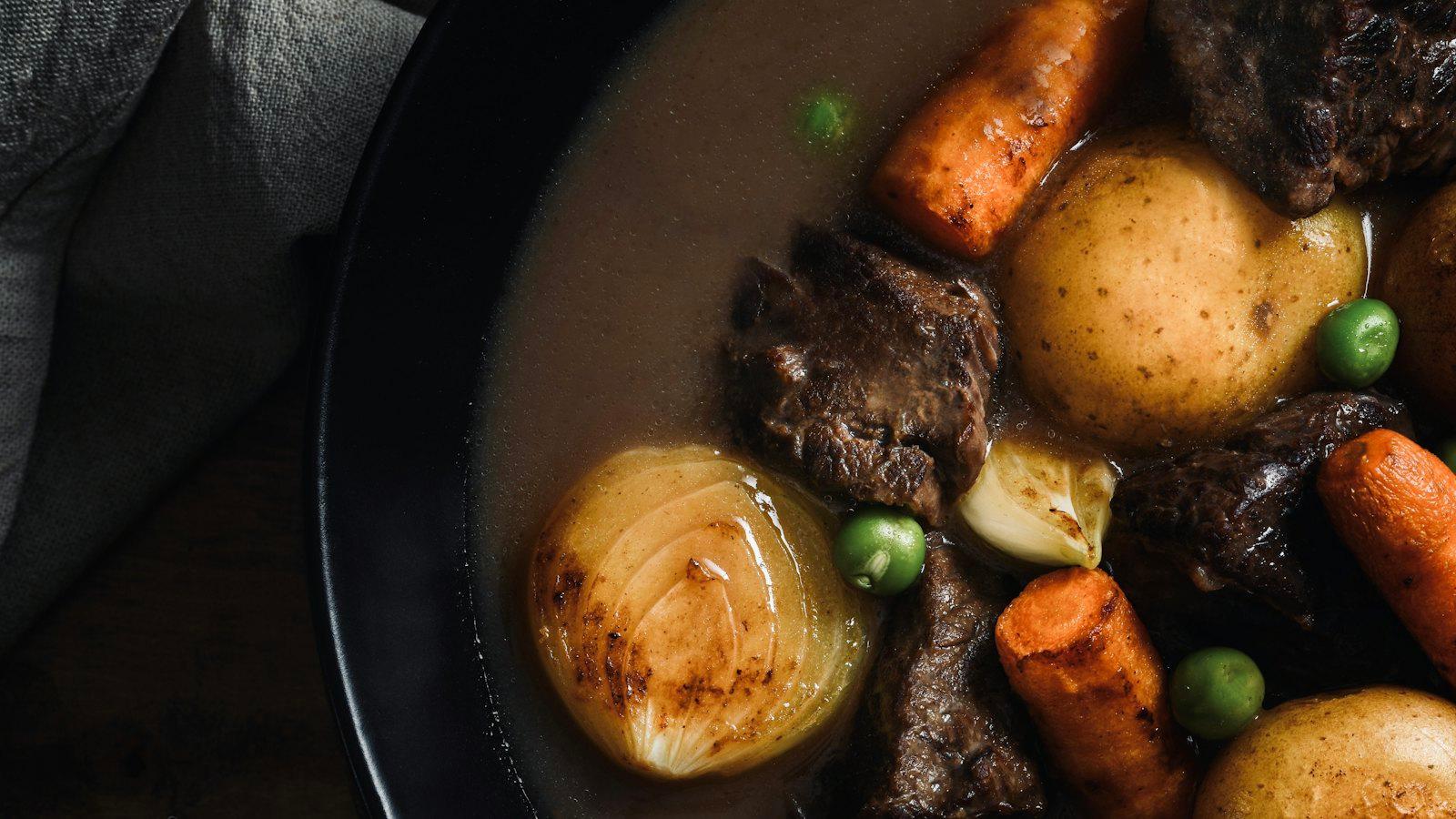
But that describes a way of running a kitchen, not a recipe. A goulash needs onions, paprika, time and a good piece of beef — nothing else. A fried chicken is chicken, coating and hot fat, and if the fat is hot enough the coating barely takes any of it up. None of that is made heavy by the cooking. It is made heavy by carelessness.
What actually makes a plate heavy
Three things, and none of them is in the recipe.
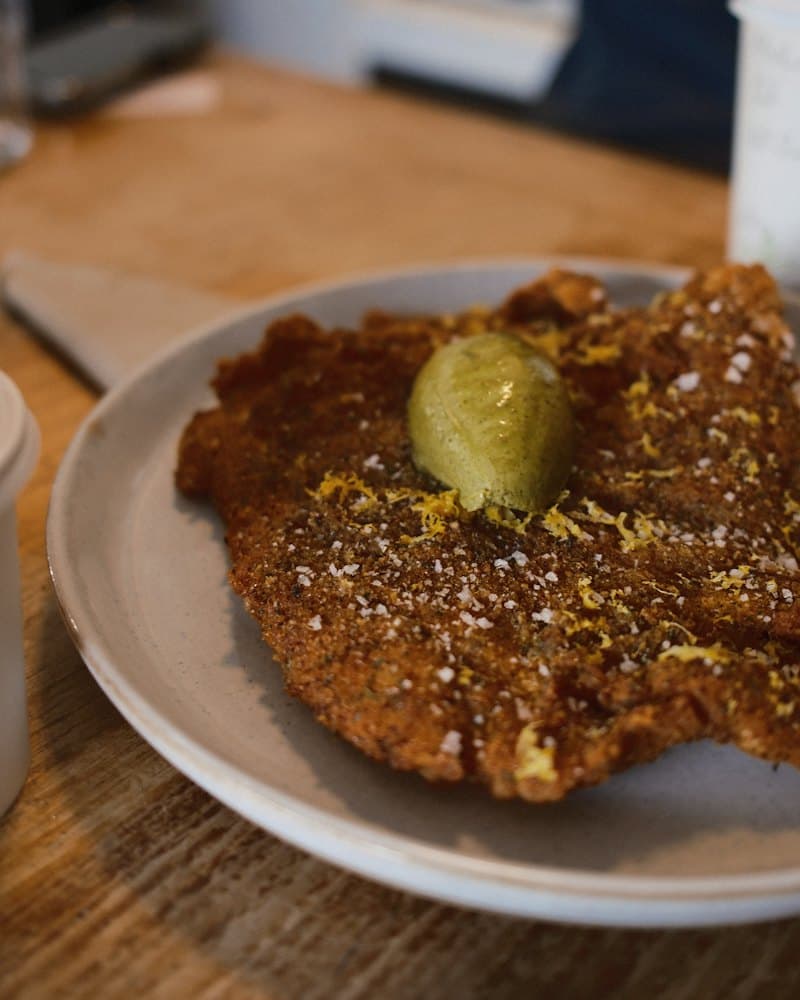
Fat that is not hot enough is the first. A coating that goes into cool fat soaks it up instead of forming a crust immediately. That is the difference between a schnitzel that sits dry on the plate and one that leaves a greasy mark — what actually matters in a Wiener Schnitzel goes into exactly that.
The second is holding food warm. Every minute under a heat lamp costs texture. What was light when fresh turns soft, and soft reads on the palate as heavy.
The third is quantity. A plate carrying a full portion each of meat, dumplings, sauce and a side is not heavy because it is Austrian. It is heavy because it is too much. The same cooking in a sensible portion eats completely differently.
Filling is not a fault
A goulash is supposed to fill you up. That is the point of it, not a flaw to be cooked away. A good braise in November is exactly right, and nobody wants it "reinterpreted, lighter".
The difference is how you feel afterwards. Filling means full and content. Heavy means full and tired. The first is craft; the second is a mistake in how the food was handled.
What acidity has to do with it
There is a reason a schnitzel comes with a lemon and a goulash with a pickled gherkin. Acidity clears up after fat. It cuts through, resets the palate, and keeps the last mouthful as interesting as the first.
That is also what the Mediterranean half of our menu contributes, and not as a diet promise: lemon, vinegar, pickled vegetables, tomatoes, good olive oil. Those are not lighter ingredients. They are ingredients that take the weight out of heavy food.
Eat a schnitzel with no acidity and it feels rich halfway through. Eat it with a properly sharp salad and you finish it. It is the same schnitzel.
Portion size is a decision
Which leaves the third point, and it is the uncomfortable one, because it has nothing to do with craft. Big portions look generous, and a smaller portion is quickly read as meanness.
We would still rather leave room for pudding after the main course. A plate that stops anyone ordering anything else is not a better offer. It is only a bigger one.
What we do with it
We cook the classics the way they are meant to be cooked and leave out the shortcuts. Hot fat, short distances, no heat lamp, and portions that still leave room for pudding.
The menu helps too. Anyone who wants something light finds it two lines further down — that is the whole idea, described in what belongs on one menu and what does not. Anyone who wants a goulash gets a proper one.
The test is simple: a well-made schnitzel leaves no grease on the paper underneath it. It is the simplest check there is, and it works anywhere.
In the end it is a question of the evening, not of the cuisine. Book a table and decide once you are there.