An aperitif is not a drink that happens to be drunk before dinner. It has a job, and almost everything about its composition follows from that job.
Why intent behind a drink counts at a bar is in our guide to the bar.
Bitterness builds an appetite
The name comes from aperire, to open. What is being opened is the appetite, and the mechanism is not kitchen folklore: bitter compounds stimulate saliva and gastric juice. The body prepares for food it has not been given yet.
Which is why practically every classic aperitif is bitter — Campari, vermouth, chinotto, gentian, wormwood in any form. The bitterness is not the price of the drink, it is the drink.
Sweetness does the opposite: it satisfies. A sweet, creamy cocktail before dinner is a pudding in the wrong place, and anyone drinking one eats less afterwards. The same goes for anything with cream, egg or a lot of sugar.
Light, cold, with bubbles
The second rule: an aperitif is not strong. Five to ten per cent is usual, and there is a practical reason — it is drunk before eating, on a largely empty stomach, and it is meant to open the evening rather than end it.
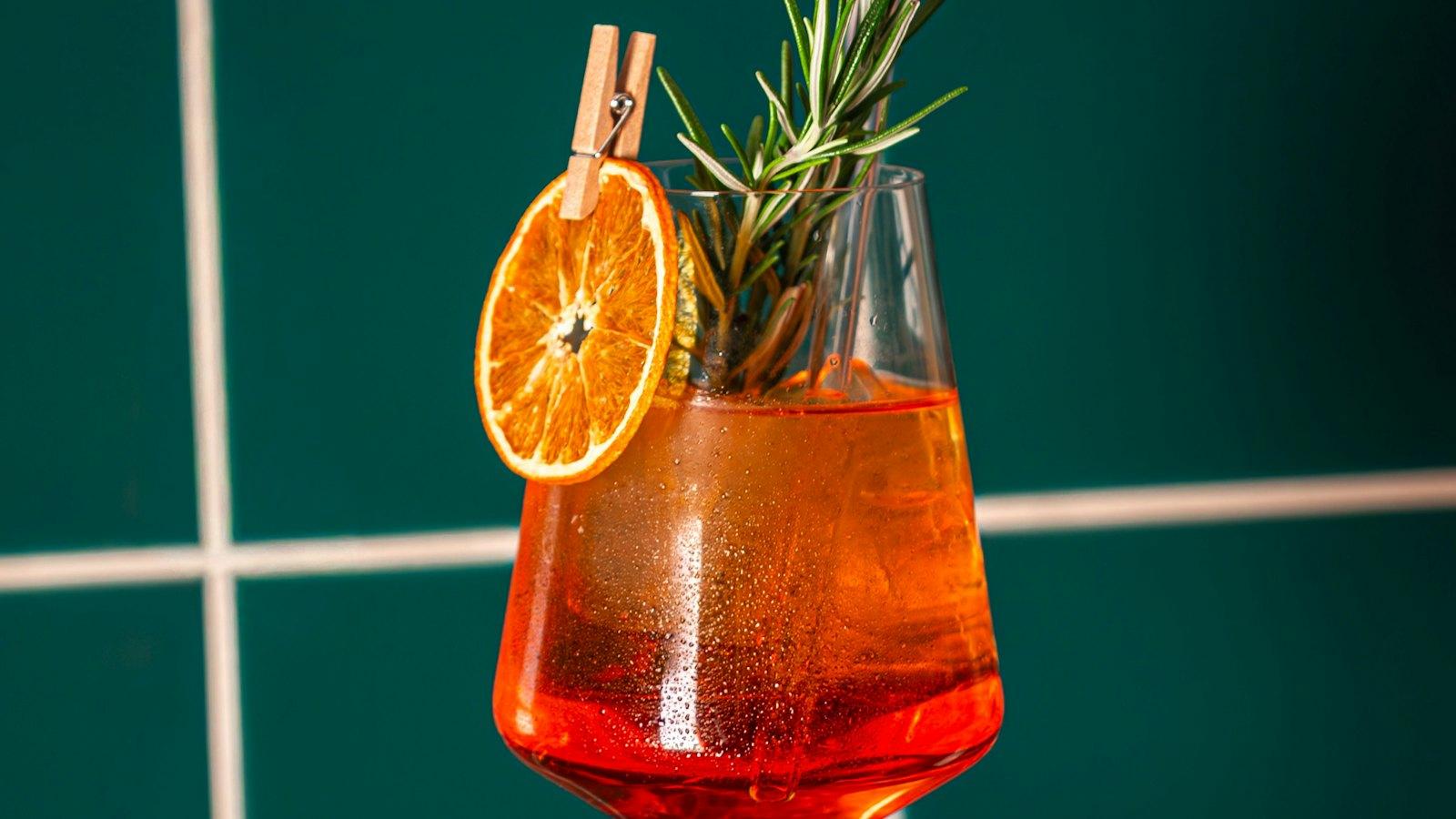
Hence the spritz being the most widespread form: a bitter liqueur, plenty of soda or prosecco, plenty of ice. The carbonation carries the aromas and the cold keeps the drink refreshing rather than heavy.
How much the dilution matters there is the same point as everywhere behind a bar — ice is an ingredient goes into it.
The three families
To get your bearings, the usual aperitifs divide into three groups.
Bitter liqueurs such as Campari or Aperol: red to orange, distinctly bitter, usually lengthened with soda or prosecco. The most approachable form.
Vermouth, aromatised wine with herbs: drier and less sweet, drunk in Italy and France neat over ice with a twist. A dry vermouth on ice is the most underrated aperitif there is, and it costs a fraction of a cocktail.
Dry sparkling wine, with nothing added: the simplest aperitif there is and one of the best. Bubbles, acidity, very little sugar.
What all three share is a combination of acidity and bitterness. Sweetness comes first in none of them.
Something salty belongs with it
The aperitif is the only drink that traditionally always arrives with something to eat: olives, nuts, crisps, bread with oil. That is not politeness but part of the mechanism — salt amplifies the effect of the bitter compounds and makes you thirsty besides.
Here that means olives and bread. What olives otherwise do in a kitchen is in anchovies, capers, olives.
What follows for a list
An aperitif has to be quick. It gets ordered before anything else has been decided, often by a whole table at once, and it should arrive before the menu has been read.
Which is why the classic forms are all simple: pour, top up, ice, twist. An aperitif that takes three minutes of work reaches a table that has already ordered. It is the same reason a short bar list works better on a busy evening than a long one.
The timing is part of it
An aperitif is not drunk at the table while the starter arrives but before — at the bar, standing, or at the table while nobody has ordered yet. It is the pause between the day and the meal.
In practice, for us: anyone arriving twenty minutes before their booking is better off spending them at the bar than outside. And a table ordering together and sharing would rather start with something in hand anyway — how that fits together is in sharing, or not.
The digestif is the opposite
At the other end of the evening sits a drink with the reverse job: a digestif is not meant to open but to close. It is stronger, warmer and often sweeter, and it is drunk in small quantities.
What links the two is again the bitter compounds — a herbal schnapps is the same principle at heart, only concentrated and without ice.
Without alcohol too
The aperitif is the case where an alcohol-free version works most convincingly, because the decisive part is the bitterness rather than the alcohol. Bitter compounds from gentian, cinchona or grapefruit do the same work.
What else matters there is in alcohol-free is not a consolation.
Book a table and come twenty minutes early.