Mediterranean cooking has three ingredients that are not a side dish but seasoning. They rarely take the foreground, and if you can taste them clearly, too much went in.
Why this half of our menu seasons less and selects more is in our guide to the Mediterranean side.
Anchovies are liquid salt
The most misunderstood ingredient there is. People who say they dislike anchovies are usually thinking of the firm, aggressively salty fillets on a pizza. In a sauce something else happens: they dissolve completely.
What remains is not a taste of fish but depth. Anchovies are fermented over months, and that process produces free glutamates — the same compound that makes parmesan or a long-simmered stock taste savoury. Nobody detects two fillets in a tomato sauce; they only notice the sauce is better.
In practice: let them melt in warm oil over low heat before the other ingredients go in. And cut the salt in the dish accordingly.
Capers are flower buds
Not a vegetable and not a berry, but the unopened bud of the caper bush, which is inedible raw. Only salt or vinegar makes it usable.
The difference between the two forms is substantial. Salted capers are more aromatic and more floral, but need ten minutes of soaking first. Capers in vinegar are more convenient and bring more acidity than aroma; they get rinsed.
Their job is acidity where lemon would be too thin — with fried fish, with butter, with braises. Capers and fish is one of the oldest combinations in Mediterranean cooking, and it works for the same reason lemon works with a schnitzel: fish in a country with no coast goes into that.
Olives are not all one thing
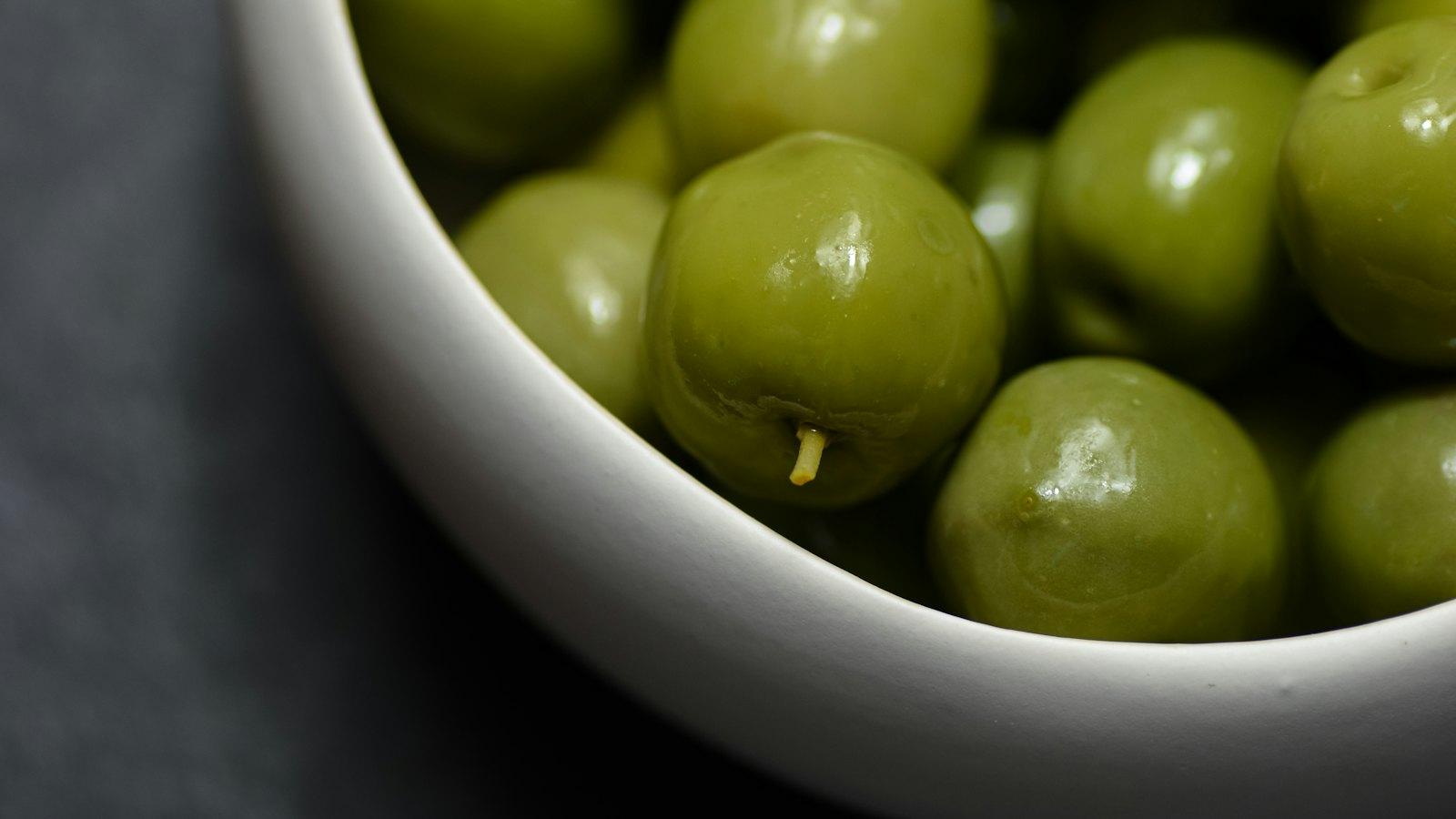
Green and black is not a difference of variety but of ripeness: green olives were picked unripe, black ones ripe. Green are firmer and more bitter, black softer and oilier.
All olives have to be de-bittered, because raw ones are inedible — in brine, in lye, or by drying. If you want the difference between a good olive and a cheap one: cheap ones are blackened artificially with ferrous gluconate and taste of the brine they sit in.
In the kitchen they are a source of salt with fruit behind it. Stoned, roughly chopped, into a braise or onto a plate. Whole and with the stone in, they are served with an aperitif, where being salty is the entire job.
They do not substitute for each other
Although all three salt, they do it differently, which makes them not interchangeable. Anchovies bring depth and vanish while doing it. Capers bring acidity and stay noticeable as small points. Olives bring fruit and fat and are always recognisable.
Put differently: anchovies work in the background, olives in the foreground, capers somewhere between. Swap capers for olives in a recipe and you get a different dish — not a worse one, but not the same one.
Used together they complement each other, which is why they sit side by side in so many Mediterranean sauces. Each covers a direction the others do not.
The rule they share
All three bring a lot of salt, and this is the point most recipes quietly assume you know. Use anchovies, capers or olives and you salt the dish last — and usually considerably less than you otherwise would.
It is the same arithmetic as every side dish in our kitchen: the plate needs fat, starch and acidity in balance, whichever direction they arrive from. Dumplings, potato salad and the rest of the plate sets out the same thought for the Austrian half.
How long they keep
That is their great practical advantage: all three are preserved and stand for months. In a kitchen whose menu shifts with the season, they are the constant that is the same in February as in July — related to what pickling, bottling, keeping describes.
Once opened they want their brine or oil kept over them and a cold shelf. Anchovies in particular go rancid quickly once the oil no longer covers them, and that is a smell you notice immediately.
Book a table — what you cannot taste is often what is holding the dish up.