A bistro in Vienna cooking Mediterranean food faces an awkward sum where fish is concerned. The nearest sea is four hundred kilometres away, and anything arriving from it has been travelling for at least a day.
Why this half of our menu works anyway is the subject of our guide to the Mediterranean side. This piece is about the decision behind it.
Freshwater is the honest answer
Austria has no coast but it has lakes, rivers and a working fish farming tradition. Zander, char, trout and whitefish travel distances measured in hours rather than days.
Zander — pike-perch — is the best of them for a pan. Firm, white, lean flesh in large flakes that holds together while frying, and a very mild flavour that carries butter and lemon as readily as olive oil and herbs.
Char is finer and a little fatter, with pale pink flesh. It forgives less, because it dries faster, and it is the fish to cook whole rather than fillet.
Trout is the least complicated and the cheapest. Fried whole, or smoked.
Mediterranean cooking takes this without complaint. What it does to sea bass — olive oil, lemon, herbs, short heat — works identically on zander, and the zander was in water yesterday.
How to tell fresh fish
With a whole fish it is easy. The eye is clear and domed rather than cloudy and sunken. The gills are strong red, not brownish. The flesh springs back under a finger instead of holding a dent. And it smells of water and cucumber rather than of fish — the characteristic "fishy" smell is already a sign of age.
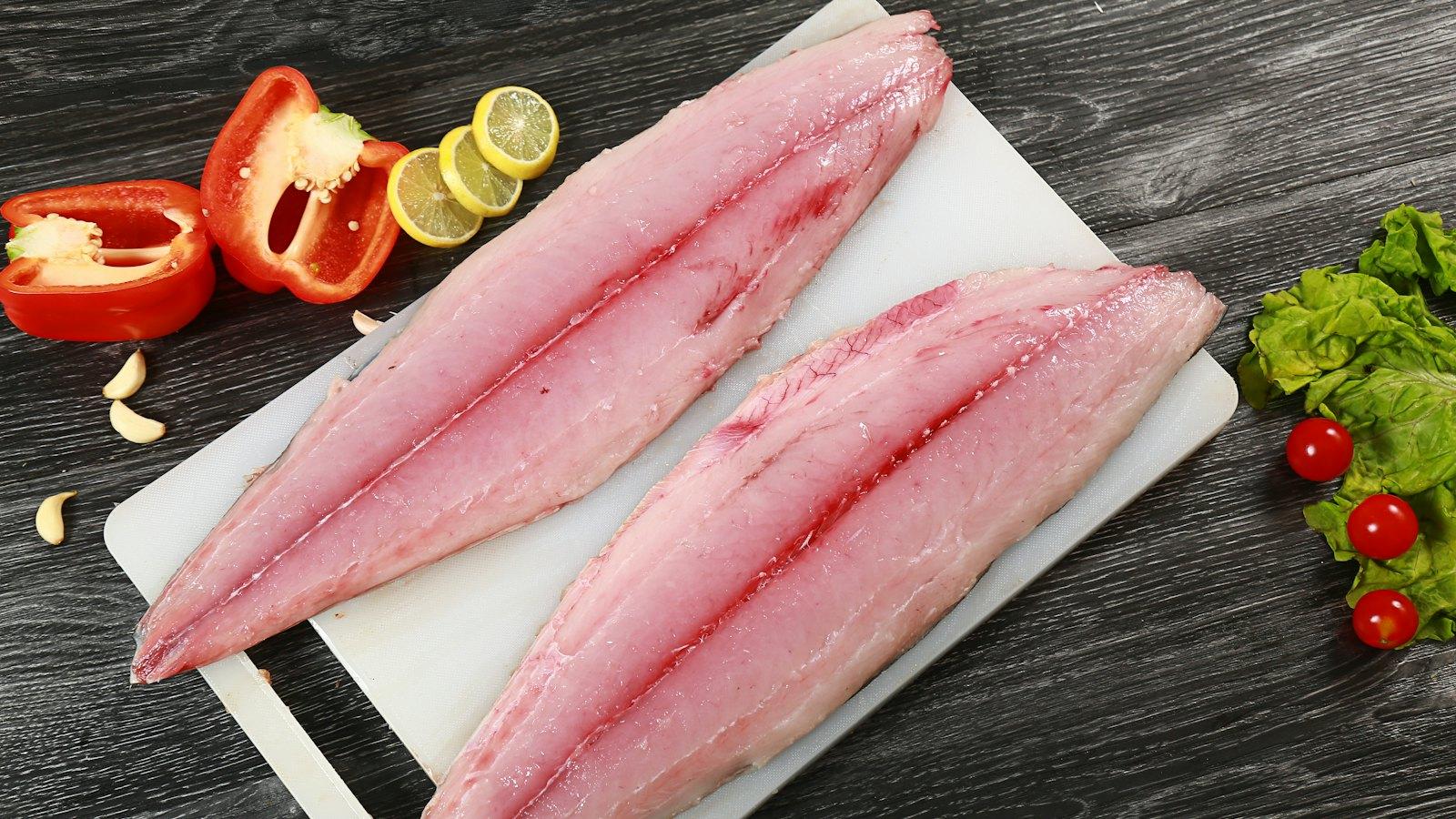
With a fillet most of that disappears and two things remain: the surface is glossy and slightly translucent rather than dull and white, and the flakes sit tightly together instead of separating.
The skin is the point
Frying fish skin-side down is the technique a good deal depends on, and it has three rules.
The skin has to be dry. Wet skin steams instead of browning, so it gets patted with paper first. The pan has to be hot before the fish goes in. And then the fish is laid on its skin, pressed down lightly and left alone — not moved, not turned, until the skin is crisp and releases by itself.
It is the principle behind every crust: moisture is the enemy, heat is the friend. Why the same holds for anything crumbed is in Backhendl, the other crumbed dish.
Whole or filleted
A whole fish is almost always the better buy, for three reasons. You can see how fresh it is, which is barely possible with a fillet. It stays moister, because skin and bones protect the flesh while it cooks. And the head and frame make a stock that underpins a fish soup or a risotto.
The drawback is the work at the table, which is why most menus carry fillets. At home the whole fish nearly always pays; in service the sum comes out differently.
Frozen, incidentally, is no disgrace. Fish frozen on the boat or beside the pond beats one that spent three days on ice — just thaw it slowly, in the fridge, never in water.
Too little rather than too much
Fish overcooks faster than any meat, because its connective tissue breaks down at considerably lower temperatures. On a fillet, two minutes too long is the difference between moist and dry.
The rule of thumb: take it off the heat while the centre is still just slightly translucent. Residual heat finishes it on the way to the table.
What goes with it
Acidity, always. Lemon is the simplest answer, a salad with vinegar the second. Then good olive oil, which goes on raw over the finished fish — the reasoning is in how to recognise good olive oil.
What does not go with it is a heavy sauce. A fish that needs a sauce to be interesting was the wrong fish, or was cooked two minutes too long. Butter, lemon and a few capers are a sauce in the sense that matters here, and they take about a minute in the pan the fish just left.
Book a table — the zander comes from Austria, not the Mediterranean.