Bruschetta is the dish that reveals a kitchen fastest, because there is almost nothing for anything to hide behind. And the commonest mistake is not the topping but what sits underneath it.
Why this half of our menu depends so heavily on produce is in our guide to the Mediterranean side.
The name comes from the toasting
Bruscare is Roman dialect for "to scorch". The dish is named after the process rather than the topping — and originally there was no topping at all: bruschetta was toasted bread with garlic, oil and salt, invented as a way of tasting freshly pressed olive oil.
Which makes the priorities obvious. The bread and the oil are the dish; the tomato is a later addition.
Which bread belongs underneath
A loaf with a firm, open crumb and a substantial crust. Sourdough, ciabatta, a rustic wheat loaf — something with structure, which toasts hard outside and stays chewy inside rather than crumbling.
What does not work: soft sliced bread, baguette with too fine a crumb, anything sweetened. Those soak up oil and tomato juice and are sodden within two minutes.
And it should be a day old. Fresh bread holds too much moisture and turns rubbery inside when toasted; one day of drying is right. It is the same logic as breadcrumbs for a coating or bread dumplings — stale bread is an ingredient in both kitchens rather than a leftover, as dumplings, potato salad and the rest of the plate shows.
The garlic is rubbed, not chopped
The slice is toasted — grill, pan or oven, but dry, with no oil — until it is dark and crisp outside. Then, while it is still hot, a halved clove of garlic is rubbed across the rough surface.
The crust works like a grater: very little garlic comes off, evenly spread, without the aggression of raw pieces. Chopped garlic on bread is a different and considerably more insistent thing.
Only then comes the oil, generously. It soaks into the warm crust, and that is the moment the quality of the oil genuinely shows — what to look for is in how to recognise good olive oil.
The tomato last, and drained
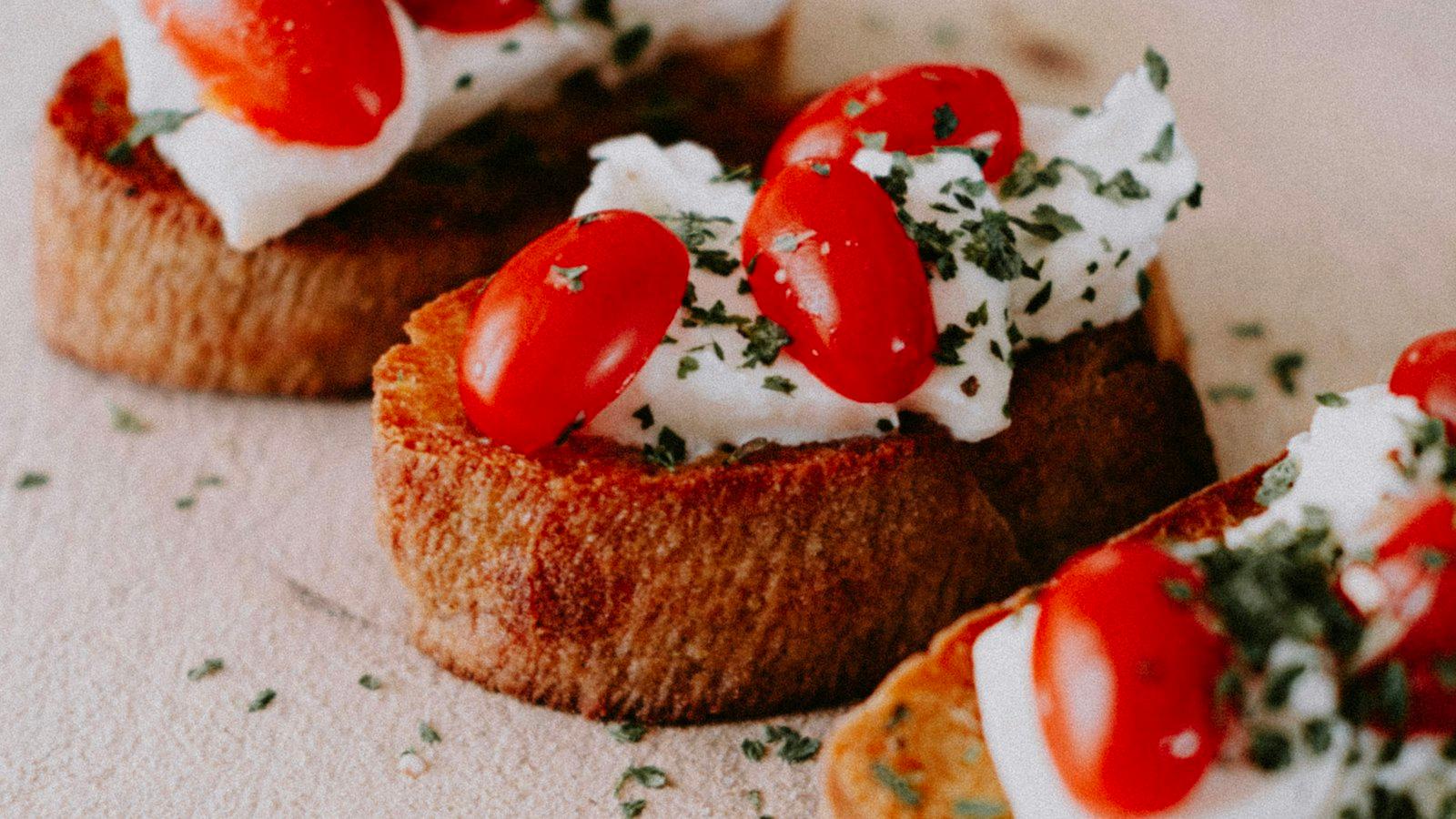
If tomatoes go on, they are diced, salted and left to drain for a few minutes. The salt draws out water, and that water is why a bruschetta turns soggy after five minutes.
The drained juice is not thrown away but stirred into oil and spooned over at the end. And the tomatoes have to be ripe or the whole thing is pointless — tomatoes that taste of something goes into that.
The slice has a thickness
About a centimetre and a half, and that is not pedantry. Cut too thin, the slice toasts hard all the way through and shatters when bitten, dropping the topping. Too thick and the middle stays soft and tastes of raw bread.
At a centimetre and a half you get the contrast that is the whole point: crisp outside, still chewy enough inside to take up oil without disintegrating.
Cut it on the diagonal if the loaf is small, to gain surface area — and straight across if it is a large loaf anyway.
It is assembled at the last moment
That is this dish's one real constraint: it cannot be prepared ahead. Toasted bread holds for twenty minutes, topped bread for five. A kitchen can slice the bread, dice the tomatoes and have everything standing by. Which is why it arrives early here rather than as the last plate of a round: it is a dish for the beginning of an evening, while everyone is still at the table. It goes together only once it has been ordered.
Outside tomato season the same principle works with other toppings: bean purée, roasted peppers, fresh cheese, roast pumpkin in autumn. What goes on top is interchangeable. What goes underneath is not.
Order a bruschetta and find pale tomatoes on it and you have found a kitchen that treats the dish as decoration rather than as a test. It is a cheap plate to make and an expensive one to get wrong, because there is nothing on it to argue with.
Book a table and check the bread.