A risotto is creamy with no cream in it. That creaminess comes out of the rice itself, and getting it out is the entire technique.
It is the one dish on the Mediterranean half of our menu that genuinely demands handwork — the rest of that half leans on produce instead, as our guide to it describes.
The variety is not negotiable
You need a short-grain rice high in amylopectin: Arborio, Carnaroli or Vialone Nano. Their starch comes off the surface as you stir and forms the creaminess, while the core stays firm.
Carnaroli is the most reliable, because it releases more starch and holds its bite for longer — it forgives two minutes of inattention. Arborio is more widely sold and softens faster.
Long-grain rice does not work. It lacks the surface starch, and you end up with boiled rice in stock.
The stock has to be hot
This is the underrated point. Adding cold liquid to a hot pan drops the temperature abruptly, interrupts the cooking and makes the grains burst on the outside before the core is done.
So the stock sits alongside at a simmer and goes in a ladle at a time — always once the previous one has largely been absorbed. Not as a ritual, but because that is what creates the friction that releases the starch.
The quality of the stock decides a good deal. Water gives you a watery risotto. A stock made from asparagus peelings, vegetable trimmings or chicken bones gives you one that tastes of something — the thinking behind that is in what makes asparagus season so short.
Stir, but not constantly
Continuous stirring is half myth. What matters is regular stirring that rubs the grains against each other and wears the starch off. Stand there stirring without pause and you break the grains up; walk away for ten minutes and you get a burnt layer on the base.
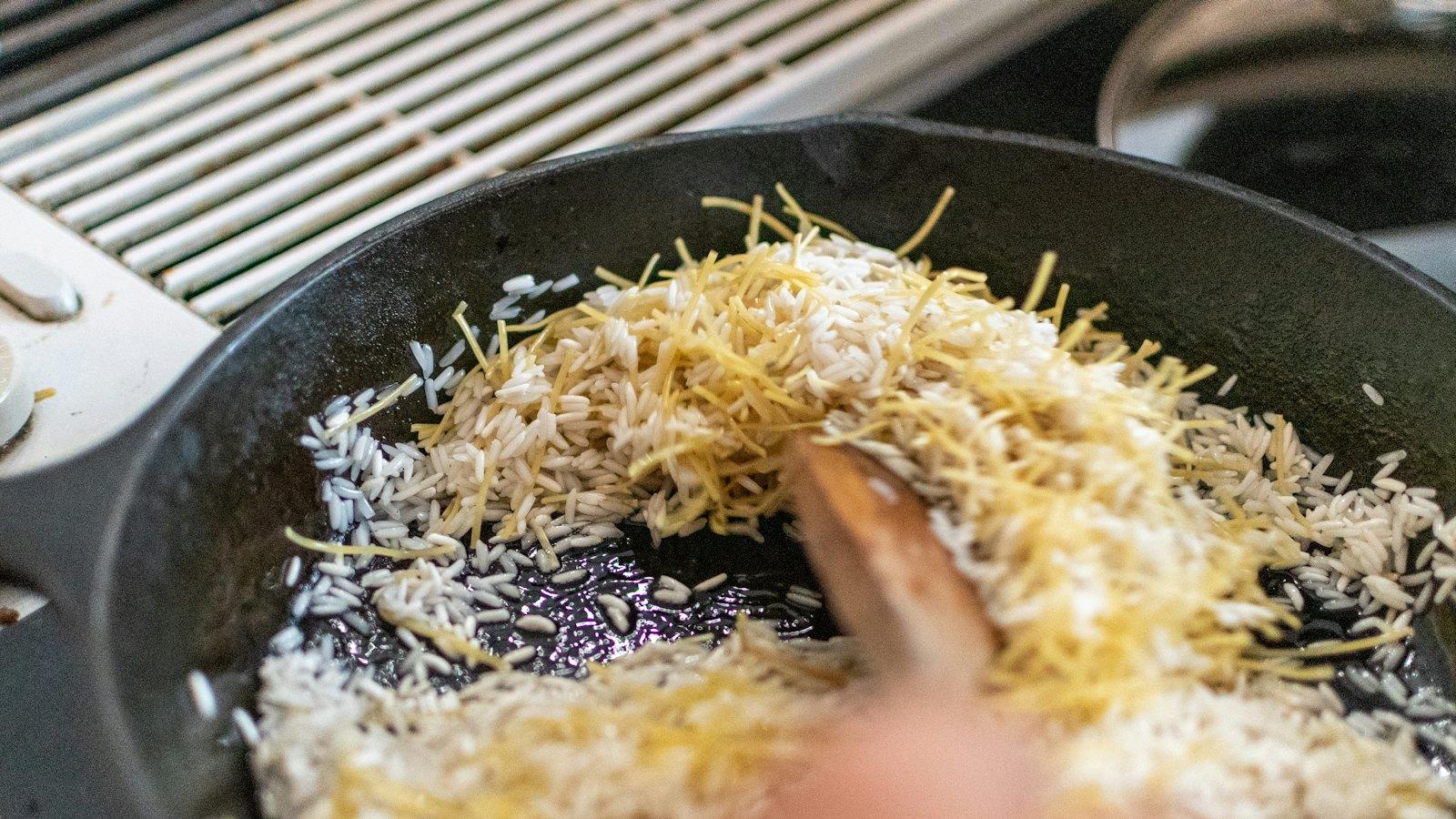
What comes before is short: sweat onion in oil or butter until translucent, add the rice and toast it for a minute or two until the grains are translucent with a white centre. Then white wine, which has to cook away completely, and only then the stock.
The mantecatura decides it
The final step is the one most people skip, and it is the most important. The pan comes off the heat, and only now do cold butter and grated parmesan get beaten in — vigorously.
Cold butter is deliberate: it emulsifies with the starchy liquid into something glossy and creamy. Warm butter does not; it separates. Then the risotto rests, covered, for two minutes.
The right consistency is called all'onda — like a wave. On the plate it should spread slowly rather than sit in a heap. If it sits, it was too dry, and a ladle of stock fixes it.
What goes in
Pumpkin is the most reliable version, because it brings sweetness, colour and body without disturbing the texture — pumpkin is more than soup covers the varieties. Asparagus, mushrooms and peas follow the same logic.
What does not go in is several things at once. A risotto has one main ingredient, not four.
The cheese is not interchangeable
Parmesan or Grana Padano, grated fresh, and both for good reason: both are long-matured, low in salt relative to their savour, and melt without going stringy. Pre-grated cheese from a bag usually carries anti-caking agents that do the opposite — it clumps instead of joining the emulsion.
The quantity is smaller than people assume. The cheese is there to support the texture and to season, not to dominate. And because it salts heavily already, a risotto is only finally tasted for salt after the mantecatura.
The rind is not thrown away: it goes into the stock and gives up what it has.
Why it is cooked to order
A risotto cannot be held warm. It carries on cooking, softens and loses the wave. The stock, the onion and the main ingredient can be prepared; the rest starts when the order does and takes eighteen minutes. It is the same reason a schnitzel is not fried in advance.
Book a table and allow twenty minutes.