Pumpkin has an image problem in Austria: it is assumed to be soup. In fact it is the most versatile vegetable of the autumn, and one of the very few that stores for weeks without losing anything.
Why it carries the longest season of the year is in our guide to cooking with the season. This piece is about the varieties and what to do with them.
Three worth knowing
Hokkaido is the least complicated. It does not need peeling — the skin softens as it cooks and is edible — the flesh is firm and nutty, and it does not immediately collapse. Use it wherever shape matters: oven, pan, salad.
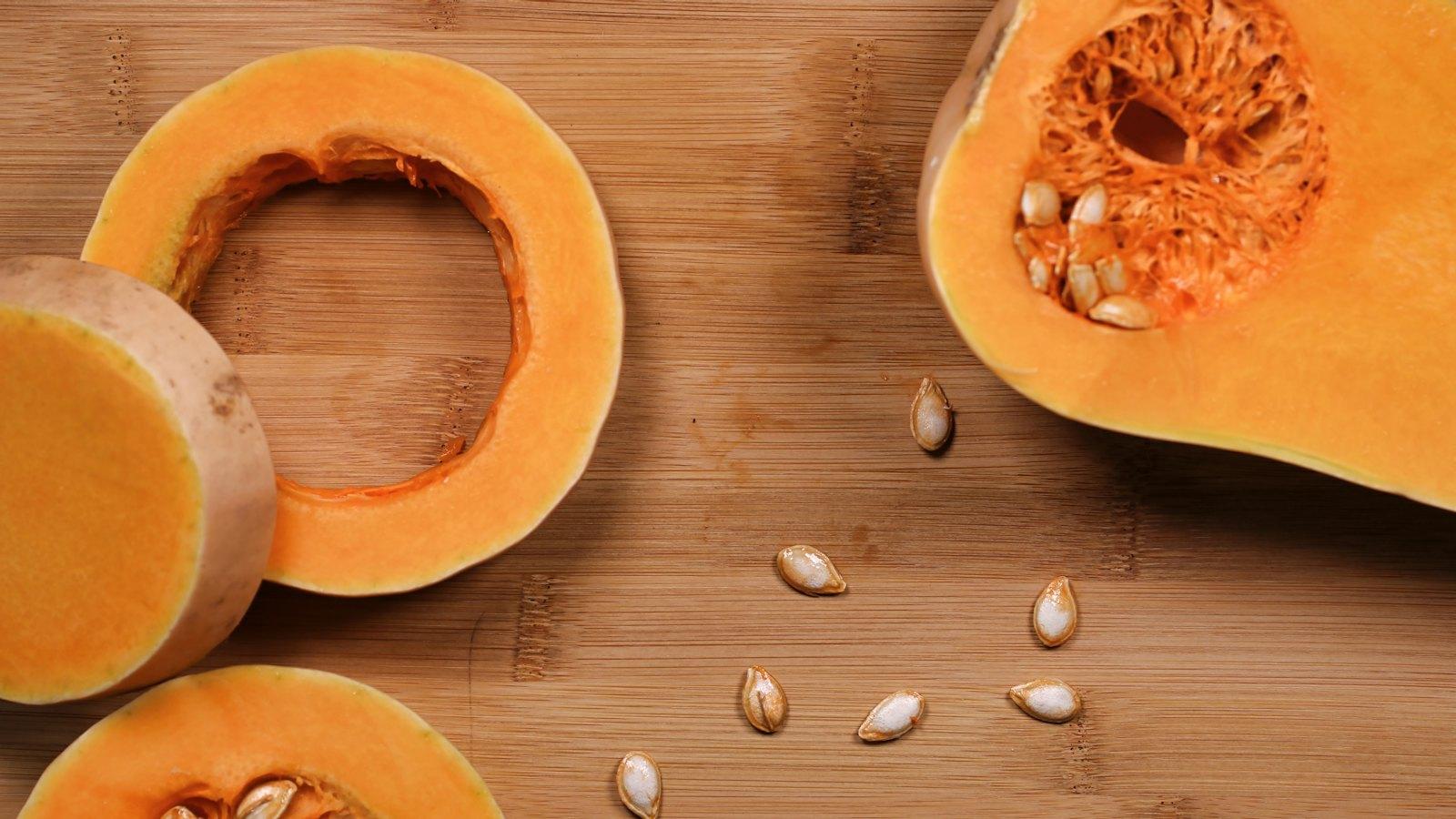
Butternut is sweeter, finer and almost free of fibre, but it has a hard skin that has to come off. It is the better choice for anything puréed and for risotto, because it turns creamy without going watery.
Muscade is the big ribbed one usually sold in wedges. Strong in flavour, faintly spiced, and good in anything that cooks for a long time.
What is not meant by pumpkin: the orange Halloween sort. That one is bred for size rather than flavour, and tastes of very little.
Pumpkin wants heat, not water
The commonest mistake is boiling it. Pumpkin is largely water already, and putting it into more water gives you something bland that then gets rescued with spices.
What it wants is dry, high heat. In an oven at 200°C its own sugar caramelises on the cut faces, and that is where the flavour boiled pumpkin never has comes from. Twenty to thirty minutes depending on the size of the pieces, with oil and salt, and nothing else is required.
That holds even for soup: roast first, then purée. It is one extra step and the only one that really counts.
The seeds are not waste
In Styria the seeds are pressed for oil, and pumpkin seed oil is one of the few products where Austria has something to say internationally. Dark green to almost black, thick, nutty and bitter.
Two rules: it is never heated, and it is never cut with anything else. It goes on the finished plate by the drop — on salad, on pumpkin soup, and in Austria on vanilla ice cream, which sounds odd and works. In a pan it loses everything and turns bitter.
The seeds themselves also toast well: washed, dried, salted, into a 160°C oven until they crack.
To peel or not
A question settled by variety rather than preference. Hokkaido skin softens as it cooks and is edible — peeling it is wasted work and costs colour and structure besides. Butternut and muscade, by contrast, have skin that stays leathery after an hour; it has to go.
The safest route with a hard-skinned squash is not a peeler but the oven: halve it, roast it cut side down, and afterwards the flesh lifts out with a spoon. That is considerably less dangerous than trying to peel a round, hard fruit on a board.
Where it sits on a plate
Pumpkin is one of the vegetables that works on both halves of our menu — it goes with an Austrian braise as readily as with olive oil and parmesan. That is not luck but the point what belongs on one menu and what does not makes.
In a risotto it is the most reliable version there is, because it brings sweetness and colour without disturbing the texture — risotto does not stir itself covers the rest of that dish.
How long it keeps
A whole pumpkin stored cool and dry keeps two to three months without losing anything. Cut, it is three or four days in the fridge.
That is what makes it valuable to a kitchen. It is the opposite of asparagus or herbs, which look different the next day, and it bridges the turn into winter when little else is arriving.
It is also cheap, which is worth saying plainly. Pumpkin is one of the few ingredients where the good version and the inexpensive version are the same thing, provided it was grown for eating rather than for a doorstep.
Book a table while pumpkin still makes sense.