By volume, ice is the largest single ingredient in most drinks, and it is the one thought about least. It is not merely the refrigeration — it is an active part of the recipe.
Why things like this decide more than the recipe itself is in our guide to the bar.
Dilution is deliberate
A stirred or shaken drink takes on between twenty and twenty-five per cent water, and that is not a loss but part of the sum. A cocktail without that dilution is too sharp, too dense and tastes mainly of alcohol.
It is why the same drink tastes different when poured together from pre-mixed ingredients without ice. What is missing is not the cold, it is the water.
The skill is hitting the ratio: enough dilution to open the aromas, not so much that the drink goes watery. Shaking gets there faster than stirring — which is why anything with juice is shaken and anything purely spirituous is stirred.
Big cubes dilute more slowly
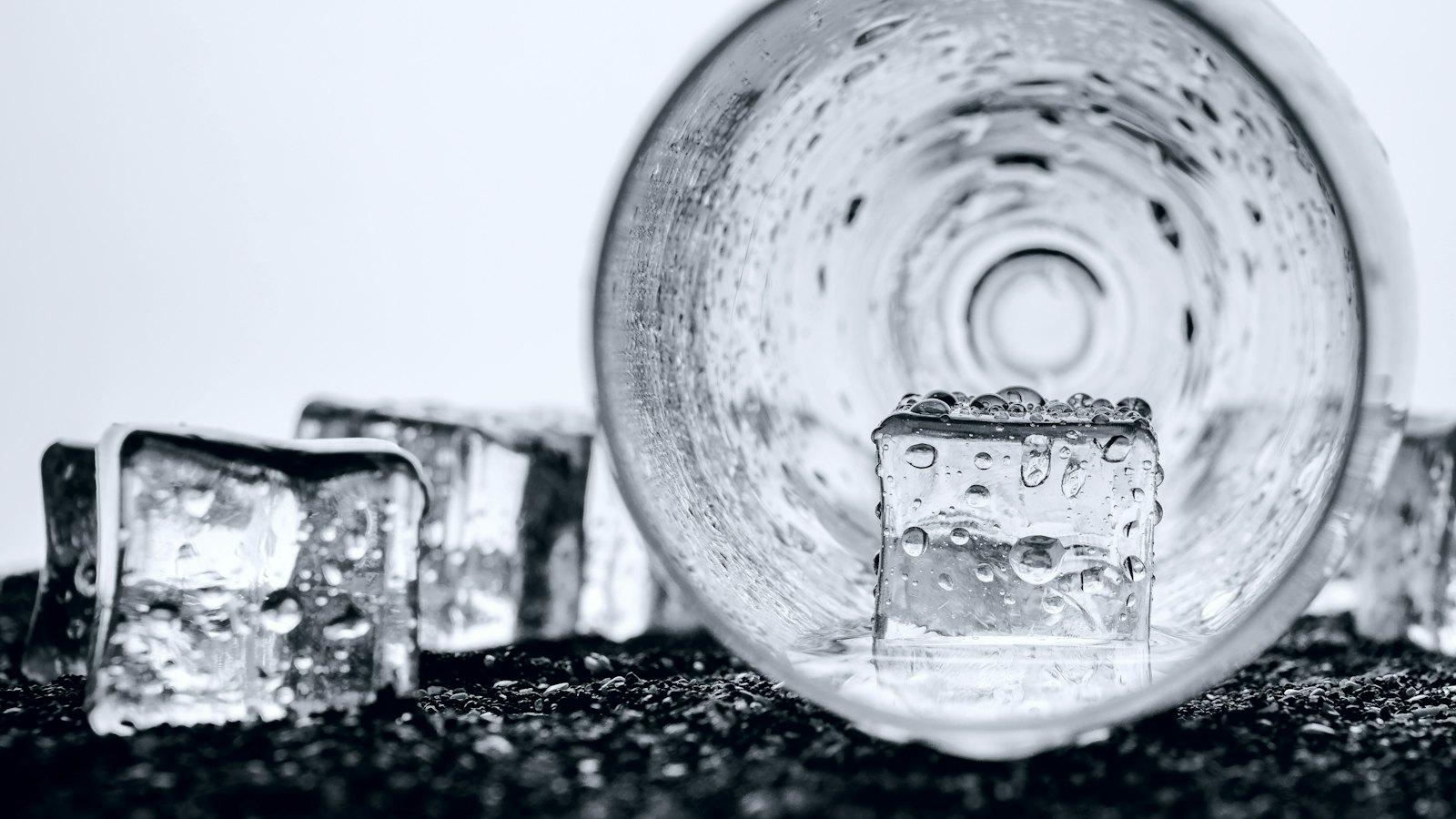
That is the entire reason for the large cube in a tumbler. It is not about looks but about surface area: a large cube has less surface relative to its volume than several small ones, and therefore melts more slowly.
A drink that sits in the glass and is drunk slowly — a negroni, a whiskey — belongs on a large cube, so that it is still itself at the last mouthful. A drink meant to get cold fast wants many small cubes or crushed ice.
In a shaker the opposite applies: there it should happen quickly, so plenty of ice, giving up cold immediately. Too little ice in a shaker is the commonest mistake — it melts completely, over-dilutes, and still fails to chill properly.
Bad ice is tasteable
Ice takes on smells. A container sitting open in a freezer next to food produces cubes that taste of freezer, and in a clear, lightly flavoured drink that registers at once.
The second point is the water itself. Cloudy ice is not worse in flavour — the cloudiness comes from trapped air and dissolved minerals — but it melts less evenly, because the inclusions create fracture points.
And ice that sits too long sublimates: the edges go dull, the cube shrinks, and it then melts faster. Fresh ice is the same subject at a bar as freshly pressed juice, described in citrus and acidity behind the bar. In both cases the ingredient is cheap and the difference is tasteable anyway.
Why clear ice is clear
The transparent blocks in good bars are neither an accident nor a trick. Water freezes from the outside in, and dissolved air and minerals get pushed ahead of the freezing front towards the centre, where they stay as a white core.
Avoiding it means letting the water freeze from one direction only — an insulated box chilled from above drives the inclusions downwards, and the top section comes out clear. That is the whole method, and it needs nothing but time and a cool box.
The practical benefit is smaller than often claimed, though. Clear ice looks better and melts a little more evenly; it does not taste better. More important than clarity is that the ice is fresh and smells of nothing.
Shaking and stirring are not interchangeable
Shaking aerates, chills fast and dilutes fast; stirring chills slowly and keeps the drink clear and dense. Which is why anything with juice, egg or cream is shaken, and anything purely spirituous is stirred.
Shake a martini and you get a cloudy, over-diluted one. That is not snobbery about a rule — it is visible in the glass.
Chill the glass
Save on ice by pouring a drink into a warm glass and you lose precisely what you shook for. A warm glass absorbs the cold, and the drink is lukewarm within two minutes.
A pre-chilled glass costs nothing but forethought — it sits in the freezer, or gets filled with ice and water while the drink is mixed. What else matters there is in the glass and the temperature.
The same applies without alcohol
More so, in fact, because there is no alcohol carrying the aromas. An alcohol-free drink that is over-diluted loses everything faster than a cocktail does — one more reason not to make it as an afterthought, as alcohol-free is not a consolation describes.
Book a table and pay attention to the last mouthful.