"A coffee, please" is not a complete order in Vienna. You will usually get something anyway, most likely a Verlängerter, but you have not made the choice — you have handed it over.
What else belongs to the morning in this city is in our guide to breakfast and the coffee house.
The base is always the same
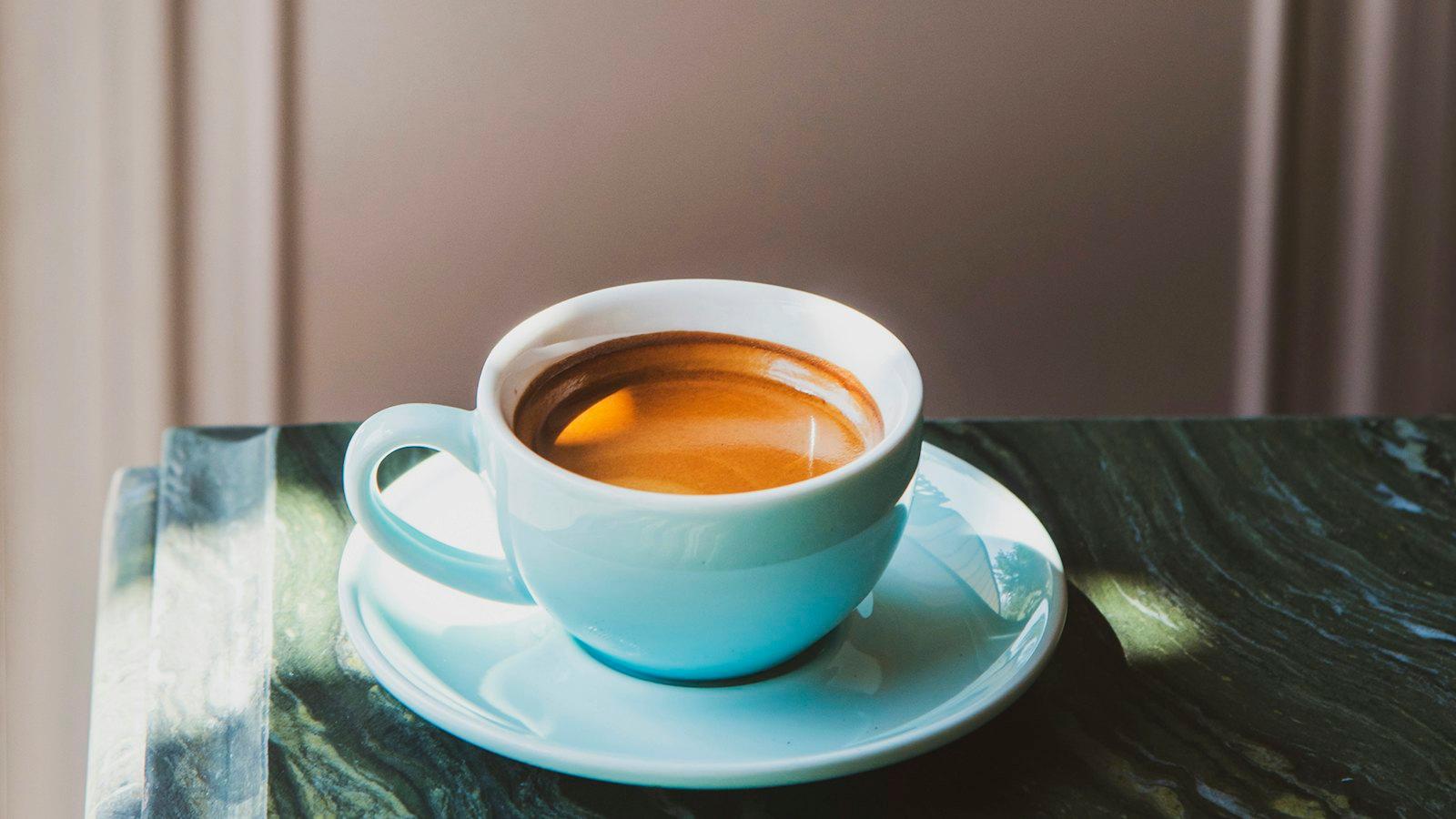
Almost everything on a Viennese coffee list starts from a single or double Mokka — what elsewhere is called espresso. What separates the names is solely what goes in afterwards: water, milk, whipped cream, or some combination.
Understand that once and the whole list becomes readable.
The four worth knowing
Kleiner or Großer Schwarzer is the Mokka on its own, single or double. Nothing else.
Kleiner or Großer Brauner is the same Mokka with a small jug of milk or cream alongside, which you pour yourself. The only difference from a Schwarzer is that jug.
Verlängerter is a Mokka lengthened with hot water to twice the volume. It is not the same as a double espresso but milder and longer — the most common order in the country, and what most people mean when they say "a coffee".
Melange is a Mokka with hot milk, topped up and finished with a cap of foam. It resembles a cappuccino but is traditionally milder, with less foam and in a larger cup.
The coffee itself
Viennese roasting is traditionally darker than a Nordic roast and lighter than an Italian one, and it is built for milk drinks. A Verlängerter made from a very light speciality roast therefore strikes many people as oddly sour.
Both are legitimate, and in Vienna the two schools now sit side by side: the classic houses with a dark roast and the newer roasteries with a light one.
The ones with whipped cream
Einspänner is a double Mokka in a glass under a dome of whipped cream. The name comes from the Fiaker drivers with their one-horse carriages: the cream kept the coffee warm, and the glass could be held in one hand because the other held the reins.
Franziskaner is a Melange with whipped cream instead of milk foam.
Fiaker is a Schwarzer with rum or slivovitz and whipped cream.
Small and large
The size always refers to the quantity of coffee rather than the cup: small is a single Mokka, large a double. A large cup with a single Mokka in it does not exist.
The glass of water belongs to it
Every coffee in Vienna arrives with a glass of tap water, unasked, and that is not a service extra but part of the order. Historically it comes from the quality of Vienna's spring water, and it does two things: it resets the palate before the coffee and replaces afterwards the fluid that caffeine takes away.
A coffee house where the water does not arrive has missed something. In many places it gets refilled for as long as you sit there — which connects directly to the rules described in the unwritten rules of the coffee house.
It is served on a tray
Small silver tray, cup, water glass, spoon laid across the glass. The spoon on the glass is not incidental: it used to signal that the water was fresh, and it stops anything falling in.
Something sweet belongs with it
Every coffee in a coffee house traditionally comes with something sweet, and the choice is a subject of its own: apple strudel, Topfenstrudel, Sachertorte, Cremeschnitte, Punschkrapfen, Buchteln.
It is usually ordered with the second coffee rather than the first. And strudel comes with whipped cream, called simply "Obers" in Vienna — if you do not want it, say so, or it arrives.
Why sweet food is a category of its own in Austria, with its own main courses, is in a Mehlspeise is not a pudding.
Saying it
"Melange" is pronounced in the French way, roughly "meh-LAHNGSH", with a soft ending. "Verlängerter" defeats nobody who says it slowly. And "Mokka" in Vienna means the plain black coffee, not the Turkish drink.
What not to order
A coffee to take away, in a coffee house. It exists now, but it contradicts the entire format: the coffee is the ticket for the seat, not the product.
Book a table — the Melange sits beside breakfast here.