Nearly every piece of baking is called something different in Austria than in Germany, and that is not dialect but a different baking tradition. Know the names and you order what you mean.
Why the bread is the core of a Viennese breakfast is in our guide to it.
Names differ by region
Even inside Austria the words shift: a Semmel in Vienna can be a Weckerl further west. Ordering by pointing works everywhere.
The Semmel
The basic roll, and in Vienna almost always the Kaisersemmel: round, with a five-pointed pattern on top, crisp outside and pale and open inside.
The pattern is not decoration but a cut or stamp, once made by hand, that controls how the roll rises as it bakes. A hand-folded Kaisersemmel is the exception now; most are stamped.
A good one is not cotton-wool inside but has a recognisable crumb, and it sounds hollow when you tap the underside.
The Kipferl
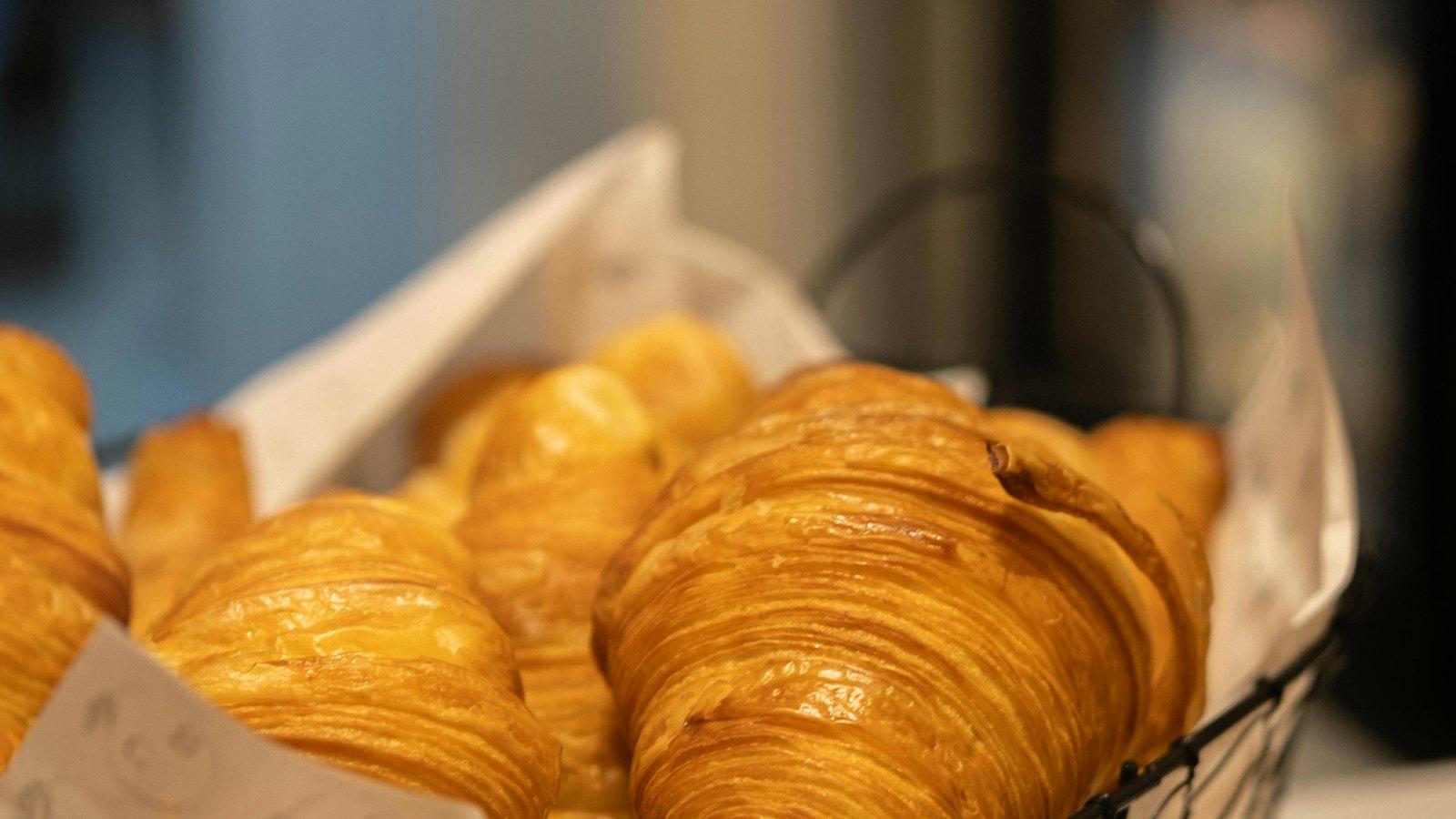
Crescent-shaped, made from a wheat dough, and the ancestor of the French croissant — Viennese baking reached Paris with Viennese bakers in the nineteenth century, where butter dough turned it into the croissant.
A Kipferl is less fatty and less flaky than a croissant, and drier and firmer for it. A Vanillekipferl is something else entirely: a shortbread biscuit made at Christmas.
The bakery as an institution
Vienna still has a high density of craft bakeries, and many open at half past five. That is not incidental: baking is thought of as morning stock in Austria, and in good houses the second delivery in the afternoon is smaller than the first.
Salzstangerl and Weckerl
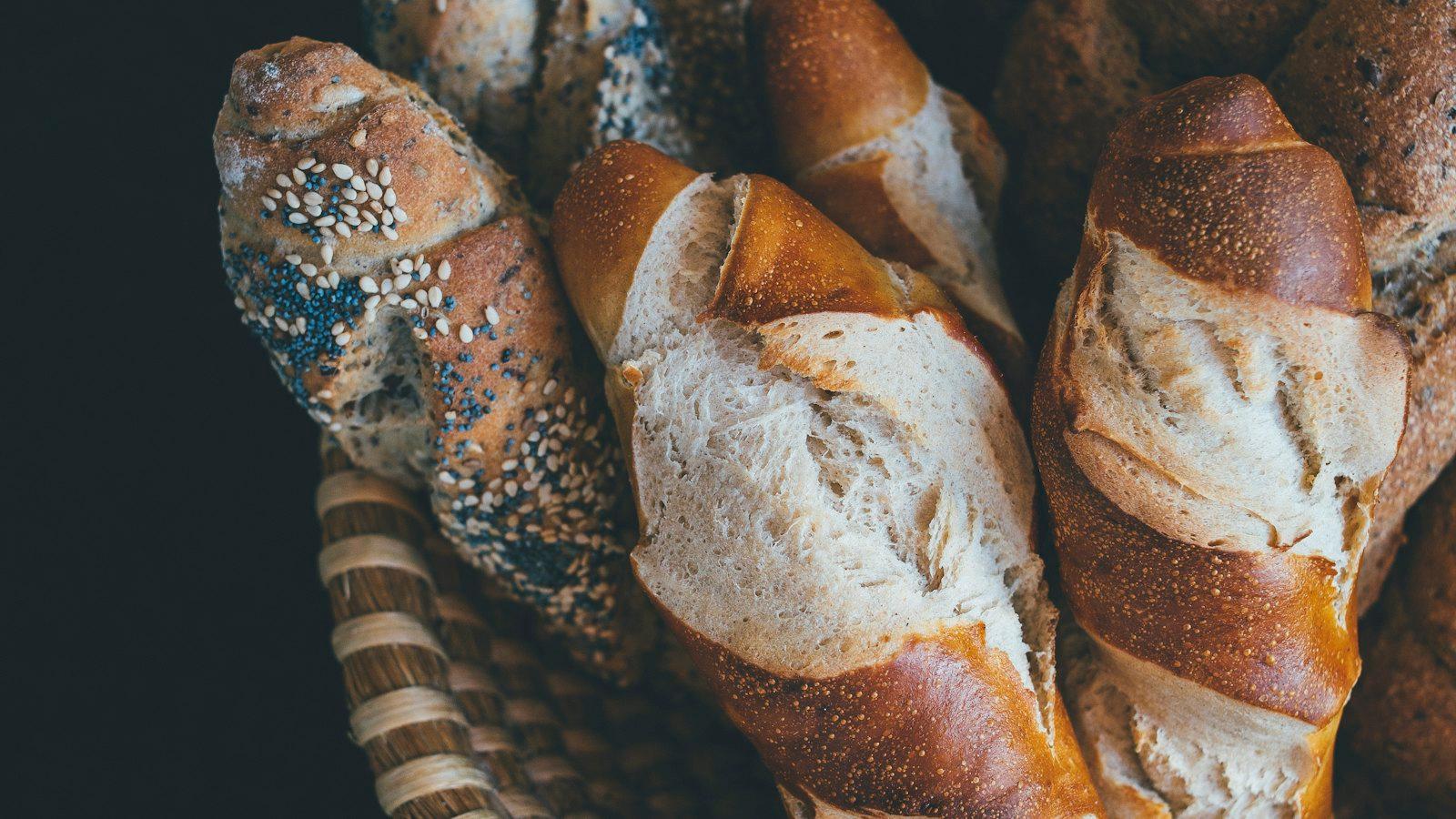
Salzstangerl are long thin rolls with salt and caraway, very crisp outside. They are what gets served in Vienna with an aperitif or a snack, and the caraway on them is the same ingredient that carries weight in the hot kitchen — paprika, caraway, marjoram goes into that.
Weckerl is the general term for long rolls of any kind, often with seeds, poppy or sesame.
Handsemmel, Mohnflesserl, Grahamweckerl: the list is long, and every bakery has its own shapes.
Poppy seed is standard here
Poppy seed is not a niche ingredient in Austria but a staple — on bread, in strudel, in pasta. Waldviertler Graumohn even carries a protected designation of origin.
The bread is darker than elsewhere
Austrian bread is mostly a rye and wheat mix, made with sourdough, and therefore considerably darker, more sour and longer-keeping than a French white loaf.
That is exactly what makes it useful in a kitchen. Stale white bread becomes crumbs for a coating and bread dumplings, both load-bearing ingredients rather than leftovers — described in dumplings, potato salad and the rest of the plate. And a bruschetta needs precisely this kind of structured loaf, as bruschetta is a question of bread sets out.
Flour types mean something different here
Austrian flour is labelled W480, W700 or W1600, and those numbers are not identical to the German types. W480 is the pale wheat flour for pastry and cakes, W700 the all-purpose one, W1600 a darker flour with more bran.
For a kitchen that mostly means: cooking a German recipe requires converting. W700 corresponds roughly to German type 550, and that is what you reach for most of the time.
What becomes of stale bread
Nothing is thrown away, and in Austrian cooking that is method rather than thrift. Stale white rolls become crumbs, dumplings, or Scheiterhaufen — a pudding of soaked bread slices with apples.
And dark bread gets toasted and goes into a soup as croûtons or into a salad. The same principle as everything else in this kitchen, described in two kitchens, one shopping list.
How to tell fresh baking
By the sound. A fresh Semmel crackles faintly when squeezed, and the crust splinters when cut. A reheated frozen one seems similar at first but turns soft and leathery within the hour — that is the most reliable difference.
And by the base: fresh baking has a matt, floury underside. A smooth, shiny one points to industrial production.
Baking is morning stock in Vienna. Whatever is still in the window at four in the afternoon was better at seven.
Book a table — the bread comes from a baker.