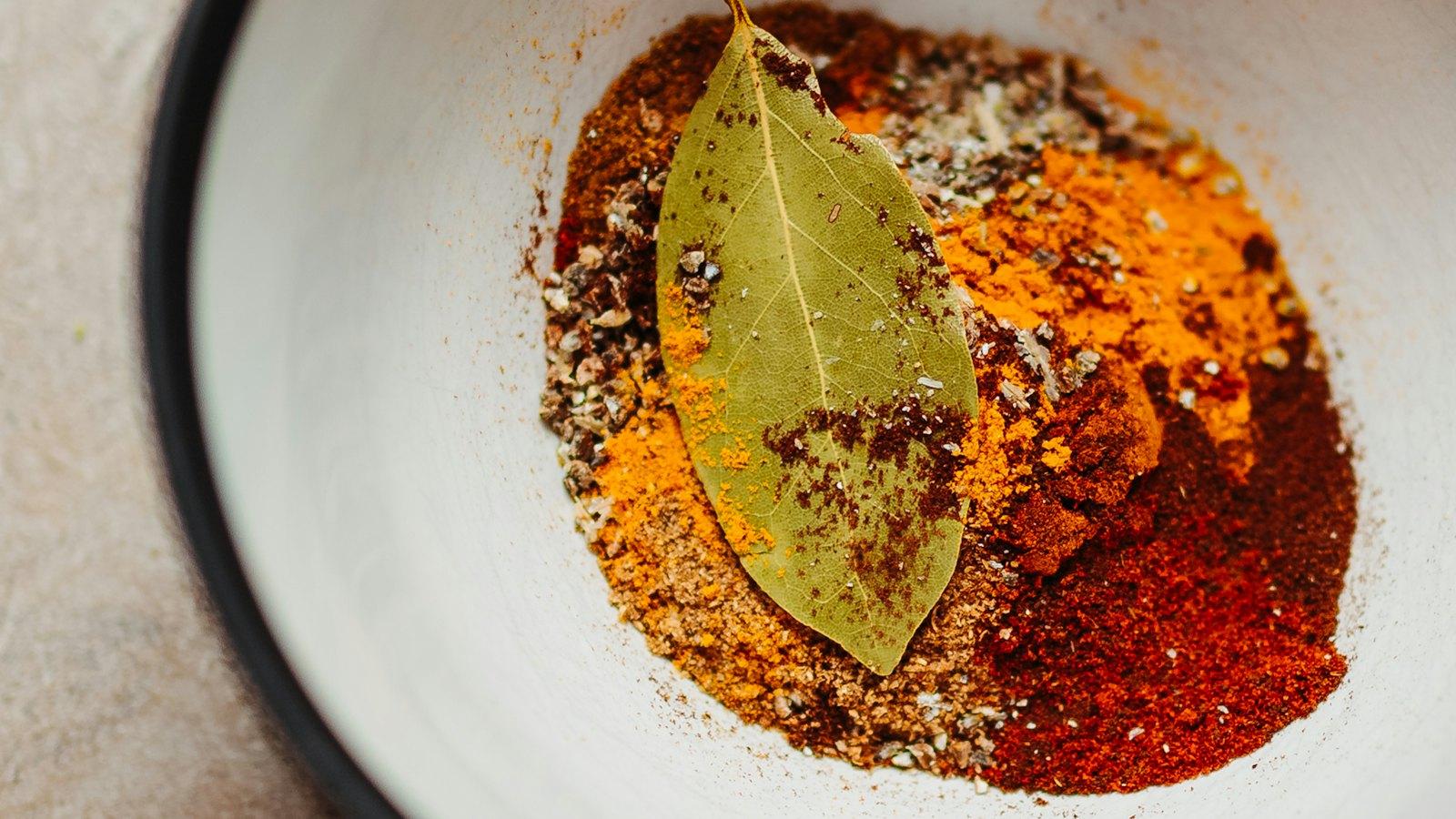
The Austrian spice shelf is small. No cumin, no coriander, no curry, and chilli only very recently. Three spices carry most of the classics, and all three behave differently from how people assume.
That a cuisine manages on so little is one of its characteristics rather than a shortcoming — as set out in what makes a classic a classic.
Paprika is a vegetable, not a spice
The most important point first: paprika powder is ground dried vegetable. It is therefore far more bulk than a spice in the narrow sense, and it behaves accordingly.
Everything else follows from that. Paprika contains sugar, and sugar burns. In hot fat it turns bitter within seconds — the commonest mistake in braising, described in why a goulash needs time. So the powder always goes into a pot with the heat turned down, and is deglazed with liquid immediately.
Second: paprika fades fast. Year-old powder is brown rather than red and tastes of hay. Good powder is bright, smells faintly sweet, and stains your fingers at once. Buy it in small quantities, and buy it where it turns over.
Sweet (edelsüß) is the standard; rose paprika is hotter and goes alongside it sparingly, not instead of it. Smoked paprika belongs to a different cuisine.
Caraway decides how heavy a dish feels
Caraway has the worst reputation of the three and does the most work. It sits in cabbage stews, in roast pork, in bread and in sauerkraut — wherever fat and cabbage meet.
Its job is not primarily flavour but digestibility, and that is not folk medicine: the essential oils in caraway act against bloating, which is why it turns up historically wherever hard-to-digest things are eaten. A cabbage dish without caraway is a different dish, and one you notice for longer afterwards.
Whole or ground is a genuine decision. Whole seeds release slowly and stay recognisable as texture, which not everyone enjoys. Ground caraway distributes completely but turns dominant and then stale quickly. The middle route is to toast the seeds briefly and crush them coarsely.
Marjoram is the quiet third
Marjoram is the herb of potato dishes, liver dumplings and many soups. It is softer than oregano, with which it is often confused, and distinctly more floral.
Its problem is heat. Marjoram loses almost everything that defines it during long cooking, so it goes in late — in the last few minutes, or at plating. Cook it from the start and you have paid for it without getting it.
Dried marjoram is, unusually, the more common choice here, because drying concentrates its aroma rather than destroying it. Rub it between your fingers before it goes into the pot: that breaks the cell walls, and it is the difference between fragrant and dusty.
When each one goes in
The three want three different moments, and this is the most practical part of the whole business.
Paprika goes in early but off the heat, and then needs liquid and time to distribute itself. Caraway also goes in early, because its oils release slowly and tolerate long cooking — a cabbage dish simmering for an hour wants the caraway from the start. Marjoram goes in last, because that same hour would destroy it.
If you want one rule to carry away: anything that comes from a dried fruit or a seed can take time. Anything that comes from a leaf cannot.
What else is on the shelf
Bay and juniper for braises and cured things. Allspice for game and some cabbage dishes. Garlic, used more sparingly than in the south. And salt, which goes in earlier than people expect — right at the start of a braise, so it has time, and only at the last moment on anything to be crumbed, where it would otherwise draw out water.
What is missing tends to strike visitors faster than it strikes us: no heat as an element in its own right, barely any citrus zest, few fresh herbs beyond parsley and chives. The acidity comes from vinegar and pickles instead, which explains the side dishes — dumplings, potato salad and the rest of the plate goes into that.
Book a table if you want to see how little is enough.