A classic is not a dish that happens to be old. It is one that nobody has managed to improve in a hundred years. That is a different thing, and it explains why Austrian cooking gets by on a surprisingly small number of dishes.
They solve a problem that still exists
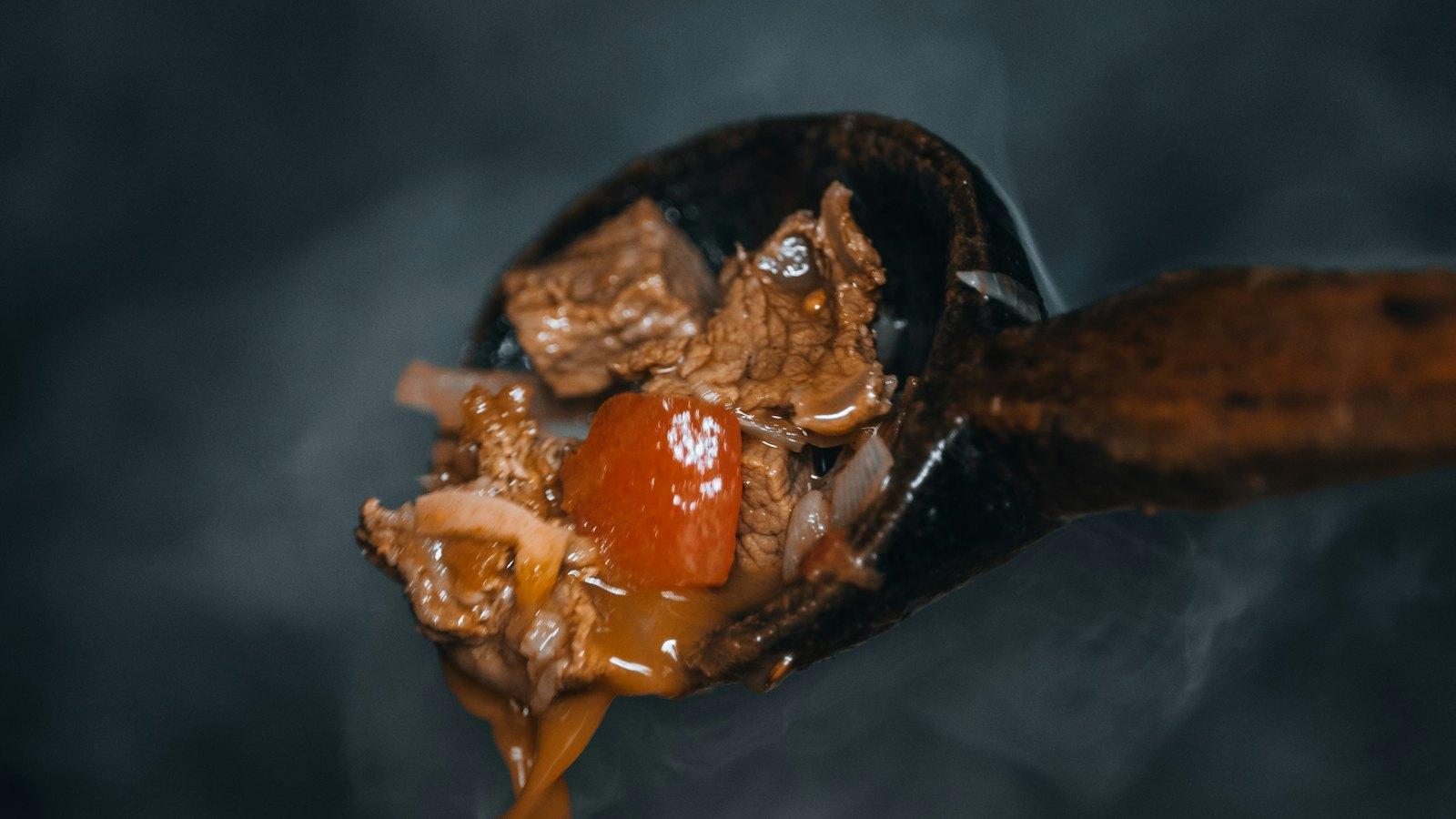
Almost every classic is an answer to the same question: how do you make something good out of a cut of meat that is not tender? Braising, simmering, crumbing — three methods, three classics. Why a goulash needs time, and cannot be hurried into something else, is the first of those answers.
The question has not gone away. Good meat has stayed expensive, and the cheap cuts are still the more interesting ones.
They get by on very little
A second trait: the ingredient lists are short. A goulash needs four things, a Tafelspitz five. What else goes in comes from the spice shelf — and it is a small shelf. That paprika, caraway and marjoram carry almost the entire cuisine only becomes obvious once you look for it.
They are hard to get right
Which is exactly why they are test pieces. With four ingredients there is nothing for a mistake to hide behind.
A Backhendl is the best example: the same technique as a schnitzel, a different animal, and suddenly the timing no longer works. And a Tafelspitz is cooked in a liquid that ends up being half the dish.
The plate is more than the meat
What lies beside the meat belongs to the classic, and it is routinely underrated. Dumplings, potato salad and the rest of the plate are not filler; they are the part that balances the dish.
And pudding is not an afterthought
In Austria, sweet food is not a footnote at the end of a meal but a category of its own with its own main courses. Why a Mehlspeise is not a pudding is one of the larger differences from most European kitchens.
How these classics sit beside the Mediterranean half of our menu is the subject of our guide to Austrian and Mediterranean cooking. Book a table if you would rather eat the short version than read it.