Tafelspitz is the only dish in this series that leaves two things on the table: the meat, and the liquid it cooked in. Both are the dish, and neither is a by-product.
It belongs to the classics that get by on very little — how that works is in what makes a classic a classic.
The cut is the name
Tafelspitz is a specific cut: the tip of the rump cap, a triangular piece from the hind end of the animal with a layer of fat along one side. That fat is not a flaw to be trimmed off — it is why the cut survives a long simmer without drying out.
It also explains why a "Tafelspitz" taken from anywhere else is a different dish. Lean cuts turn stringy when simmered, and no amount of time repairs that. The fat side goes into the pot facing upwards, so what renders out of it stays in the liquid rather than sticking to the base.
Simmering is not boiling
The decisive point is a temperature you hear rather than see. The liquid should tremble, not bubble — around 85°C, well below boiling.
The reason is the braise's reason. At a rolling boil the muscle protein contracts and squeezes out water; the meat turns tough and dry even though it is sitting in liquid. The same logic explains why a goulash needs time.
There is a second effect, and this one is visible: a boiling broth goes cloudy. Fat emulsifies into the liquid and coagulated protein disperses through it instead of staying on top. A clear beef broth has not been clarified — it was simply never boiled.
The meat goes into hot water
Here the methods part, and the difference is a decision rather than a matter of right and wrong.
If you want good soup, start the meat in cold water: the flavour moves slowly into the liquid, the broth gets strong, the meat gives up its character. If you want good meat, lower it into water that is already hot: the surface contracts at once and more stays in the piece.
For Tafelspitz, where both matter, the usual route is the second — and the broth gets its strength from bones and root vegetables started beforehand. That is more work, and it is why Tafelspitz has a reputation as a Sunday dish.
The vegetables go in late
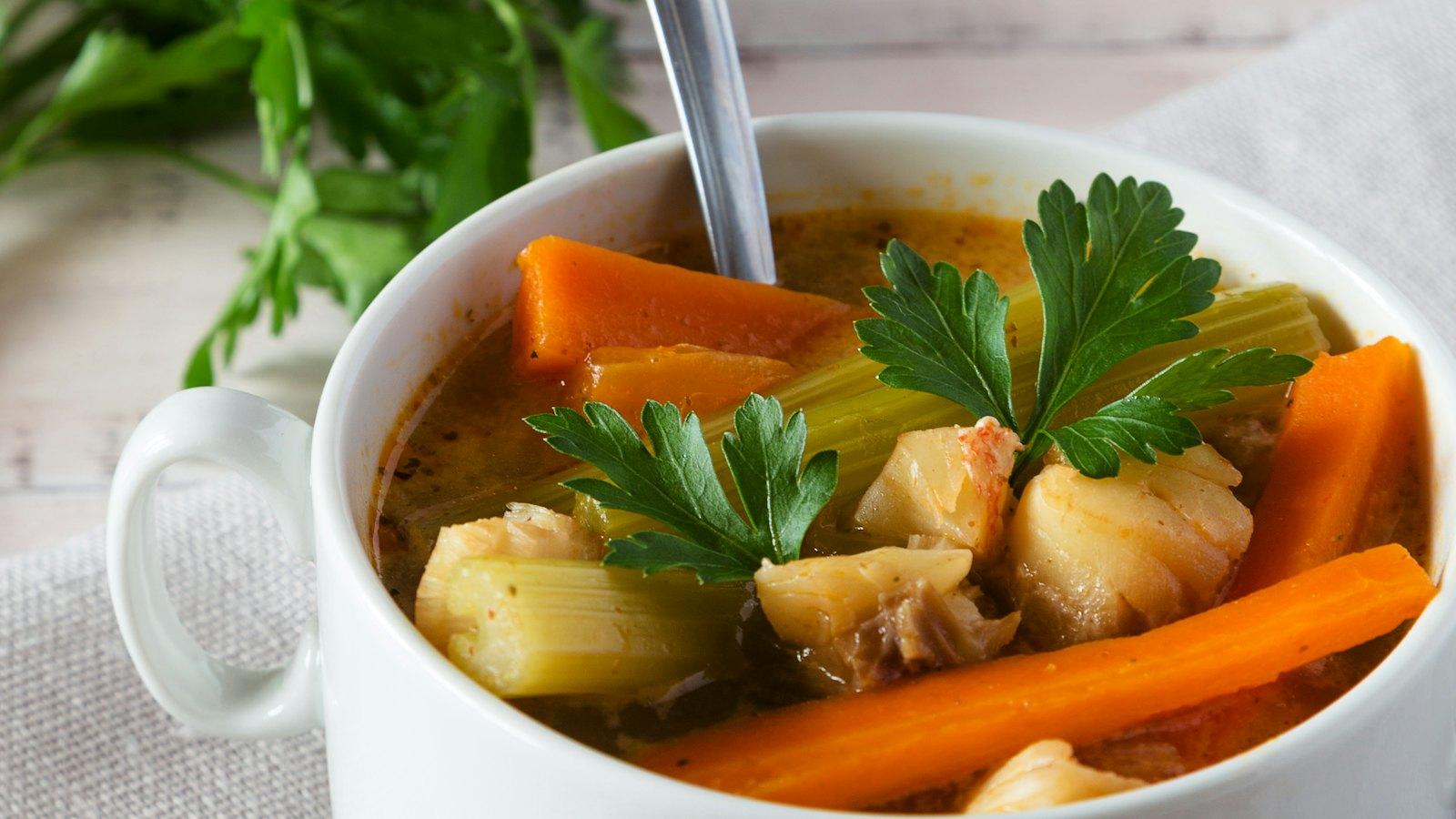
Carrots, celery, leek and parsley root need thirty to forty minutes. The meat needs two and a half to three hours. Start everything together and you get vegetables that have collapsed and a broth that tastes of nothing but boiled carrot.
So the vegetables come at the end. They should still hold their shape when served, and give their flavour to the soup without dissolving into it.
The scum has to come off
For the first half hour a grey foam rises to the surface. That is coagulated protein, and it tastes of nothing — but it clouds the broth and leaves a deposit around the rim if it is left there.
Skimming is therefore not cosmetic. It is the only job the pot actually demands in its first hour, and it decides whether the soup ends up clear. After that the pot can largely be left to itself.
What belongs beside it
The classic accompaniment is a trio: apple horseradish, chive sauce, and roast potatoes or a bread-and-horseradish sauce. All three do the same job — they bring heat or acidity to meat that is mild by nature.
That is not a coincidence but the principle every side in this cuisine works on, which dumplings, potato salad and the rest of the plate follows up.
How to recognise a good one
The soup is clear and smells of beef rather than vegetables. The meat is sliced across the grain, in slices that hold together, and it is moist without dripping. It is carved at the moment of serving — a Tafelspitz sliced in advance dries at the cut faces even while sitting in its broth. And the horseradish is freshly grated rather than out of a jar — that is the difference between heat that reaches your nose and heat that is merely sour.
Book a table if you would rather leave Sunday to somebody else.