The Viennese coffee house has been on the UNESCO list of intangible cultural heritage since 2011, and the citation contains a remarkable line: it is a place "where time and space are consumed, but only the coffee is found on the bill".
That describes the principle. What follows from it is a handful of rules nobody writes down.
What else belongs to the morning is in our guide to breakfast and the coffee house.
It was never about the coffee
The coffee is the price of admission to a room that is warm, lit and quiet. That was the arrangement in 1900 and it is the arrangement now.
You may stay
The most important one, and the one that most surprises visitors: a coffee entitles you to a seat, with no time limit attached. Three hours with a Verlängerter and a newspaper is not an abuse of the arrangement but the intended use of it.
Historically there is a reason: flats were small and badly heated, and the coffee house was study, living room and postal address at once. Writers worked there; newspapers were read there because nobody could afford a subscription.
In return you order something
The obligation is small but not optional. You order on arrival, and if you stay very long, a second time at some point. Sitting for four hours without ordering again is reading the arrangement one-sidedly.
The glass of water, by contrast, is refilled unasked for as long as you are there, and you order nothing for it — it belongs to the coffee, as described in ordering coffee in Vienna.
The waiter is not being unfriendly
The second surprise. The classic Viennese Ober is terse, dry and sometimes ironic, and that is a role rather than a bad mood. Answer with the same dryness and you have a conversation; take offence and you have a misunderstanding.
"Herr Ober" is the normal form of address and not condescending. And he comes when he comes — waving to summon him reads as impatient.
The silver tray
Every coffee arrives on a small tray, and the tray stays on the table. Clearing it is the house's business, not the guest's.
You seat yourself
In most coffee houses you find a table and sit down. There is no host and no allocation, unless the place is very full.
When it is busy it is normal to join a stranger at a larger table, having asked first. That does not mean you talk to each other.
Working is allowed, within limits
Working in a coffee house has a long tradition, and a laptop bothers nobody. What does bother people is a table for four occupied by one person and one coffee while others are waiting outside.
Phone calls happen outside. That is the one rule classic houses actually enforce.
The newspaper belongs to the house
Classic houses keep newspapers in wooden holders, free to read. You take one, read it and bring it back — you do not carry it to another table and certainly not home.
Hoarding several at once counts as bad form, particularly when the place is full.
You pay at the table
As everywhere in Austria, stating the total including the tip when you pay — not by leaving money on the table. The details are in tipping, without the guesswork.
The marble table and the Thonet chair
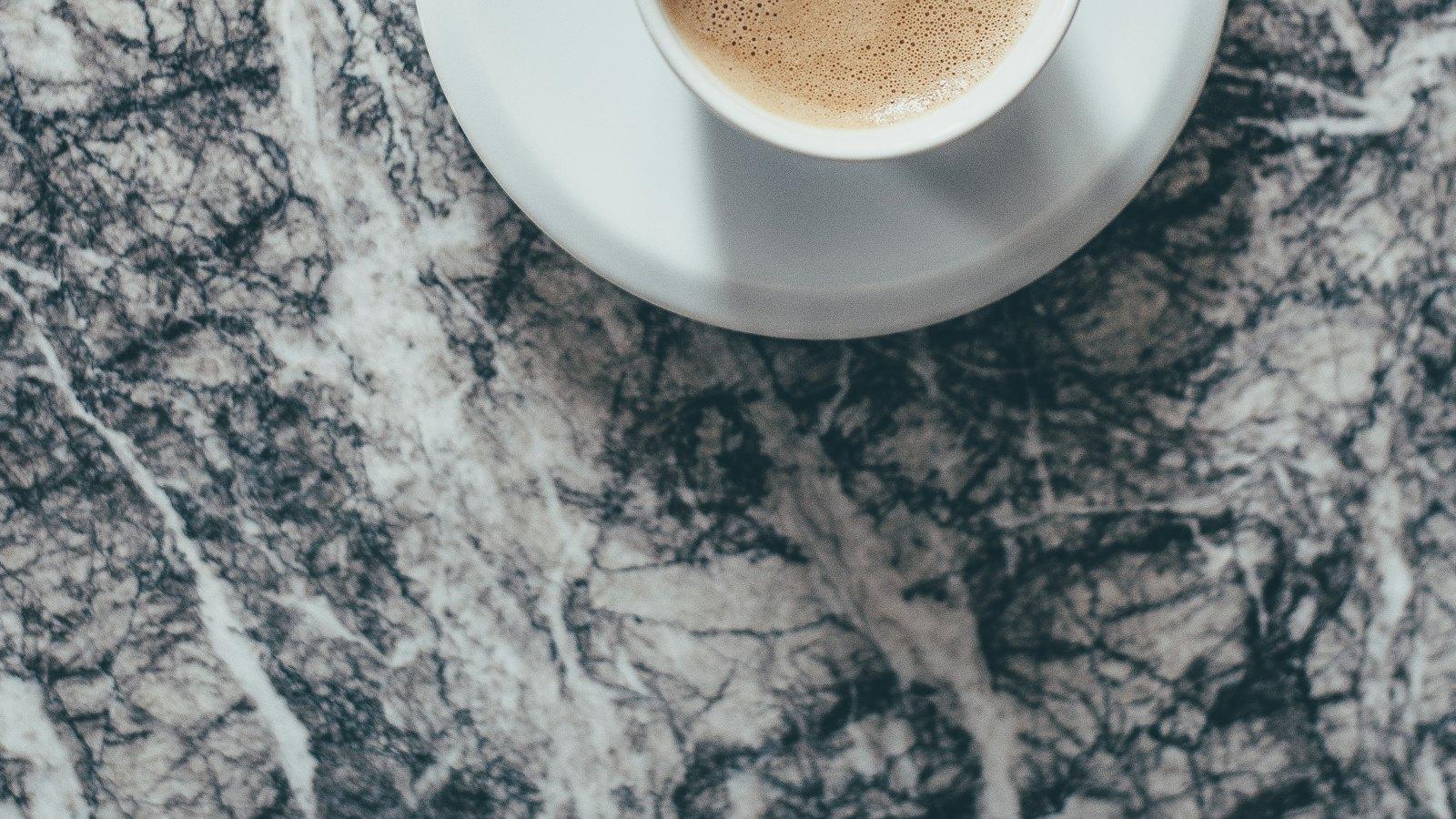
Two pieces of furniture that shaped the format. The small round table with a marble top was practical: easy to clean, heatproof, and heavy enough not to wobble.
Chair No. 14 by Michael Thonet, made from 1859, was the first piece of mass-produced furniture — six parts, shipped flat, and found in nearly every coffee house in the monarchy. Sit in a classic house today and you are very probably sitting on a copy of it.
Together they make the interior everybody recognises instantly, and both were originally a decision about cost rather than about aesthetics.
What this means for a bistro
We are not a coffee house, and the difference is honestly one of space: with thirty covers on a full evening, a table occupied for four hours is a different sum. During the day it does not apply — in the morning and the afternoon you are welcome to sit as long as you like.
Book a table, or simply come by in the morning.