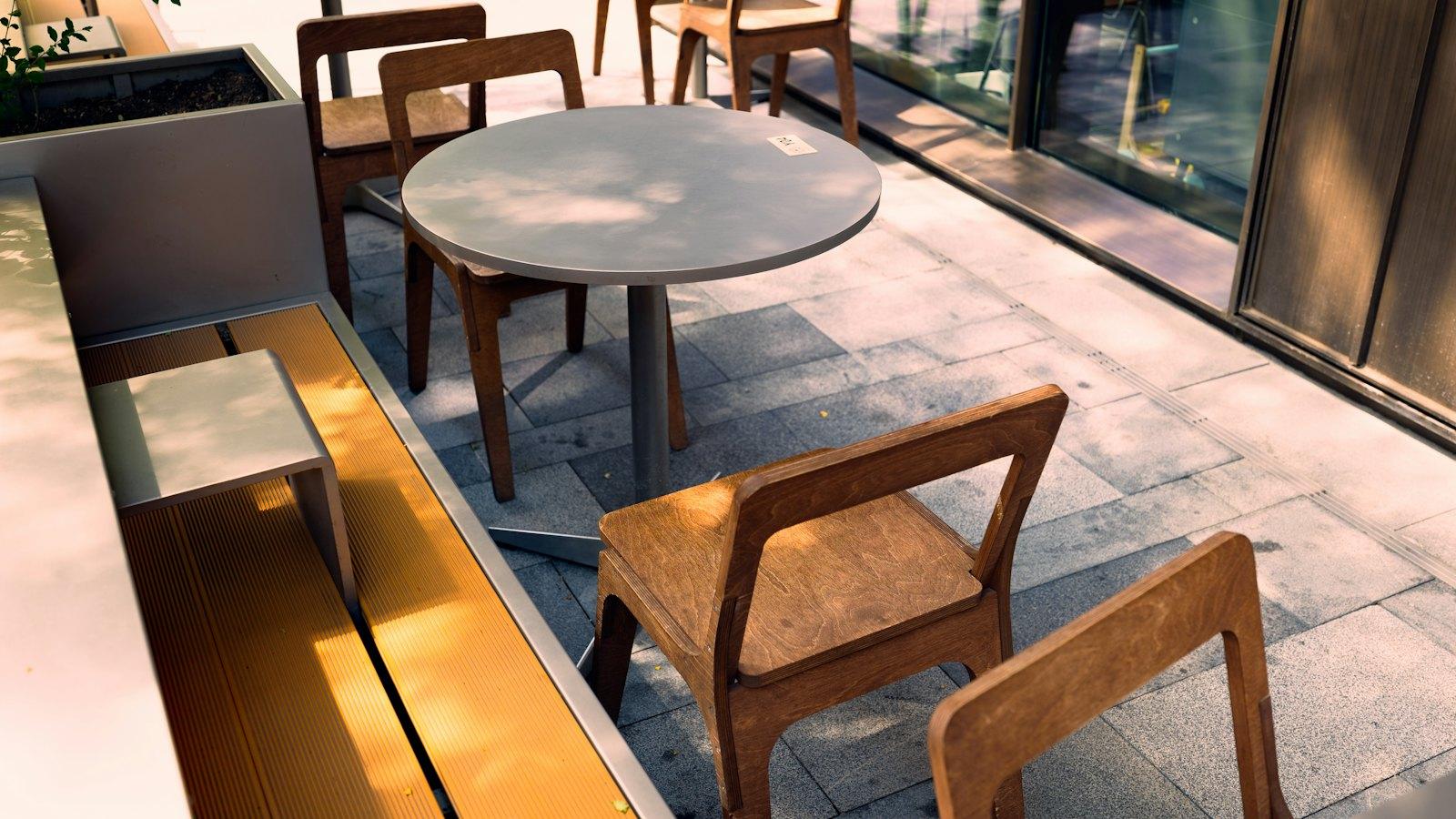
The Schanigarten is what elsewhere is simply called outdoor seating, and in Vienna is nonetheless a term of its own, with its own history, its own season and its own rules.
What else belongs to eating out in this city is in our guide to it.
It belongs to the city, not the publican
The area in front of a restaurant is public ground. A publican rents it, and the permit governs the size, the structures and the hours.
Where the name comes from
The most widespread explanation: in the eighteenth century a publican named Gianni Tarone was granted permission to put tables outside his premises. "Gianni" became "Schani" in Viennese, and Schani's garden was the Schanigarten.
The second explanation is less romantic: "Schani" was long the general Viennese term for a junior waiter or errand boy, and the Schani was the one who carried the tables out and back in. That makes sense too, and probably both are partly true.
How much room it adds
For a small house a Schanigarten often doubles capacity in summer, and that changes everything: staffing, buying, and the question of whether a booking is needed at all.
The season has a date
The classic period runs from 1 March to 30 November. Year-round operation has been possible for some years now, but the old span still shapes how the city thinks: the first warm day in March when tables appear somewhere is minor news in Vienna.
That the season does not run all year has to do with snow clearing and pavement width. A Schanigarten stands on public ground, is licensed by the city and costs a fee per square metre. Which is also why it is rarely as large as a publican would like.
Where the good ones are
Not on a main road. The pleasantest Schanigärten in Vienna are in side streets, on squares or in courtyards, and the difference is mostly noise.
Courtyards are the special case: cooler in summer, out of the wind, and acoustically far quieter than any street position.
What runs differently outside
Service is slower, and that is not carelessness. Every trip is longer, every order goes through a door, and on a busy evening it adds up. Anyone in a hurry is better off inside.
The menu is sometimes shorter. Anything that goes cold quickly or wants careful plating works less well outside than something that survives a heat wave or a gust of wind. The same consideration as with anything cooked to order — see risotto does not stir itself.
And the drinking shifts. Outside there is more spritz, more white wine and more alcohol-free, and red wine almost only in the evening once it cools — one more reason to serve it lightly chilled, as described in Zweigelt and Blaufränkisch.
The blanket and the heater
From September, blankets belong on the chairs, and in many houses they are simply there. Taking one is expected and costs nothing.
Patio heaters have been a subject in Vienna for some years, because several districts have restricted their use on energy grounds. Where there are none, the outdoor season ends earlier, and that is why everybody is suddenly back inside in October.
Umbrellas and awnings form part of the licence and cannot be put up freely. A Schanigarten with no shade on a hot afternoon is therefore not always carelessness but sometimes a condition of the permit.
The unwritten rules
You do not simply sit down if somebody is standing at a host desk inside — but in a Beisl with four tables outside, you do. When in doubt, put your head round the door.
A Schanigarten is public space, which means it is louder, and cars, trams and cyclists pass close by the table. Anyone wanting a quiet conversation is better off inside; anyone wanting to watch the city is better off outside.
And the last table outside often gets cleared earlier than those inside, because closing times outdoors are regulated separately and are stricter in residential streets. When things are cleared at ten, that is not an instruction to leave but a move indoors.
Book a table and say whether you want inside or out.