Vienna has a good two dozen markets, and they differ considerably — in what they sell, who shops there and above all in price. Anyone who knows only the famous one has met the most expensive.
What else belongs to eating out in this city is in our guide to it.
They predate the city plan
Vienna’s markets mostly stand where the city gates or the approach roads once were — at the points where farmers came in.
The Naschmarkt is two things
The best-known market in the city, nearly a kilometre and a half long, and effectively split in half.
The first third, towards Karlsplatz, is now mostly restaurants and aimed at visitors: bars, spice stalls with decorative pyramids, dried fruit in large bowls. The prices follow, and haggling is expected.
Further along it quietens down and becomes an actual food market. There are good fishmongers there, decent vegetables and cheese, and people who live nearby do shop there.
On Saturdays the flea market joins on at the western end, and then the whole stretch is packed.
There are more than three
Vienna has over twenty markets, and nearly every district has its own. Anyone living near one never needs to set foot in the Naschmarkt.
The district markets are the cheaper ones
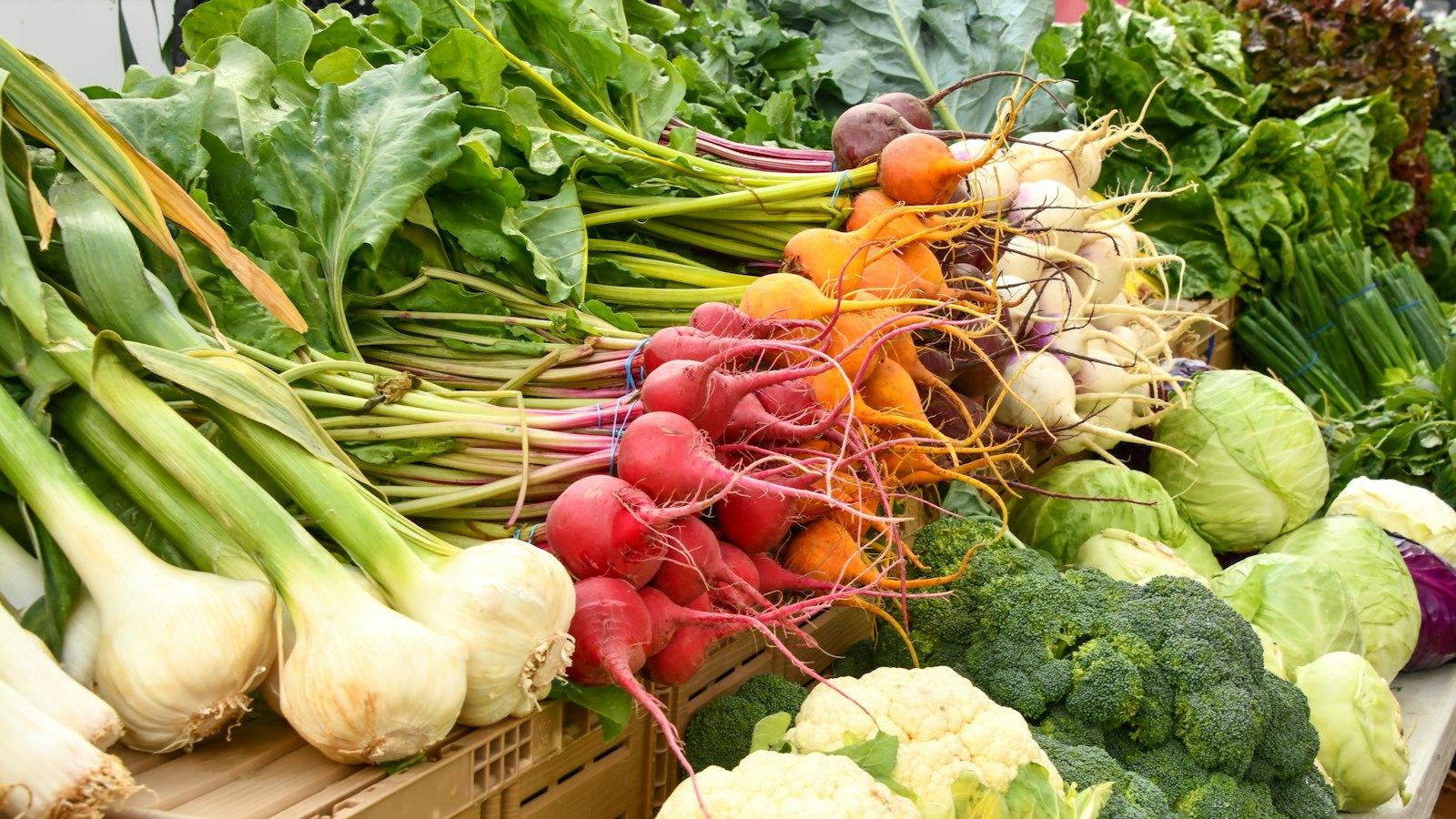
The Brunnenmarkt in the sixteenth district is the longest street market in Europe and where fruit and vegetables cost least in Vienna. Turkish and Balkan in character, loud, with no staging whatsoever. Anyone who needs a crate of tomatoes goes there.
The Karmelitermarkt in the second is smaller, quieter and more neighbourly, with some very good stalls and a farmers' market on Saturdays. The pleasantest of the three if you want to stay rather than only shop.
The Kutschkermarkt in the eighteenth is the smallest here and the classic local market: manageable, friendly, no tourists.
What there is besides fruit and vegetables
These are not purely vegetable markets. Fishmongers, butchers, cheese stalls, spice merchants and bakers belong to them, and at several markets they are among the better addresses in the city.
For fish that matters particularly, because Vienna is inland and freshness is easier to judge at a market than in a display case — fish in a country with no coast describes what to look for.
The farmers' market is a different category
Several markets run a farmers' market on Saturdays where producers from Lower Austria and Burgenland sell directly. That is a different thing from a trader's stall: the person who grew it is standing there, and you can ask when something was picked.
For anything seasonal it is the most reliable source, and it is the difference between a tomato picked ripe and one that travelled — which tomatoes that taste of something covers in detail.
In winter these stalls shrink noticeably, and what remains is stored crops and root vegetables — described in what still grows in winter.
What you buy differently at a market
The difference from a supermarket is not only freshness but that you can ask. A trader who knows their stock will tell you what is good this week and what to leave until next — and that is worth more than any label.
Small quantities are not a problem. Buying three tomatoes is entirely normal, and nobody expects you to take a crate.
What you do not do is reach into the display yourself. At most stalls you are served, and you point at what you want. Helping yourself gets noticed.
At a farmers' market the question of when something was picked is particularly worth asking, because with short-lived produce a day makes the difference — with herbs, for instance, as herbs, fresh and dried describes.
Practicalities
Most markets are open Monday to Friday until about six and Saturday until five. Everything is shut on Sunday, apart from the restaurants at the Naschmarkt.
Late on Saturday afternoon many stalls sell off, because nothing should be left standing over Sunday. Anyone flexible gets the best of it then.
Cash is still quicker at small stalls, even though cards work almost everywhere now.
Book a table — what came from the market is on the board.