Austria is thought of as a white wine country, and two thirds of its vineyard area agree. The remaining third gets routinely underrated, for a reason that is really an advantage: the reds here are light.
Why that suits our menu is in our guide to Austrian wine.
Zweigelt is the everyday grape
The most planted red in the country, and surprisingly young: bred in 1922 from Blaufränkisch and St. Laurent. It ripens reliably even in cooler years, which makes it practical in Austrian conditions.
In the glass: dark cherry, a little plum, soft tannins, medium body. A Zweigelt is rarely complicated and almost never heavy — most sit at twelve to thirteen per cent and drink easily.
That makes it the by-the-glass red par excellence. It suits braises, grilled food, sausage and cheese, and it tolerates being served lightly chilled — which makes it useful in summer, where most reds drop out.
Blaufränkisch is the serious one
Older, more demanding and considerably more characterful. Blaufränkisch needs warmth and good sites, which is why it sits mostly in Burgenland, and it carries an acidity unusual in red wine.
In the glass: dark berries, cherry, often a peppery, savoury note, and tannins firmer than a Zweigelt's. Good examples age beyond ten years and get compared to the northern Rhône or to Bordeaux.
The acidity is the decisive part. It makes it one of the few reds that hold up beside tomatoes and olive oil instead of turning dull next to them — which, for a half-Mediterranean menu, is exactly the point.
St. Laurent, the third
Rarer, related to Pinot Noir and in good years comparably fine: cherry, forest floor, fine tannin. It is trickier in the vineyard and therefore less widespread, but anyone who likes Pinot should try it.
Oak or no oak
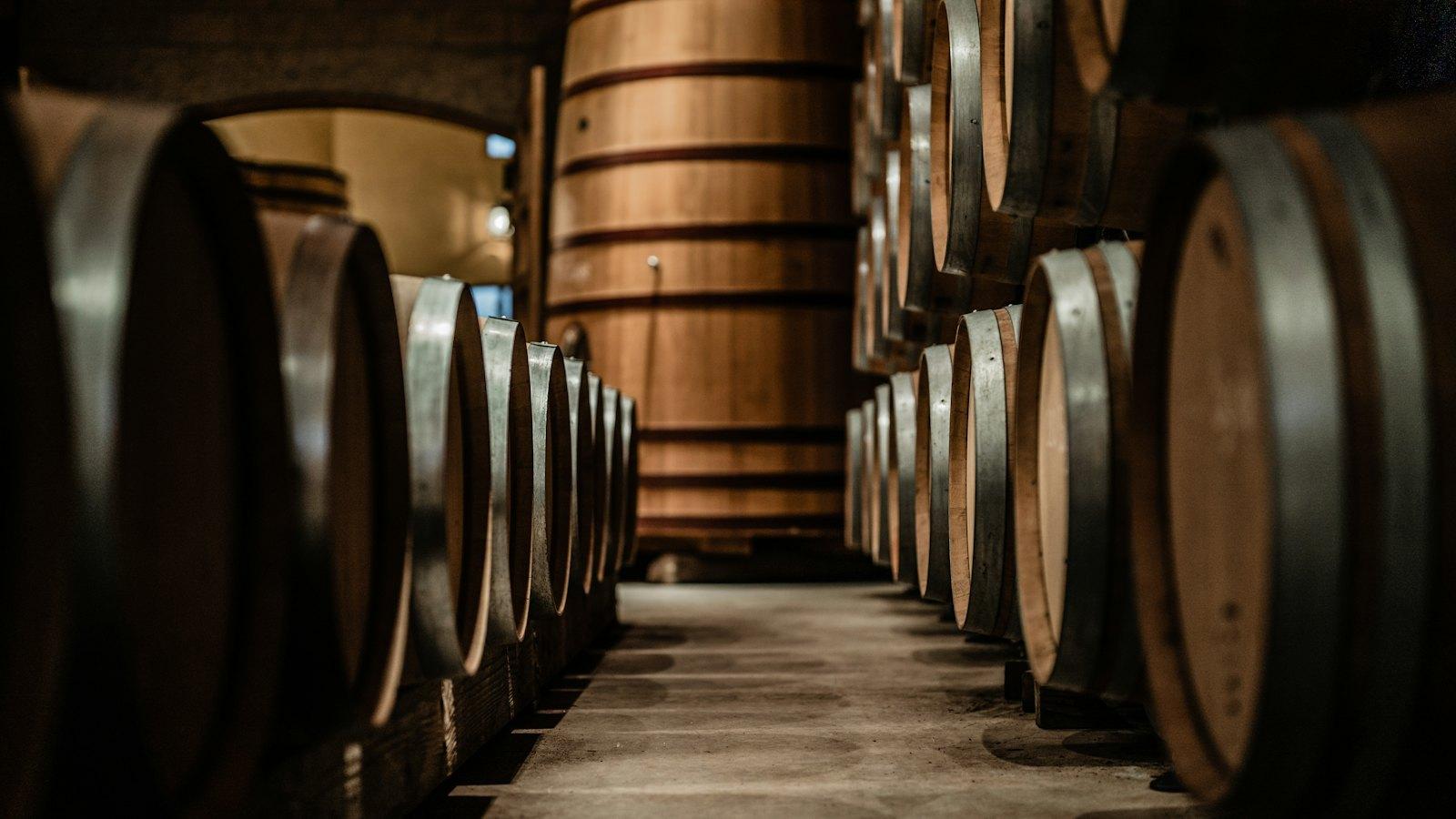
The second thing that separates Austrian reds is the barrel. A Zweigelt from a steel tank keeps its fruit and stays juicy; one from barriques gains vanilla, toast and more tannin.
Both are legitimate, but it decides what the wine suits. The fresh, unoaked one belongs to a summer evening and to anything lighter. The worked one stands beside braises and grilled food.
You can rarely tell from the name on a list, which makes asking the shorter route. What else on a wine list actually tells you something is in wine by the glass, and why it is honest.
What the three suit
Braises in any form, which is the obvious connection. A goulash wants a wine with acidity and moderate tannin, because both work against the richness of the sauce — why the dish is built that way is in why a goulash needs time.
Grilled vegetables, mushrooms, hard cheese, and anything with paprika in it, which the fruit in both grapes meets rather than fights. And, with reservations, fish: a light chilled Zweigelt beside pan-fried zander is not a mistake, whatever the old rule says.
What a young red can do
Austrian reds are often drunk very young, and that is not a shortcoming. A Zweigelt from last year has the most fruit it will ever have, and it loses that over the years without trading enough structure for it.
Blaufränkisch is the opposite case: it needs time. A good one from a strong site is still closed at three years and only opens afterwards. Drink it too early and you taste tannin and not much else.
For a by-the-glass list that means the Zweigelt is the young one and the Blaufränkisch is the one you order by the bottle.
Serving cold is not an error
The commonest serving fault with red wine is too warm. "Room temperature" comes from an era when rooms were sixteen degrees, not twenty-three. A Zweigelt at fourteen to sixteen tastes fresher and less alcoholic; a Blaufränkisch takes sixteen to eighteen.
Twenty minutes in the fridge before serving solves it, and a wine that warms slowly in the glass goes on developing while it does, and it is the same thought as anywhere temperature changes perception — set out in the glass and the temperature.
Book a table and try a chilled red.