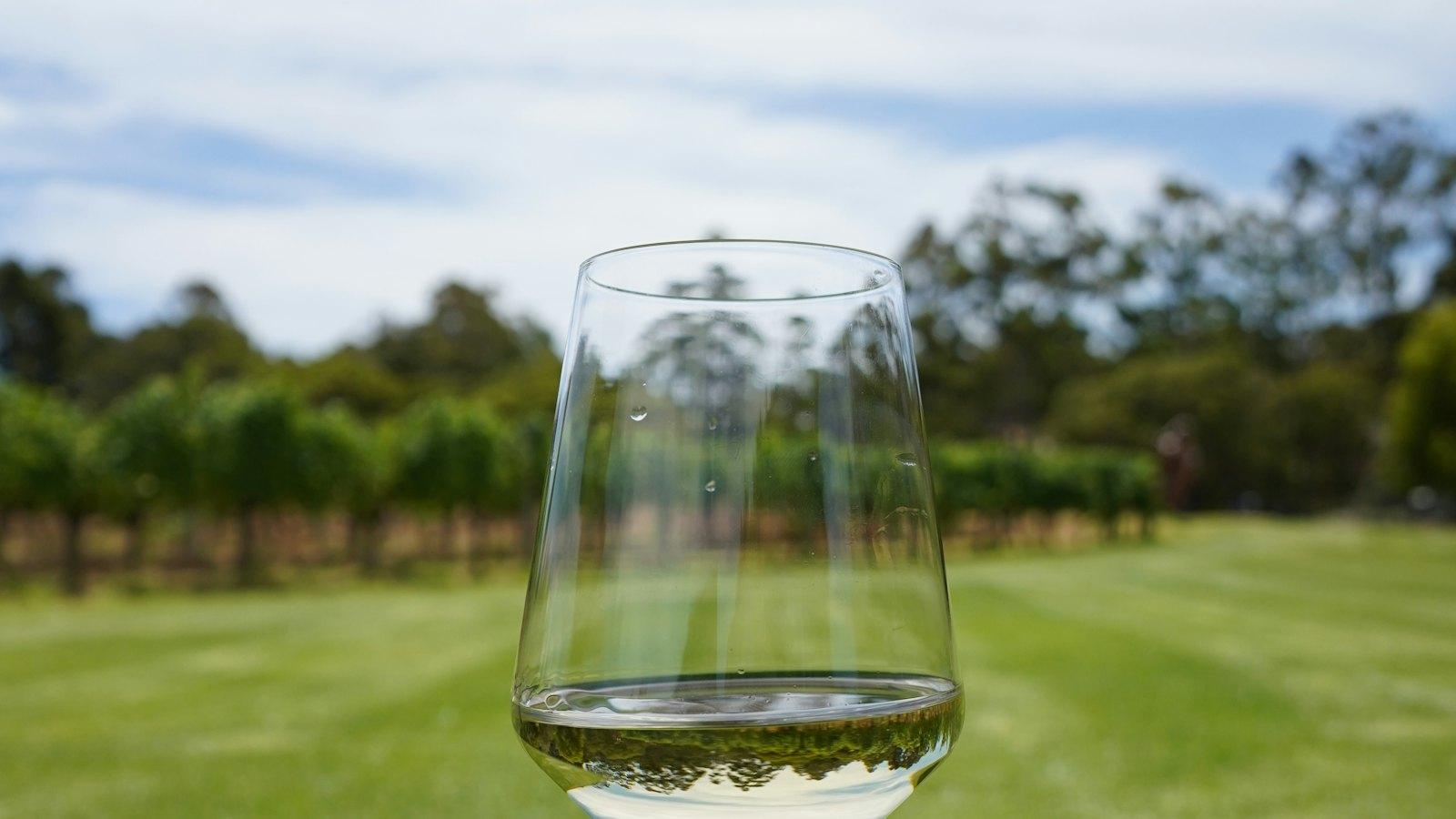
A menu that is half Mediterranean could reasonably pour Italian wine. We pour mostly Austrian, and that is a practical decision rather than a patriotic one: they suit the food better, they travel a shorter distance, and at the same quality they cost less.
Acidity is the reason
Austrian whites carry more acidity than most southern wines, because it is cooler here and the grapes ripen more slowly. Acidity is exactly what fatty and crumbed food needs — and at the same time what works beside olive oil and tomatoes.
The most important of them is in Grüner Veltliner, pepper in the glass.
The reds are lighter than people expect
Zweigelt and Blaufränkisch are not heavy wines. They have fruit, acidity and moderate alcohol, which suits them to braises as much as to grilled vegetables — Zweigelt and Blaufränkisch runs through both.
Four regions, and that is enough
To read the list you need a handful of names. The wine regions, briefly sorts out what Lower Austria, Burgenland, Styria and Vienna each deliver — and what a Wiener Gemischter Satz is.
Organic is not a niche here
Austria has one of the highest proportions of organic viticulture anywhere, and it shows on every wine list. Organic, natural wine and what lies between separates terms that routinely get muddled.
Choosing wine with food is easier than its reputation
There are two rules that hold almost always, and the rest can be tried. Choosing wine with food describes both.
Pouring by the glass is a position
A list of eight wines by the glass says more about a house than one with forty bottles. Wine by the glass, and why it is honest explains why.
What else ends up in a glass here is in our guide to the bar. Book a table and let somebody pour you something.