A wine list is a set of place names, and most of them mean nothing until somebody sorts them. For Austria, four regions get you ninety per cent of the way.
Why these wines sit well beside our menu is the question in our guide to them.
Lower Austria: the whites
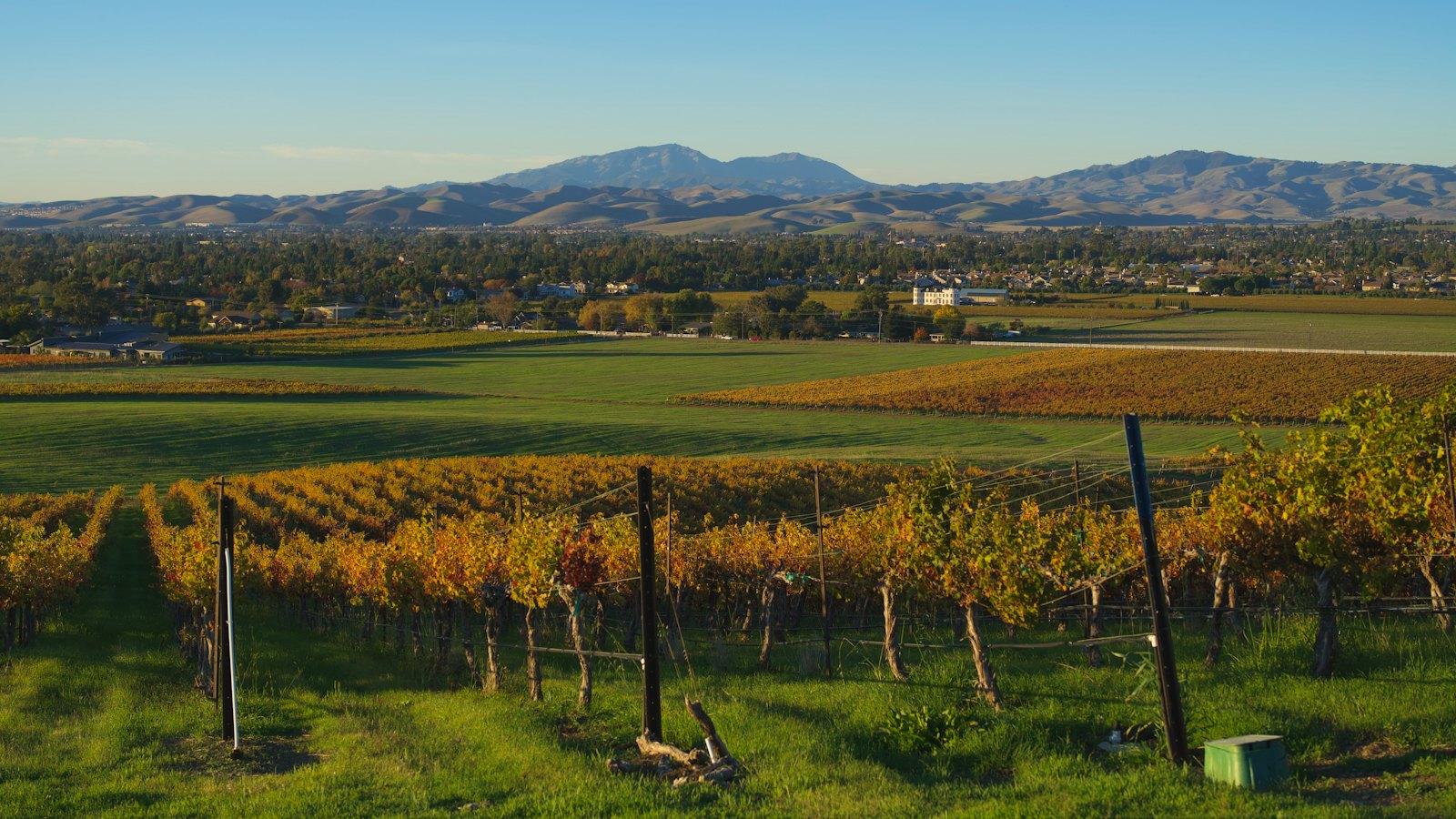
The largest growing area, and the source of the best-known whites. Three names come up repeatedly.
Wachau is the terraced stretch along the Danube, and its wines are the country's most expensive. Riesling and Grüner Veltliner from primary rock, taut and age-worthy. The terms Steinfeder, Federspiel and Smaragd are not quality tiers in the usual sense but a classification by weight and alcohol: light, medium, full.
Kamptal and Kremstal sit next door, make very similar wines and usually cost less. For a by-the-glass list they are often the smarter choice.
Weinviertel is the largest region and the home of the typical peppery Veltliner — more on that in Grüner Veltliner, pepper in the glass.
Burgenland: the reds
East of Vienna, around the Neusiedlersee, with considerably more warmth. Most Austrian red grows here, chiefly Blaufränkisch and Zweigelt — covered in Zweigelt and Blaufränkisch.
The lake brings autumn fog, and out of that come the sweet wines the region is equally known for. A Ruster Ausbruch is an Austrian speciality that is insufficiently known abroad.
Styria: the aromatic ones
In the south, hilly, cool, with steep sites. The wines are more aromatic and higher in acidity than Lower Austria's: Sauvignon Blanc, Morillon (the local name for Chardonnay), Welschriesling, Muskateller.
And Schilcher, a fiercely acidic rosé from the Blauer Wildbacher grape, which people either like or do not. The same region produces pumpkin seed oil — see pumpkin is more than soup.
What DAC means on a label
Three letters that have appeared on Austrian bottles since 2002, standing for Districtus Austriae Controllatus. They work like the Italian DOC or the French AOC: a wine with a DAC comes from a defined area and conforms to a style laid down for it.
In practice that means the origin tells you more than the grape. Where it says "Weinviertel DAC" there is Grüner Veltliner in the bottle, dry and peppery — the variety does not need naming at all.
Vienna: the only capital that grows wine
Vienna is the only city of over a million people anywhere with significant commercial viticulture inside its boundaries — around six hundred hectares, chiefly on the Nussberg, in Neustift and on the Bisamberg.
The speciality is the Wiener Gemischter Satz. At least three white varieties are interplanted in the same vineyard, picked together and fermented together. It is not a blend assembled afterwards but a field blend — historically insurance against bad years, now a protected designation of origin.
In the glass it is light, fresh and uncomplicated, and it is the wine Viennese people drink with food without thinking about it. For a menu like ours it is almost too apt: it is itself a mixture that works without explaining itself.
A Heuriger is an institution, not a type of restaurant
Anyone drinking wine in Vienna ends up at a Heuriger sooner or later, and it is legally its own thing: a tavern where a grower may serve their own wine, and only their own. The food is cold and comes from a buffet, because a hot kitchen would change the licence.
Ausg'steckt is' means it is open — signalled by a bundle of pine branches hung above the door. They do not open continuously but in blocks of weeks, because an estate may only serve on a limited number of days a year.
The wine there is young, light and cheap, and that is the point. It is a different occasion from dinner — but the same wine, a year earlier.
What that means for a list
Carry eight wines by the glass and these four regions cover everything a guest expects: a light Veltliner, a structured white, something aromatic from Styria, a Gemischter Satz and two reds from Burgenland. Why a short list is the more honest one is in wine by the glass, and why it is honest.
Book a table and ask where it comes from.