Friendliness is the precondition, not the achievement. What makes an evening good is ninety per cent decided before the first guest comes through the door — and after that by things a guest only notices when they are missing.
Everything is ready before anyone arrives
Two hours before service a kitchen is finished, or it will not survive the evening. Mise en place explains what that means and why it applies to the room as well.
An order is a route through the house
From table to kitchen, kitchen to pass, pass to table — and it can stall at every station. How an order travels through a house describes the route.
Timing beats speed
Fast is not good. Good is everything arriving at the right moment, which is something else entirely. Timing at the table follows that through.
Special requests are not a special case
At every second table somebody has a restriction, and a house not set up for it finds out too late. Allergies and special requests covers the process behind it.
The process is the actual work
A house is not measured by how warmly somebody smiles but by whether the plate arrives hot and everyone eats at the same time.
Walk-ins and bookings are two different sums
A house that relies only on bookings stands half empty some evenings; one without bookings loses all predictability. Walk-in or booking explains how the two fit together.
Most of it is never seen
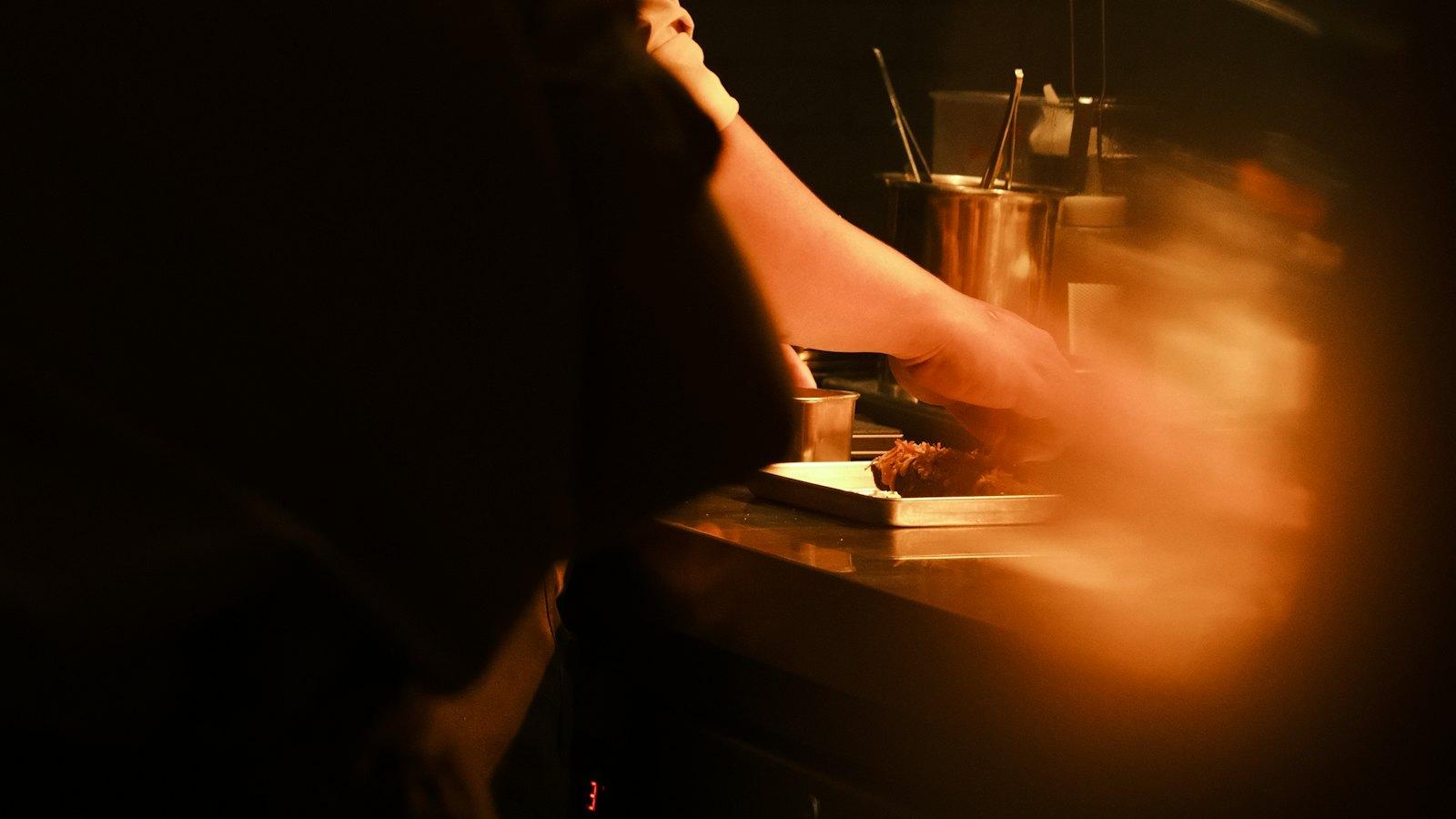
What carries an evening happens between half past four and half past six, in an empty room. Everything after that is execution.
And when something goes wrong
Something goes wrong regularly, and an evening is not measured by that. It is measured by what happens next. When something goes wrong is about that.
How a guest experiences this from the outside is in our guide to eating out in Vienna. Book a table and watch the timing.